

.png)

What Causes Sewage Smell in House: A Los Angeles Homeowner's Guide
That foul, unmistakable smell of sewage in your home isn't just unpleasant—it's your plumbing system sending up a distress signal. It's a clear warning that something, somewhere, has gone wrong. For homeowners across Los Angeles and nearby communities like Glendale and Pasadena, that odor instantly brings up worries about health, property damage, and the looming fear of a massive repair bill.
The smell itself is sewer gas escaping from your drains or pipes, and it's a problem that needs immediate attention.
Decoding the Unmistakable Smell of Sewer Gas in Your Home
When you catch a whiff of sewer gas, you're actually smelling a nasty cocktail of gases, the most prominent being hydrogen sulfide (the source of that rotten egg smell), along with ammonia and methane. Your home’s plumbing is engineered to be a closed system, designed to keep these gases safely contained and vented out through your roof.
When that barrier is broken, the smell is the first and most obvious warning sign.
This guide will help you play detective, walking you through what causes a sewage smell in a house—from simple issues you might fix in five minutes to serious plumbing failures that need a professional plumber, fast.
A few usual suspects are responsible for most of the calls we get from homeowners in the LA area:
Dry P-Traps: That U-shaped pipe under every sink holds a small amount of water to block gas. If it dries out, the path is wide open.
Clogged Drains: A buildup of biofilm—that slimy gunk made of soap scum, hair, and bacteria—can produce its own gnarly, sewer-like odors.
Blocked Plumbing Vents: Your plumbing vent stack on the roof can get clogged with leaves or debris, forcing sewer gas back down and into your home.
Damaged Sewer Lines: This is the big one. Cracks from aggressive tree roots or old, collapsing pipes can leak sewage and gas right under your property.
To get started, think about where the smell is strongest. This simple flowchart can help you narrow down the possibilities.
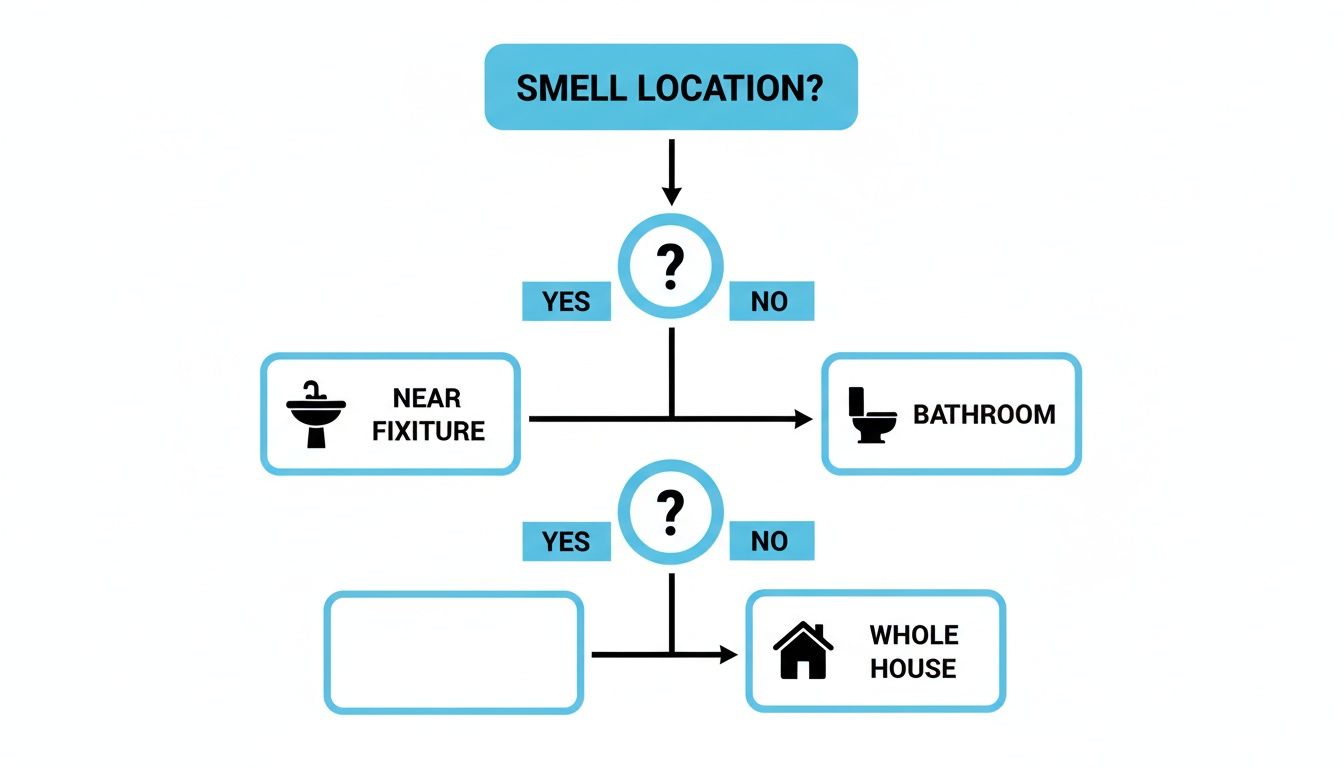
As you can see, an odor that’s stuck in one spot, like around a single sink, usually points to a simple, local issue. But a smell that has taken over the entire house often signals a more serious problem, like a main sewer line clog or a blocked vent stack.
Sewer gas isn't just a bad smell; it contains compounds that can be genuinely harmful. Prolonged exposure to even low levels of hydrogen sulfide can trigger headaches and fatigue, while higher concentrations carry more serious health risks. Pinpointing the source is as much about your family's safety as it is about comfort.
Quick Diagnostic Chart for Sewage Smells
To help you get a head start, we've put together this quick reference table. Use it to match the smell's location to the most likely cause and figure out your first move.
Smell Location | Most Likely Cause | Initial Action to Consider |
|---|---|---|
Near a Single Sink or Drain | Dry P-trap, localized clog, or biofilm buildup. | Run water for 60 seconds to refill the P-trap. Try a bio-enzyme drain cleaner. |
Only in One Bathroom | Faulty toilet wax ring, or an unused shower/tub with a dry P-trap. | Check if the toilet is wobbly. Run water in all drains. |
In the Laundry Room | Clogged floor drain or issues with the washing machine standpipe. | Pour a gallon of water down the floor drain to fill the trap. |
Throughout the Whole House | Main sewer line clog, blocked vent stack, or a crack in the sewer line. | This is professional territory. Call a 24/7 plumber immediately. |
This chart is a great starting point, but remember that plumbing systems can be tricky.
While our focus here is on plumbing-related sewer gas, it's always smart to rule out other possibilities. For a wider perspective, you might find this general guide to identifying lingering household odors useful. And since water and smells often go hand-in-hand, it’s also important to recognize the signs you might have a hidden leak in your home. By methodically checking off the possibilities, you can find the right solution and get your home smelling fresh again.
The Simple Fixes Behind Most Sewer Gas Odors
Before you jump to conclusions and imagine a major plumbing catastrophe brewing, take a deep breath. More often than not, the thing causing that awful sewage smell in your house is a surprisingly simple issue you can probably find—and maybe even fix—yourself.
Many of these usual suspects involve parts of your plumbing that are designed to protect you but have just momentarily slipped up on the job.
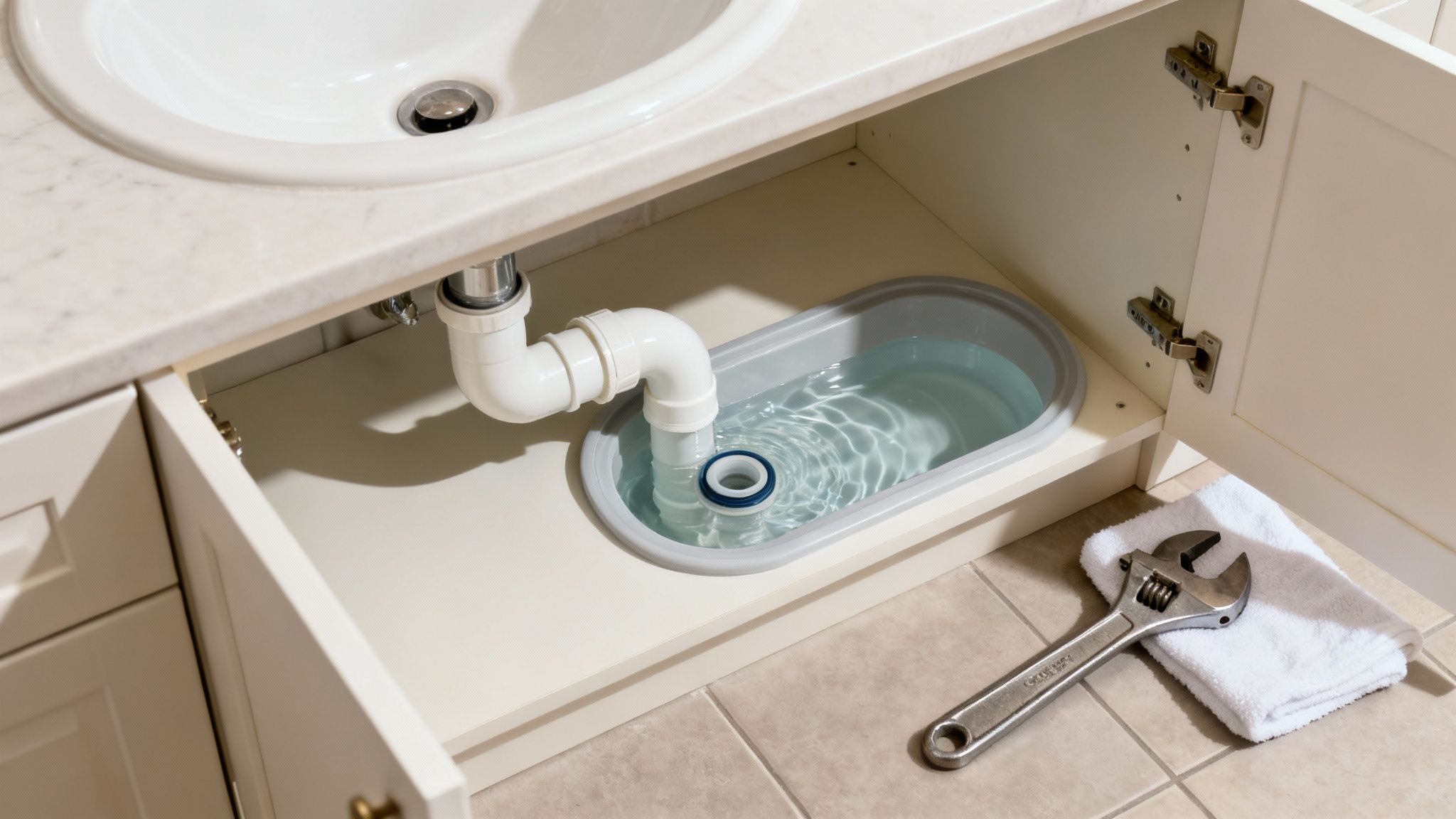
The great news is these problems are usually inexpensive and don’t involve tearing up your walls. Let's walk through the two most common culprits: a dry P-trap and a bad toilet seal.
Your Plumbing's First Line of Defense: The P-Trap
Go look under any sink in your home. See that U-shaped curve in the pipe? That’s the P-trap, and it has one crucial job: to hold a little bit of water all the time. This small puddle of water creates a physical barrier, blocking sewer gas from creeping up the drain and into your living space.
But that water barrier isn't permanent. For fixtures you don’t use very often—think a guest bathroom shower or a basement floor drain—the water can simply evaporate, leaving a wide-open path for odors. This is an especially common problem for us here in dry climates like Los Angeles and the San Fernando Valley, where the low humidity makes water evaporate much faster.
A dry P-trap is like leaving your front door wide open. It gives sewer gas an easy, direct path right into your home. Luckily, fixing it is usually as simple as locking that door again.
The fix couldn't be easier. Just run water down the drain for about 60 seconds. That’s it. This refills the trap and puts that protective water seal right back where it belongs.
To keep it from happening again, just get into this simple habit:
Take Inventory: Make a quick mental list of all the sinks, showers, tubs, and floor drains that don't get used every day.
Run Water Monthly: Once a month, make a point to run water in each of those drains for at least a minute.
Use Mineral Oil for Floor Drains: For floor drains that seem to dry out quickly, pour a few tablespoons of mineral oil down the drain after you’ve refilled it with water. The oil creates a film on top of the water that dramatically slows down evaporation.
The Toilet's Weakest Link: The Wax Ring
If the sewer smell is strongest in a bathroom and you’ve already checked your P-traps, the next place to investigate is the wax ring at the base of your toilet. This ring creates an airtight seal between the bottom of your toilet and the main drainpipe in the floor.
Over time, this wax seal can get old, dry out, or get squished out of shape if the toilet becomes loose. Once that seal is broken, sewer gas can seep out from around the base of the toilet every single time you flush.
You might be dealing with a faulty wax ring if you notice:
A Nasty, Persistent Odor: A sewage smell that just hangs in the air, especially right around the toilet.
A Wobbly Toilet: If your toilet rocks or shifts when you sit down, the bolts holding it to the floor have likely loosened, which is a classic way to break the wax seal.
Water on the Floor: Any sign of water pooling around the base of the toilet is a major red flag that the seal has failed.
Replacing a wax ring is a bit more involved than just running some water, but it's a very common repair. Our guide on essential toilet repair tips every homeowner should know offers some great insights into this and other common toilet problems. While it’s a job some DIY-ers can handle, getting a perfect seal is absolutely critical to solving the odor problem for good.
If that telltale sewage smell in your house isn't coming from a dry P-trap or a bad toilet seal, your next suspect is the drain itself. When the odor seems to be wafting up directly from a sink or shower, you're almost certainly dealing with a nasty buildup of organic gunk inside the pipes.
This isn't just a simple clog; it's a living, breathing ecosystem generating its own foul stench right under your nose.
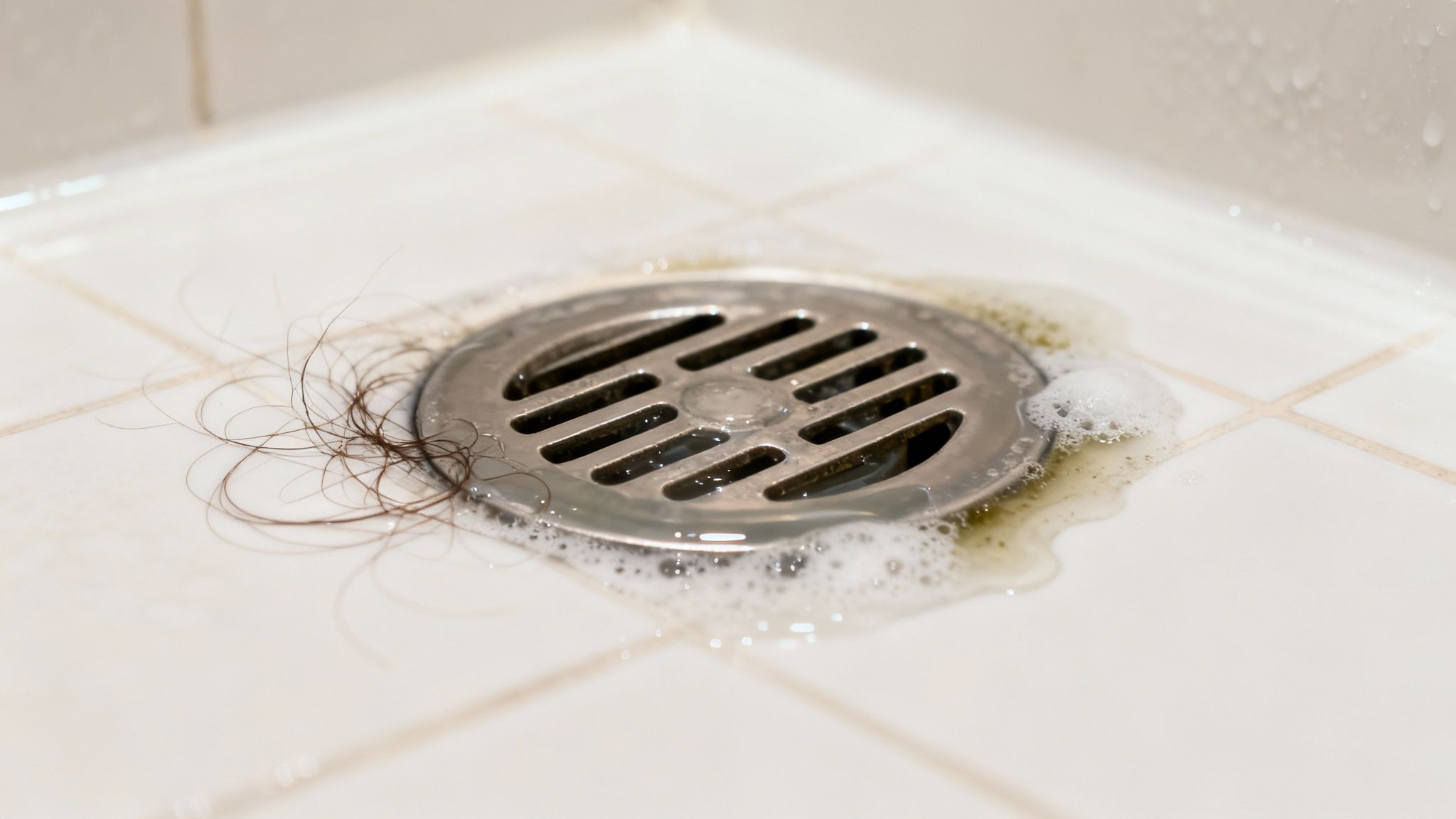
Think about everything that goes down your drains day after day: soap scum, hair, grease, tiny food scraps, and skin cells. All that gunk doesn't just wash away—it clings to the inside walls of your pipes, creating the perfect feeding ground for bacteria. These bacteria colonize the sludge and form a slimy, sticky substance called biofilm.
The Science Behind the Stench
That biofilm isn't just gross to think about; it's an active odor factory. Picture a miniature, self-sustaining swamp that has taken up residence inside your plumbing. As the bacteria gorge themselves on the endless buffet of organic waste, they release gases as a byproduct.
The most infamous of these gases is hydrogen sulfide—the same compound that gives sewer gas its distinct rotten egg smell. A slow-draining pipe makes the situation even worse, as the stagnant water creates an ideal, swampy environment for these smelly bacteria to thrive and multiply.
This problem is especially common in a few key high-traffic drains:
Kitchen Sinks: Grease, oil, and food particles are a five-star meal for biofilm.
Shower Drains: That constant mix of soap scum, conditioner, and shed hair creates a perfect sticky trap for bacteria to latch onto.
Bathroom Sinks: Toothpaste residue, shaving cream, and soap build up into a thick gunk that coats the pipes.
Why Chemical Cleaners Are a Bad Idea for LA Homes
When faced with a smelly, slow drain, the first instinct for many homeowners in Los Angeles is to grab a bottle of harsh chemical drain cleaner. It feels like a quick fix, but it often does more harm than good, especially in a city with a mix of both brand-new and very old plumbing.
Many older homes in neighborhoods from Pasadena to Santa Monica still have their original cast iron or galvanized steel pipes. The corrosive acids in chemical cleaners can literally eat away at this aging metal, turning a minor clog into a major leak.
Worse yet, these chemicals rarely solve the root of the problem. Instead of dissolving the thick, organic biofilm, they usually just burn a small tunnel through the clog. The smell might go away for a day or two, but because the biofilm is still there, the clog—and the odor—will be back before you know it. You can learn more about this and other stubborn issues in our guide to understanding the common causes of recurring drain clogs.
Safe and Effective Drain Maintenance
For minor odors and sluggish drains, you have safer and more effective options you can try before calling in a pro. These methods focus on actually breaking down the organic matter without waging war on your pipes.
Recommended DIY Drain Cleaning Methods
Boiling Water Flush: Carefully pour a full kettle of boiling water straight down the drain. This is great for melting and dislodging the greasy buildup common in kitchen sinks. (Just a word of caution: don't use this on PVC pipes if you think there's a total blockage, as the intense heat can soften the pipe joints).
Baking Soda and Vinegar: Pour about half a cup of baking soda down the drain, and follow it up with half a cup of white vinegar. Let the fizzing mixture do its thing for 15-30 minutes, then flush it all out with very hot water. It's a classic for a reason—it helps break down grime and kills odors.
Enzyme-Based Cleaners: These products use natural bacteria and enzymes to literally digest the organic waste clogging your pipes. They are completely safe for all plumbing types and are by far the best alternative to harsh chemicals for regular maintenance.
While these tips are great for minor issues, you have to know when a clog has gotten too serious for DIY solutions. If multiple drains are acting up, or if you hear strange gurgling sounds coming from the pipes, you're likely dealing with a much deeper blockage in your main line that requires professional equipment.
Identifying Major Plumbing System Failures
Okay, so you’ve checked the simple stuff like dry P-traps and cleared out minor gunk in the drains, but that awful sewage smell is still hanging around. When that happens, it’s usually a sign that something more serious is going on deep within your plumbing system.
These aren’t minor maintenance tasks; we’re talking about a potential breakdown in the core infrastructure that keeps your home sanitary. Ignoring these signals is more than just unpleasant—it can be a genuine risk to your property and your family's health. The source of the problem is often hidden away, either in the vents on your roof or the main sewer line buried underground.

Blocked Plumbing Vents
Every single drain in your house—from sinks to showers to toilets—is connected to a vent pipe. This pipe runs up through your walls and out the roof, and it’s absolutely essential. It does two critical jobs: it pulls in fresh air so your drains can flow smoothly, and it pushes nasty sewer gases safely out into the atmosphere, far away from your living space.
Ever tried pouring a drink from a can with only one small hole punched in it? It glugs and flows poorly. That’s exactly what happens to your drains without proper venting. When leaves, bird nests, or other debris clog that vent on your roof, it creates a vacuum in the pipes. This negative pressure can literally suck the water right out of your P-traps, breaking the seal and letting sewer gas pour into your home.
You might have a blocked vent if you're noticing:
Gurgling Drains: That gurgling sound coming from a toilet or sink is the classic sign of a system that’s gasping for air.
Slow Drainage Everywhere: If multiple fixtures throughout the house start draining sluggishly at the same time, a blocked main vent is a prime suspect.
An On-and-Off Sewage Smell: The odor often gets much worse right after you run water or flush a toilet.
Cracked or Broken Sewer Lines
Now for the most serious cause: a compromised main sewer line. This is the big pipe responsible for carrying all of your home’s wastewater to the municipal sewer. A crack or break here isn’t just a problem; it's a full-blown plumbing emergency.
Here in the Greater Los Angeles area, many older homes have clay or cast-iron sewer pipes. They were built to last, but even the toughest materials give out over time, especially when faced with mother nature.
For homes in Los Angeles, tree root intrusion is the number one cause of broken sewer lines. Those beautiful, mature trees we love have aggressive root systems that are naturally drawn to the moisture inside a sewer pipe. They can work their way into tiny joints and, over years, pry the pipe right open.
On top of that, shifting soil and the general wear-and-tear of decades can cause old pipes to collapse. When that happens, raw sewage and toxic gases escape into the soil right under your foundation or into your yard.
A leaking sewer pipe is a major source of that foul odor. As wastewater soaks into drywall or insulation, it releases those pungent gases. Methane, one of the main components, can pose serious health hazards and even become flammable in high concentrations. We're seeing more and more odor complaints tied to this aging infrastructure, which is a growing problem for homeowners. You can learn more about the specific health risks associated with sewer gas exposure.
You Need a Professional Diagnosis—Now
When you suspect a major failure like this, it’s not the time for DIY guesswork. The health risks are real, and the potential for expensive property damage is huge. The only way to know for sure what’s happening underground is to get a professional to take a look.
We use specialized equipment to find the problem without having to dig up your entire yard. A sewer camera inspection is the gold standard here. A technician feeds a tiny, high-resolution waterproof camera down into your sewer line. We get a live video feed of the inside of your pipes, allowing us to pinpoint the exact location of any cracks, blockages, or tree roots.
If that sewage smell just won't quit, exploring the benefits of a professional sewer camera inspection will give you the definitive answers you need. It’s the fastest, most reliable way to turn a dangerous unknown into a clear plan of action.
The Importance of Proactive Plumbing Maintenance
Look, dealing with a sewage smell after it appears is one thing. But preventing it from ever showing up in the first place? That’s the smarter, safer, and far less stressful approach. For homeowners here in Los Angeles, proactive plumbing maintenance isn't some luxury add-on; it's a critical investment in your home’s health and your family's comfort. It’s all about shifting your mindset from emergency reaction to smart preparation.
Regular, scheduled care is what protects your home from the chaos and cost of a sudden plumbing disaster. Instead of holding your breath and waiting for something to go wrong, you can catch and solve the small stuff before it snowballs into a catastrophe. This is especially true for the beautiful older homes you see in neighborhoods like Pasadena and Hollywood, which often have aging pipes just waiting for an excuse to cause trouble.
Preventing Problems Before They Start
Think of a maintenance plan as an early warning system for your entire plumbing network. It gives a professional plumber the chance to spot developing issues—like slimy biofilm buildup, tiny hidden leaks, or the very first signs of tree root intrusion—long before they announce themselves with a foul odor or a nasty backup.
It’s just like a regular health check-up for your home's circulatory system. Here are a few key services that make all the difference:
Routine Drain Cleaning: This is about more than just busting a clog. Professional cleaning scours away the gross biofilm that produces hydrogen sulfide, stopping that classic "rotten egg" smell right at the source.
Sewer Camera Inspections: Honestly, this is the only way to get a true look at the condition of your main sewer line. We can spot cracks, pipe decay, or creeping tree roots before you’re facing a catastrophic line break in your front yard.
Garbage Disposal Inspection: A dirty or malfunctioning disposal is a major source of kitchen odors. Keeping it clean and working properly prevents food bits from collecting and rotting inside your drain system.
The Value of a Professional Relationship
When you build a relationship with a trusted plumbing company, you have an expert on your side who knows the specific history and quirks of your home’s system. That familiarity means we can diagnose problems faster and recommend more effective, long-term solutions, not just quick fixes.
Neglected plumbing is, without a doubt, a primary cause of household odor issues. In fact, research shows that a huge percentage of odor complaints are directly tied to poor maintenance of wastewater systems. When drains aren't cleaned regularly, sludge-like organic material starts to decompose and release nasty gases, a problem that even large-scale treatment facilities deal with. You can read the full research about these odor nuisance issues if you want to geek out on the science behind the smell.
A small investment in preventive maintenance today can save you thousands of dollars in emergency repairs, water damage restoration, and lost property value tomorrow. It’s the ultimate peace of mind.
Proactive care also extends to specific fixtures inside your home to head off water damage and musty smells; you can learn more about preventing leaks with proper water stops. For a deeper dive into what a smart maintenance schedule looks like for your property, check out our guide on the importance of regular plumbing maintenance for residential homeowners. Taking these simple steps is the best way to ensure your home remains a safe, healthy, and pleasant place to live.
When You Need a Professional Plumber
Look, many of the reasons for a sewage smell in your house are surprisingly simple DIY fixes. But knowing when to put down the wrench and pick up the phone is absolutely crucial. Trying to be a hero with a major plumbing problem can quickly turn into a costly nightmare of property damage and, worse, expose your family to serious health risks.
If you’ve already tried the easy solutions and that foul odor is still hanging around, it’s a giant red flag. The problem is almost certainly buried deeper in your plumbing system, and it's time for a professional diagnosis.
Signs You Need an Expert Immediately
Some symptoms aren't just annoyances; they're your plumbing system screaming for help. If you spot any of the following, stop troubleshooting and give a licensed plumber a call. These signs often point directly to a main sewer line issue—something far beyond a simple home repair.
Persistent Odor: The smell just won't quit, even after you’ve refilled all the P-traps and cleaned every drain in the house.
Gurgling Drains: You hear strange bubbling or gurgling sounds coming from your toilets or sinks, especially right after you run water or flush. That's a classic symptom of a blocked vent or main line gasping for air.
Multiple Slow Drains: It’s not just one sink. The shower, toilet, and sink in the same bathroom are all draining like molasses. Or maybe fixtures all over the house are sluggish. This tells you the clog is in a shared line, not an individual one.
Water Backups: This is the big one. If you see any water or raw sewage backing up into your shower, tub, or floor drains, you have a plumbing emergency on your hands.
When you experience these issues, it means a significant blockage is preventing wastewater and toxic sewer gas from leaving your home the way they should. The culprit could be anything from years of grease buildup to aggressive tree roots—a very common problem for homeowners all across the Los Angeles area.
How a Professional Solves the Problem
Calling in an expert from a trusted company like ZH Plumbing means you get a fast, accurate diagnosis without the guesswork. We bring in specialized tools that let us see exactly what’s going on inside your pipes.
A sewer camera inspection is the single most effective tool for hunting down the source of persistent sewer odors. We feed a high-resolution camera deep into your main line, allowing us to see precisely what’s causing the blockage—whether it’s a nasty crack, a collapsed pipe, or invasive tree roots—and recommend the right solution.
This approach saves you money because we aren’t just guessing and trying random, unnecessary repairs. A licensed plumber can pinpoint the issue, whether it’s a blocked vent stack on your roof or a broken pipe under your foundation, and deliver a lasting fix that brings safety and comfort back to your home.
Common Questions About Sewer Smells
Even after running through the usual suspects, it's completely normal to have some nagging questions about that awful smell. Plumbing problems are stressful, and getting clear, straight answers is the first step to feeling in control again. We get these questions all the time from homeowners across Los Angeles, so let's tackle them head-on.
Is That Sewage Smell in My House Dangerous?
Yes, it absolutely can be. Sewer gas isn't just a bad smell—it's a nasty cocktail of gases that includes toxic hydrogen sulfide, ammonia, and even flammable methane.
While a faint whiff might just be annoying, prolonged exposure can lead to headaches, nausea, and dizziness. The real danger is in high concentrations, which can actually displace oxygen in a room. If the smell is overwhelming or anyone in your house starts feeling unwell, don't hesitate. Ventilate the area immediately by opening every window you can, and call a professional plumber right away to find and fix the source.
Why Does the Sewer Smell Get Worse After Rain?
This is a classic problem here in Southern California, especially when we get one of our rare but intense downpours. All that rain completely saturates the ground, putting a ton of pressure on the underground sewer pipes.
If you already have a small crack or a weak joint in your main sewer line, that external pressure can literally squeeze more sewer gas out of the pipe and into the soil around your foundation, making the smell inside much stronger. It can also overwhelm the city's main sewer system, causing gas to back up into your home. The only way to know for sure if your line is compromised is with a professional sewer camera inspection.
A sewer smell that shows up or gets worse with the weather is a huge red flag. It’s often a sign of a structural problem in your pipes that was just waiting for the rain to expose it.
Can I Use Bleach to Get Rid of the Smell?
Please don't. We strongly advise against pouring bleach or any other harsh chemical drain cleaner down your pipes to chase away a smell. At best, it's a temporary band-aid; at worst, it can cause serious, permanent damage.
So many older homes in Los Angeles have cast iron or galvanized steel pipes, and the acids in these chemical cleaners eat right through them. You could easily turn a small issue into a catastrophic leak. Besides, chemicals don't fix the real problem, whether it's a dry P-trap, a blocked vent, or a cracked pipe. A proper diagnosis is always the safest and most effective solution.
How Do I Know if It Is Sewer Gas or a Dead Animal?
It can be tough to tell the difference between these two particularly unpleasant odors, but there are a few clues.
Sewer Gas: This usually smells like "rotten eggs" or raw sewage. The smell is persistent and tends to be strongest near drains, toilets, or in a specific room like a bathroom or basement.
Deceased Animal: This is a very different kind of pungent, powerful decay smell. It gets stronger over several days as decomposition ramps up, then slowly fades over a few weeks. You'll often find the source is in a wall cavity, the attic, or a crawlspace—not necessarily near your plumbing fixtures.
If you're stuck with a sewer smell you just can't track down, don't wait for it to get worse. The expert team at ZH Plumbing is on call 24/7 to protect your home. We use advanced diagnostic tools to pinpoint the exact cause and give you a solution that lasts.
Contact us today for a professional inspection and get your peace of mind back. Learn more at https://zhplumbing.com.
Comments