

.png)

7 Signs of a Broken Sewer Line in Your Los Angeles Home
Dealing with recurring plumbing problems like stubborn odors, drains that take forever to clear, or strange gurgling sounds from your pipes? These aren't just minor annoyances—they're often the first signs of a broken sewer line. For Los Angeles homeowners, this is a serious issue that can lead to expensive property damage and create health hazards. Ignoring these warnings can result in sewage backups, foundation damage, and a massive bill for emergency repairs.
Identifying Early Warning Signs of Sewer Failure
A sewer line problem rarely happens overnight. It usually starts small, sending out subtle clues long before it becomes a full-blown catastrophe. Think of your home’s plumbing as a tree: the main sewer line is the trunk, and every drain—from your sinks to your showers—is a branch. When that main trunk is damaged, every single branch feels the effect. That's why you’ll often see problems pop up in multiple places at once, not just in one toilet.
What might look like a simple clog could actually be a major issue brewing underground, a common headache in many of L.A.'s older neighborhoods. Knowing the difference early on is crucial for protecting your home's foundation and value. Acting fast can be the difference between a targeted, modern repair and a huge excavation project that tears up your entire yard.
Common Symptoms and What They Mean
The first thing to do is just pay attention to how your plumbing is behaving. If you notice more than one of the following signs happening around the same time, you're likely dealing with a main line problem, not just an isolated clog.
Frequent Backups: If your toilets, sinks, or showers are constantly backing up, especially right after a flush, it's a huge red flag. This usually means there's a major blockage in the main sewer line preventing wastewater from leaving your property.
Slow Drains Across the House: One slow drain? Probably a local clog from hair or soap scum. But when multiple fixtures start draining slowly all at once, it’s a strong sign that the main line itself is obstructed.
Unpleasant Odors: A lingering sewage smell inside or outside your home is a dead giveaway. It means sewer gas is escaping through a crack or break somewhere in the line.
This diagram helps visualize how these key indicators point to a central issue.
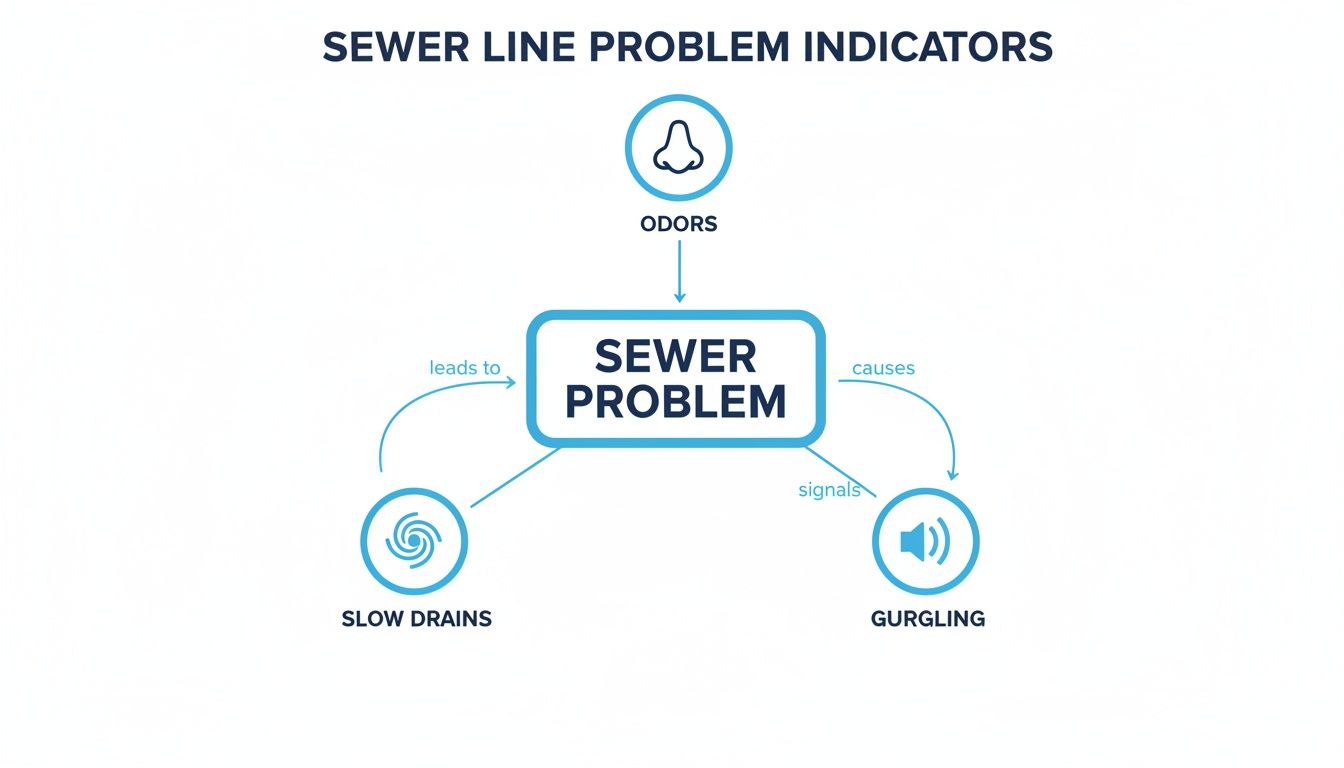
As the image shows, those nagging odors, slow drains, and gurgling noises are often interconnected symptoms all pointing back to a failure in the main sewer line.
That persistent foul odor—often described as a rotten egg smell from hydrogen sulfide gas—is one of the most undeniable signs. Here in Greater Los Angeles, older neighborhoods like Hollywood and Pasadena see this all the time. Their clay and cast-iron pipes, many of which are 50-75 years old, are finally giving in to decades of tree root intrusion and shifting soil. You can dig into some sewer line repair and replacement service market insights to see just how common this is.
To make it easier, here's a quick rundown of what to look for.
Quick Guide to Sewer Line Warning Signs
Symptom | What It Could Mean | Action Required |
|---|---|---|
Multiple Slow Drains | A developing blockage or belly in the main sewer line. | High Urgency: Call a plumber for a camera inspection. |
Sewer Odors | A crack or break in the sewer pipe is letting gas escape. | High Urgency: This is a health risk. Get a professional inspection immediately. |
Gurgling Toilets/Drains | Trapped air in the plumbing system, often due to a blockage. | Medium Urgency: Monitor closely and schedule an inspection if it persists. |
Lush Patches on Lawn | A leak in the sewer line is fertilizing the grass above it. | Medium Urgency: A sign of a definite leak that needs to be located and fixed. |
This table should help you quickly assess the situation, but when in doubt, it’s always best to get an expert opinion.
The Most Obvious Signs of a Broken Sewer Line
Some plumbing problems are subtle, but a broken sewer line? That’s one issue that usually makes its presence known loud and clear. While the first clues can be easy to miss, the most common signs are impossible to ignore once you know what you’re looking at.
These are the big, flashing warning signs that you have a serious problem with your main sewer line—not just a simple clog in a single sink. Catching them early can be the difference between a manageable repair and a full-blown catastrophe. For any homeowner in Los Angeles, recognizing these red flags is your first and best line of defense.
Persistent Foul Odors
One of the most undeniable signs of a sewer line break is a foul, persistent odor of sewage or rotten eggs. You might catch a whiff of it coming from your drains, wafting up into your home, or even when you’re out in your yard. This isn't the kind of smell that comes from a dirty sink trap; it's the unmistakable scent of raw sewer gas escaping from a crack in the main pipe.
That smell is more than just unpleasant—it’s a health risk. The gas, mostly hydrogen sulfide, can be harmful if it builds up. If the odor is constant and no amount of cleaning gets rid of it, that's a powerful signal that sewage is exposed somewhere it shouldn't be.
Frequent Backups in Multiple Drains
Is your toilet backing up every time you run the laundry? Does your shower drain gurgle and fill with murky water whenever you flush? These are classic signs of a main line blockage. When a single drain clogs, the problem is contained to that one fixture. But when several drains across your home start backing up at the same time, it tells you the main exit for all your wastewater is blocked.
Think of it as a backed-up freeway. If one off-ramp is closed, only that local street is affected. But if the entire freeway shuts down, traffic grinds to a halt everywhere. That’s exactly what happens when your main sewer line is compromised—every drain in your house is trying to use the same blocked-off exit.
Slow drains, gurgling, or backups happening in multiple fixtures are the calling cards of a broken sewer line, pointing to a major blockage or even a collapsed pipe. For homeowners in Los Angeles, this problem is often magnified by tree roots, which cause 60-70% of municipal sewer breaks, and the aging clay pipes common in homes built from the 1920s to the 1960s. Left unchecked, this can lead to sinkholes—like the one in Pasadena in 2019 that cost over $200,000 in public repairs. You can explore more data on the sewer line repair market to get a sense of how widespread these issues are.
Gurgling Noises from Toilets and Sinks
Your plumbing system should be relatively quiet. If you're hearing strange gurgling or bubbling sounds from your toilets and drains, you're likely hearing trapped air fighting to escape. When a sewer line is broken or blocked, wastewater struggles to get past the obstruction, forcing air back up through your pipes.
A good way to picture this is trying to drink through a straw with a piece of ice stuck in it. As you try to pull the liquid up, you’ll hear gurgling and bubbling as air tries to get around the blockage. Your plumbing system is doing the exact same thing.
These sounds are your plumbing’s early warning system. They might seem like a minor annoyance, but they often come right before a complete sewage backup. Don’t just turn up the TV to drown them out; they’re telling you that pressure is building. While these noises often point to a drain issue, it's also smart to know the difference between drain blockages and hidden water leaks. You can learn more about how professionals find the source of a problem in our guide on professional water leak detection services.
Unusually Green Patches of Grass
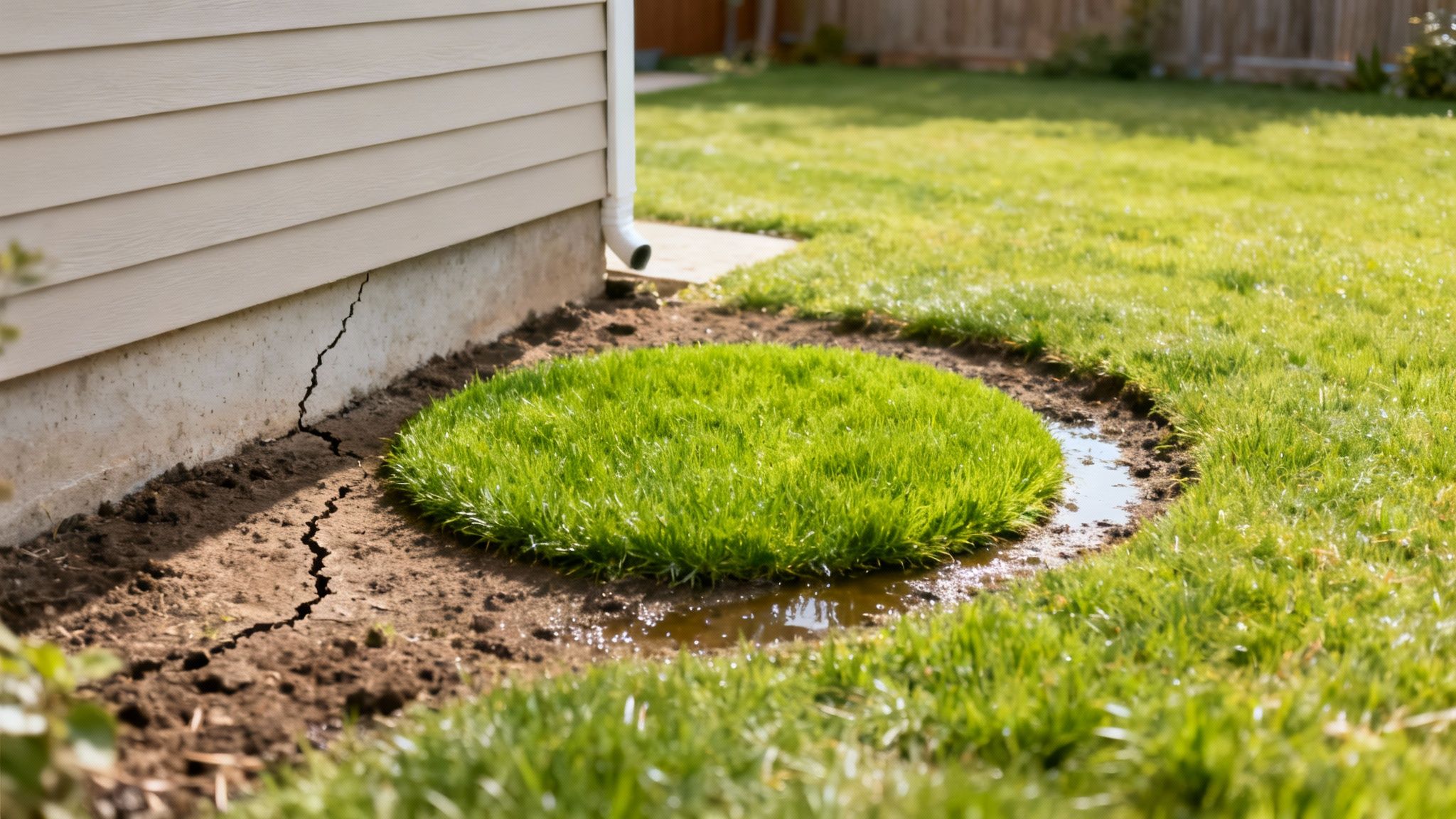
Have you noticed a patch of grass in your San Fernando Valley lawn that’s suddenly looking much greener and healthier than everything around it? It might look nice from your window, but it's often a dead giveaway that a sewer line is leaking right underneath.
Raw sewage is full of nutrients that act as a powerful fertilizer. When a pipe underground cracks or breaks, this "fertilizer" seeps into the soil, causing the grass directly above it to flourish. You may also notice the ground in that spot is soft, soggy, or even indented, which means the soil is completely saturated with wastewater. It's one of the clearest signs you can see outside your home that your sewer line is in trouble.
Uncovering the Subtle Clues of Sewer Damage
Not all sewer problems announce themselves with a dramatic backup. Some of the most serious issues start with quiet, subtle signs that are easy to dismiss. For homeowners in places like Santa Monica or Glendale, learning to spot these clues can be the difference between a simple repair and a full-blown catastrophe.
Paying attention to these whispers from your plumbing system can help you catch a developing sewer line break before it gets out of hand, saving you a world of headaches and expense.
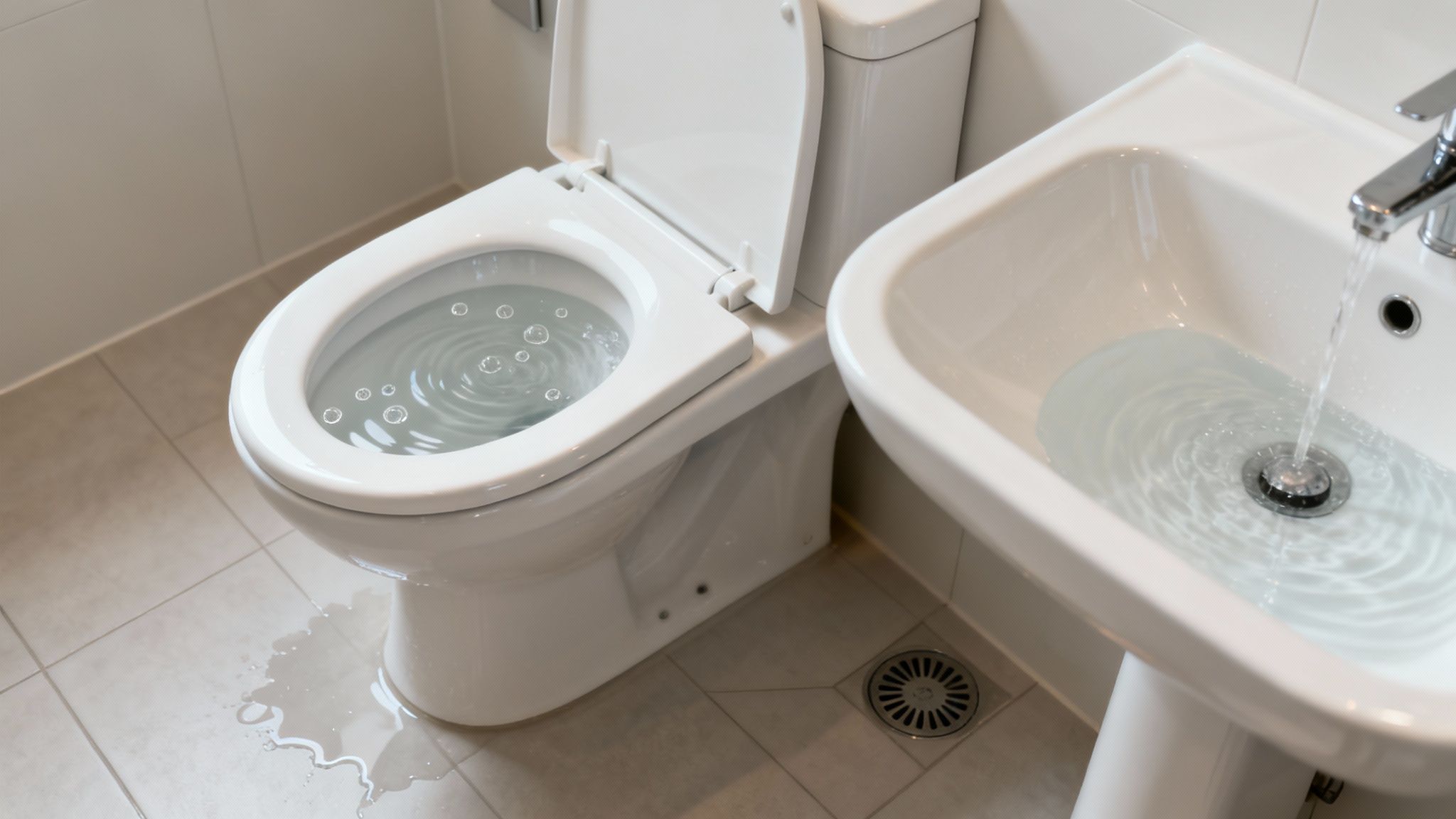
Unlike a sudden clog, these signs creep up on you. They might seem completely unrelated to your pipes at first, but more often than not, they’re the direct result of a hidden leak from a broken sewer line.
Foundation Cracks or Settlement
One of the most alarming—yet often overlooked—signs of a broken sewer line is damage to your home's foundation. When a sewer pipe leaks underground, it slowly turns the soil supporting your house into mud. This process, called soil subsidence, can cause your foundation to shift, settle, or even crack under the home's weight.
Think of the soil under your home as a solid platform. A slow, steady sewer leak is like hosing down that platform, washing away bits of it day after day. Eventually, that support gives way, leading to very real structural problems.
Keep an eye out for:
New cracks suddenly appearing in your walls, floors, or the foundation slab itself.
Doors and windows that start sticking or won't close properly anymore.
A visible sinking or settling of one part of your home.
These are not just cosmetic issues; they are serious red flags pointing to a long-term water leak that needs a professional’s attention right away.
Pest Infestations
If you’re suddenly fighting a losing battle against cockroaches, rodents, or sewer flies, your sewer line might be the culprit. These pests thrive in municipal sewer systems, and a crack in your private line is like rolling out the welcome mat for them to enter your home.
This is more than just a nuisance—it’s a major health hazard. These pests can carry all sorts of bacteria and pathogens from the sewer straight into your kitchen and living areas. If you're dealing with a sudden, unexplainable pest problem, it’s time to consider that your plumbing might be compromised.
Unexplained Mold Growth
Mold needs one thing to grow: moisture. So, if you find mold creeping up on walls or baseboards in areas that have no obvious water source, like a leaky sink or shower, you could be looking at a sign of a hidden pipe leak.
A broken sewer line can slowly release moisture into the ground, raising the humidity levels inside your walls and under your floors. This creates the perfect dark, damp environment where mold can flourish, often long before you ever see a puddle.
The presence of mold doesn't just signal a moisture problem; it's a health risk, particularly for family members with allergies or respiratory conditions. Finding the true source of that moisture is critical. To know for sure, a professional sewer camera inspection is the only way experts can definitively pinpoint these invisible leaks.
If you've noticed any of these subtle but serious signs around your Los Angeles home, don’t wait for the problem to get worse. Calling a licensed plumber can give you a clear diagnosis and help you protect your property from much bigger headaches down the road.
Why Sewer Lines Fail in Los Angeles
Seeing the signs of a broken sewer line is one thing, but understanding why it happened is the key to preventing it from happening again. Here in Los Angeles, our homes are up against a unique set of challenges that put serious stress on underground plumbing. From our beautiful, mature trees to the very ground we live on, several local factors are constantly working against your pipes.
Sewer lines simply don’t last forever, and the specific conditions in Southern California can definitely speed up their decline. Getting familiar with these regional culprits is the first step toward finding a real, long-term solution.
Aggressive Tree Root Intrusion
One of the most common calls we get, especially from homeowners in places like the San Fernando Valley and Pasadena, is for tree root intrusion. Those lovely ficus, pine, and jacaranda trees that give our neighborhoods character have incredibly powerful, water-seeking roots that can easily worm their way into older pipes.
These roots are naturally drawn to the constant source of moisture and nutrients flowing through your sewer line. They’ll find the smallest crack or a loose joint to get in, and once inside, they expand fast. Before you know it, they’ve created a dense net that catches everything going down the drain and eventually breaks the pipe apart from the inside out.
Aging Pipe Infrastructure
A lot of the homes in L.A.’s historic neighborhoods were built with cast iron or vitrified clay pipes. These materials were the standard back in the day, but they have a definite shelf life—usually around 50 to 75 years. After decades in the ground, they get brittle and become prime candidates for corrosion and cracking.
Think of an old clay pot. For years, it holds its shape perfectly, but with age, it becomes fragile. One small knock or a shift in pressure can cause it to shatter. Your aging sewer pipes are facing that same risk every day.
This aging infrastructure is a ticking time bomb under so many properties around here. The old pipes just can't handle the constant pressure from shifting soil and invasive roots the way modern materials can. For anyone with an older home, looking into a complete pipe system replacement isn't just an upgrade; it's essential for long-term peace of mind.
Soil Shifting and Seismic Activity
Living in Southern California means living with the reality of moving ground. Even the minor, unfelt seismic tremors we get all the time can cause the soil to shift, putting a huge amount of strain on rigid, unforgiving sewer lines. This constant movement can knock pipe joints out of alignment, create low spots (we call them "bellies"), or cause hairline cracks.
Of course, a big earthquake can cause immediate, catastrophic damage. But it’s really the thousands of smaller shifts over the years that do the slow, steady work of weakening the whole system. This leads to slow leaks that wash away the soil supporting your pipes and can even compromise your home’s foundation.
Chronic Blockages and Buildup
While outside forces are a major threat, what you put down your drains plays a massive role, too. Years of grease, so-called "flushable" wipes, and other gunk that doesn't break down can create blockages as hard as concrete.
These clogs put incredible pressure on the inside of the pipe walls. Over time, that constant internal stress can lead to cracks and full-on breaks, especially in older, more vulnerable pipes. This is exactly why proper drain maintenance isn't just about avoiding a backup—it's about protecting the integrity of your entire sewer system.
Your Next Steps for a Suspected Sewer Break
If the warning signs of a broken sewer line are hitting a little too close to home, what you do next is critical. Moving methodically can save you from a world of headache and get you on the quickest path to a real solution.
The very first step is figuring out if the problem is a single clogged drain or the main line itself. An easy way to check is to run water in a sink or shower that’s farthest from where your sewer line leaves the house (usually at the front of your property). Let it run for a minute, and keep an eye on your toilets. Do they start gurgling? Does the water level rise? If you see any reaction, that’s a pretty clear signal you’re dealing with a main line issue.
Why DIY Sewer Repair Is a Bad Idea
When you’re staring down a potential sewer break, the urge to find a quick, cheap fix is completely understandable. But trying to repair your main sewer line yourself is more than just a bad idea—it’s a dangerous one. It’s incredibly easy to make the damage worse, trigger a catastrophic sewage backup inside your home, or expose yourself to some truly nasty bacteria.
And please, step away from the chemical drain cleaners. Pouring those harsh liquids down your drains almost never fixes a main line blockage. What it can do is eat away at your pipes, especially if they’re older. That simple crack you had could easily turn into a full-blown pipe collapse. This is one of those jobs where you absolutely need professional tools and experience.
Calling in a Professional Plumber
The only way to know for sure what's going on inside your pipes is to call a licensed plumber. When you bring in a pro, you’re not just paying for a repair; you’re investing in a definitive diagnosis that saves you from expensive guesswork down the road. At ZH Plumbing, our team is geared up to handle these exact kinds of emergencies all across Los Angeles County.
When you call, be ready to describe everything you’ve noticed—the weird gurgling, the slow drains, any foul smells. The more details you can provide, the better prepared our plumber will be when they arrive. You can check out the full range of our emergency plumbing and repair services to see all the ways we can help.
For a job like this, the single most important tool in our arsenal is the sewer camera. This isn't just a fancy gadget; it’s the only way to get a 100% accurate diagnosis without tearing up your yard. It gives us a live video feed from inside the pipe, leaving no room for speculation.
Before calling in the experts, there are a few things you can check on your own. However, a professional diagnosis goes much deeper to find the root cause of the issue.
Homeowner Checklist vs. Professional Diagnostics
Action | DIY Homeowner Check | Professional Plumber Service |
|---|---|---|
Initial Test | Run water in a distant fixture and watch toilets for gurgling or rising water. | Use advanced listening devices and pressure tests to confirm a main line issue. |
Visual Inspection | Look for obvious signs like soggy spots in the yard, foundation cracks, or pest problems. | Conduct a full-property inspection, including cleanout access points and pipe materials. |
Problem Diagnosis | Guess based on symptoms (e.g., "it might be roots"). | Perform a sewer camera inspection to get a live video feed from inside the pipes. |
Location Pinpointing | Know the general area of the problem based on outdoor signs. | Use camera sondes and line locators to pinpoint the exact depth and location of the break. |
Solution | Limited to temporary fixes like plunging, which often won't work on a main line. | Provide a detailed repair plan with options like hydro-jetting or trenchless pipe lining. |
The DIY checks are great for confirming you have a problem, but only a professional can tell you exactly what and where that problem is, ensuring the right fix is applied the first time.
The Sewer Camera Inspection Process
A sewer camera inspection is the gold standard for getting to the bottom of things. Our technician will find an accessible cleanout port and feed a flexible cable with a small, high-resolution waterproof camera on the end directly into your sewer line.
As that camera snakes its way through the pipe, it shows us everything on a monitor in real-time:
The exact location of any cracks, invasive tree roots, or collapsed sections.
The type of blockage, whether it’s a buildup of grease and sludge or foreign objects.
The overall condition of your pipes, flagging any corrosion or weak spots that could cause trouble later.
This process takes all the guesswork out of the equation. It gives us a clear roadmap for the repair, allowing for a targeted and efficient solution that saves you time, money, and your landscaping. When you're figuring out your next steps for a suspected sewer break, knowing how professionals approach the problem, from camera work to choosing the right sewer jetter nozzle for clearing the line, makes all the difference.
Exploring Modern Trenchless Sewer Repair
Just the thought of sewer repair probably brings up images of a disaster zone: your beautiful lawn completely dug up, the driveway destroyed, and days of noisy, disruptive construction. For most Los Angeles homeowners, the fear of this massive property damage is one of the biggest sources of stress.
Thankfully, plumbing has come a long way from the old dig-and-replace methods. Today, we have trenchless sewer repair, a powerful and minimally invasive alternative. This technology lets us fix your underground pipes without having to excavate your entire yard, saving your landscaping, patio, and sanity. Instead of a long, ugly trench, these methods usually just need one or two small access points to fix your whole sewer line.
Pipe Lining: The No-Dig Solution
One of the most popular trenchless methods is Cured-in-Place Pipe (CIPP), which you’ll often hear called pipe lining. It’s an ingenious process that creates a brand-new, seamless pipe right inside your old, broken one. Think of it like performing surgery without making a big incision.
Here’s a quick rundown of how it works:
Cleaning the Pipe: First, we blast the inside of the existing line with high-pressure water jets. This clears out all the roots, grease, and debris that have built up over the years.
Inserting the Liner: Next, a flexible felt liner soaked in a special resin is inserted into the old pipe through an access point.
Curing the New Pipe: The liner is then inflated, pushing it tightly against the walls of the original pipe. We use hot water or steam to cure the resin, which hardens it into a rock-solid, durable new pipe that can last for 50 years or more.
This method is perfect for fixing cracks, sealing off root intrusions for good, and bridging gaps in old, deteriorating pipes.
Pipe Bursting: A Powerful Replacement Method
What if your pipe is too far gone for lining? For pipes that are severely collapsed or have major structural damage, pipe bursting is another incredibly effective trenchless technique. Just like the name implies, this method breaks apart the old, failing pipe from the inside while pulling a brand-new one into its place at the same time.
Imagine you're pulling a new, strong shoelace through an old, frayed one. The new lace follows the exact same path, pushing the old material out of the way as it goes. Pipe bursting works on the same principle, using a hydraulic machine to pull a new, stronger pipe through the old one’s footprint.
This powerful approach gives you a complete pipe replacement without the headache of extensive digging. Exploring these kinds of less invasive and safer repair options is becoming the standard, especially when sewer lines are located near other important utilities. If you're interested in the details, professionals use many non-destructive digging techniques to ensure everything is done with safety and precision.
Both pipe lining and bursting save you from massive property disruption, get the job done faster, and deliver incredibly durable results compared to traditional excavation. The first step is always a thorough camera inspection to see exactly what’s going on down there and determine which approach is right for your property.
You can learn more by exploring our detailed guide on trenchless sewer line repair options in Los Angeles.
Your Top Questions About Los Angeles Sewer Lines, Answered
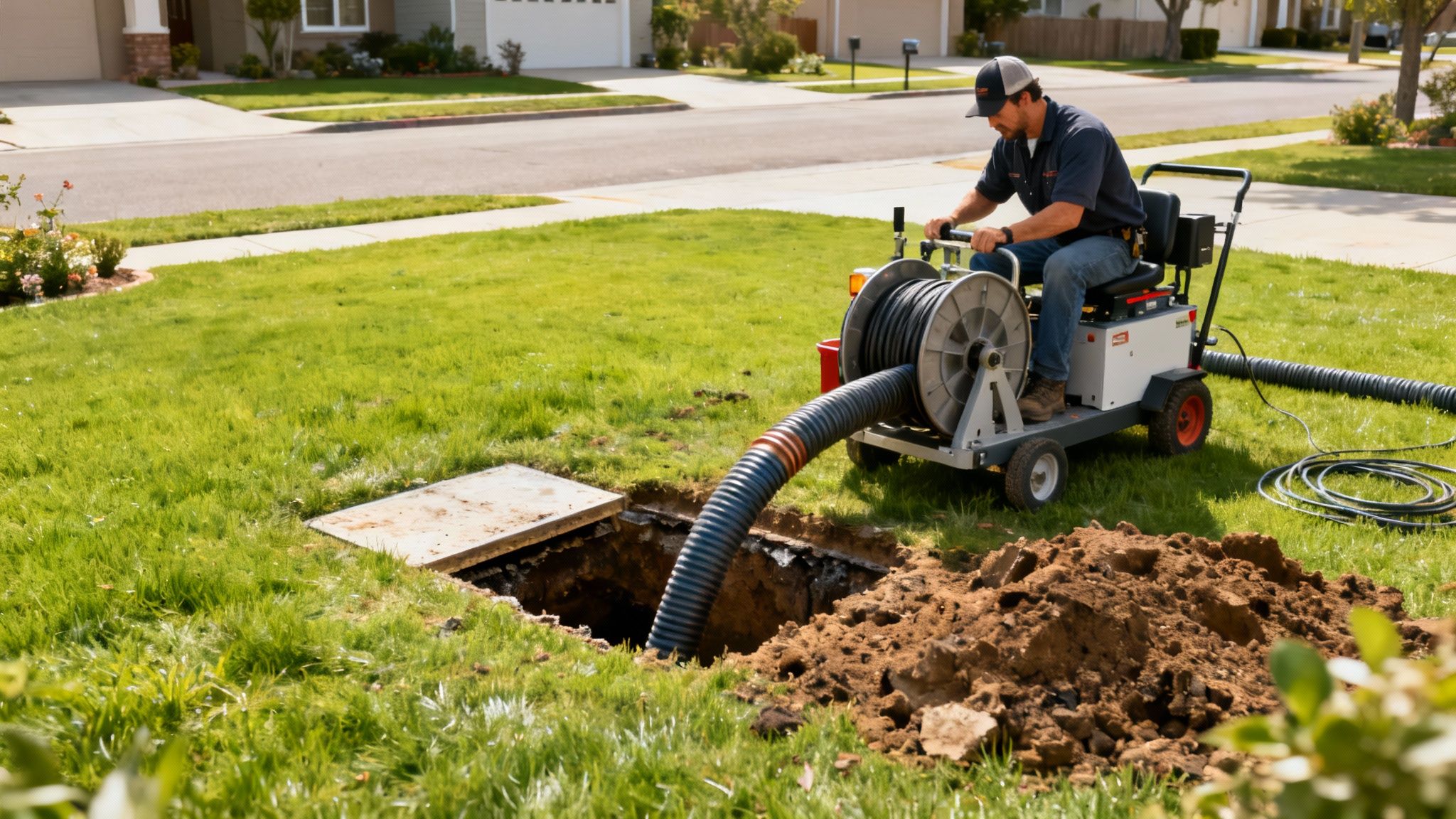
When you’re facing a potential sewer line issue, it’s natural to have a lot of questions. As a Los Angeles homeowner, getting clear, straightforward answers is crucial for making informed decisions and reducing stress.
We've compiled answers to the most common questions we hear from homeowners across L.A. County to give you the practical information you need to understand the situation.
How Much Does Sewer Line Repair Cost in Los Angeles?
The cost to fix a sewer line in Los Angeles can vary significantly based on the specifics of the job. A simple spot repair might run about $3,000, while a full replacement using modern trenchless methods could range from $7,000 to over $25,000.
Several factors influence the final price:
Extent of Damage: A small crack is much less expensive to fix than a completely collapsed pipe.
Repair Method: Trenchless solutions can be more cost-effective overall because they eliminate the expense of extensive excavation and landscape restoration.
Pipe Location: Accessing a line buried under a concrete driveway, mature tree, or patio will increase the complexity and cost of the repair.
A professional camera inspection is the only way to get an accurate quote based on the true condition of your pipes.
Does Homeowners Insurance Cover a Broken Sewer Line?
Coverage for a broken sewer line depends heavily on your specific insurance policy and the cause of the damage. Most standard policies do not cover issues resulting from gradual wear and tear, such as aging pipes or slow-growing tree roots.
However, if the break was caused by a sudden, accidental event, you might be covered. The best course of action is to review your policy and speak directly with your insurance agent. We can provide detailed camera footage and a comprehensive report to support your claim.
How Can I Prevent Future Sewer Line Problems?
Proactive maintenance is key to preventing major sewer line issues. The most important step is to be mindful of what you put down your drains—only human waste and toilet paper should be flushed. Additionally, avoid planting trees with aggressive root systems near your main sewer line.
For older homes, particularly in neighborhoods like Pasadena or Glendale, scheduling a professional sewer camera inspection every one to two years is a wise investment. This allows a plumber to identify and address minor issues like small cracks or early root intrusion before they escalate into costly emergencies.
How Long Does a Typical Sewer Line Repair Take?
The repair timeline depends entirely on the method used. Traditional excavation is a multi-day process that involves digging a long trench across your property.
In contrast, modern trenchless methods like pipe lining are much faster. Most trenchless repairs can be completed in a single day, with minimal disruption to your home and daily life. Our priority is to restore your plumbing system quickly and effectively without compromising on quality.
If you're noticing any of the signs of a broken sewer line, don't wait for the problem to escalate. The expert team at ZH Plumbing provides fast, accurate diagnostics and lasting repairs throughout the Los Angeles area. Schedule your professional camera inspection today by visiting us at https://zhplumbing.com.
Comments