

.png)

Landlord Plumbing Responsibilities California: A Practical Guide
Facing a sudden plumbing disaster at your Los Angeles rental property? A tenant calling about a burst pipe or a backed-up sewer line is one of the most stressful parts of being a landlord. The confusion over who is responsible, who pays, and how quickly it needs to be fixed can be overwhelming. But understanding your legal duties under California law isn't just good practice—it's essential for protecting your investment and maintaining a positive tenant relationship.
In California, from the San Fernando Valley to the Westside, every lease agreement includes an unspoken guarantee: the rental unit is safe and livable. This "implied warranty of habitability" puts the responsibility for providing working plumbing squarely on your shoulders. Getting this right isn't optional; it's the law.
Understanding Your Core Plumbing Duties in California
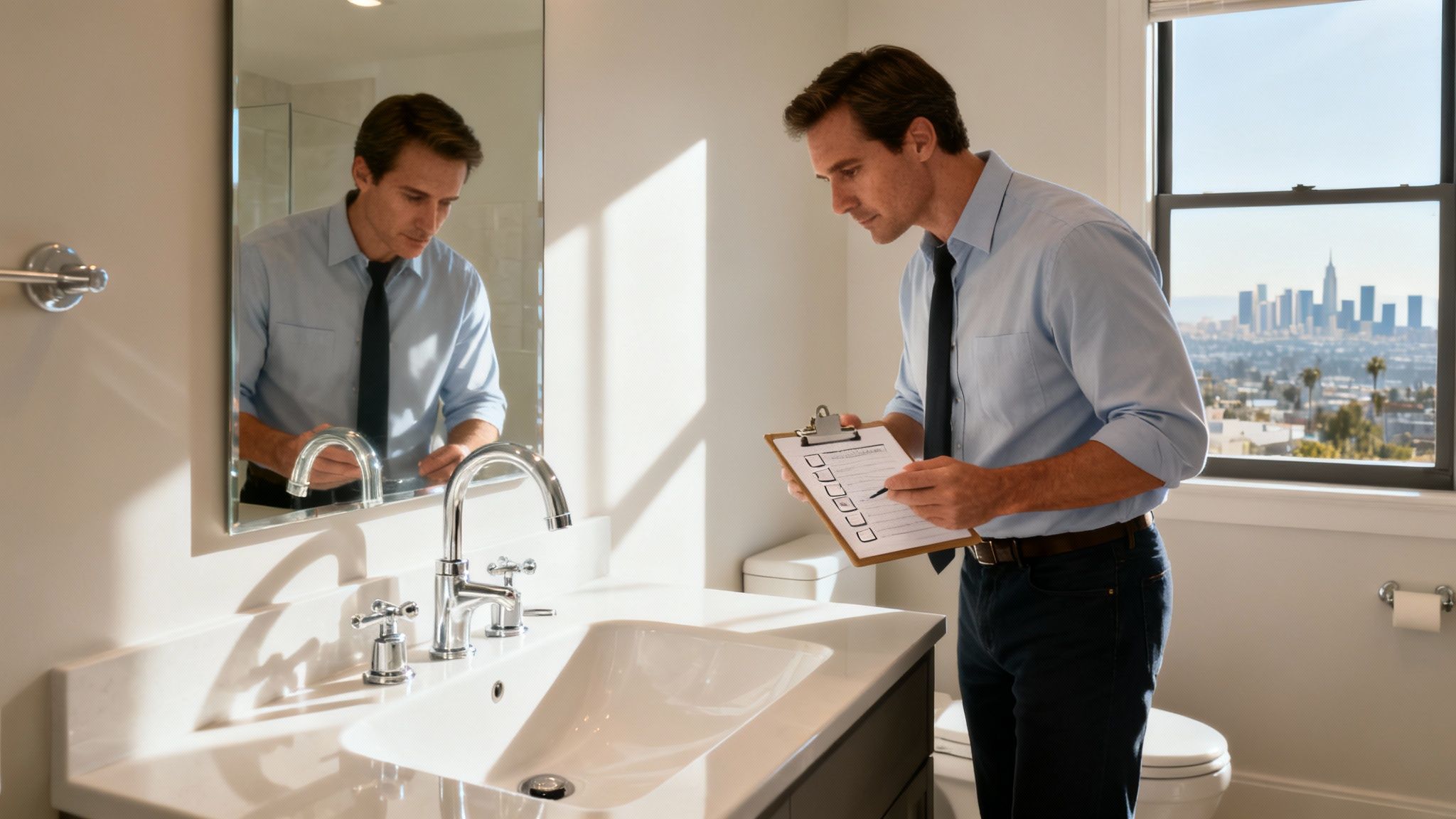
Feeling a bit overwhelmed by your plumbing duties as a Los Angeles landlord? You're not the only one. The law can feel like a maze, but your main job is actually pretty simple: provide a safe, livable home for your tenants. This responsibility is legally known as the "implied warranty of habitability."
Think of this warranty as an unspoken promise that's automatically part of every California lease. It guarantees that the rental unit meets basic health and safety standards. And when it comes to plumbing, this promise gets very specific.
What Habitability Means for Your Plumbing
Let’s cut through the legal jargon. At its core, "habitability" is a simple checklist for your property's plumbing. To meet the standard, your rental absolutely must have:
A Reliable Water Supply: This isn't just about water flowing from the tap; it means both hot and cold running water. A broken water heater in your Beverly Hills duplex isn't just an inconvenience—it's a direct breach of this warranty.
Functional Fixtures: Every essential fixture, like the toilet, sink, and bathtub or shower, has to be in good working order. No exceptions.
Proper Drainage: All sinks, showers, and toilets must connect to an approved sewage disposal system. Waste needs to be carried away from the property safely and effectively.
These aren't just good ideas; they're spelled out in state law, specifically in California Civil Code § 1941.1. This code lists the "affirmative standard characteristics" a rental unit must have, and plumbing is right at the top of that list.
The bottom line is this: the responsibility for the entire plumbing system—from the pipes hidden in the walls to the faucets your tenants use every day—falls squarely on your shoulders as the landlord.
Grasping this fundamental principle will help you manage your properties—whether in Pasadena, Santa Monica, or Glendale—with confidence. To stay ahead of any issues, it’s always a smart move to familiarize yourself with the full scope of California rental regulations. This knowledge helps you tackle problems before they start, build a great relationship with your tenants, and protect your Los Angeles-area investment. Let's dive into what this looks like in the real world.
The Implied Warranty of Habitability Explained
In California, every lease agreement—whether it’s a detailed document for a downtown L.A. loft or a simple handshake deal for a suburban home—comes with an unspoken promise. This is the implied warranty of habitability, and it’s the bedrock of the landlord-tenant relationship. Think of it as your fundamental guarantee to tenants that the rental unit is safe, clean, and livable from the day they get the keys until the day they move out.
This isn't just a friendly suggestion; it's a legal requirement baked into California law. It sets the absolute minimum standard for health and safety, and when it comes to plumbing, its rules are crystal clear. Falling short of this standard can land a Los Angeles property owner in some serious legal and financial trouble.
Turning Legalese into a Practical Checklist
So, what does "habitable" actually mean when you're staring at a leaky pipe in your Burbank property? It's less about minor drips and more about the fundamental systems that make a home functional. The law doesn't leave much room for interpretation here.
Under California Civil Code § 1941.1, landlords are squarely responsible for providing and maintaining working plumbing. This isn’t optional. It means tenants have a right to hot and cold running water, functional fixtures like toilets and sinks, and a plumbing system that’s properly hooked up to a sewage disposal system.
To make this easier, here's a quick reference table breaking down exactly what the law requires.
California Habitability Requirements for Plumbing
Required System | Description of 'Operable Condition' | Common Landlord-Responsible Issues |
|---|---|---|
Hot & Cold Water Supply | A reliable and consistent supply of both hot and cold running water. | Broken water heaters, low or no water pressure, pipes that deliver only scalding or cold water. |
Plumbing Fixtures | Toilets, sinks, bathtubs, and showers must be in good working order. | Clogged or non-flushing toilets, cracked sinks or tubs, broken faucets, significant fixture leaks. |
Sewage Disposal System | All plumbing must be connected to an approved and functioning sewage system. | Sewer line backups, persistent drain clogs causing overflows, foul odors from drains indicating a blockage. |
Ultimately, these requirements ensure that your tenants have access to the basic necessities for sanitation and health. Keeping these systems in check is non-negotiable.
When a Drip Becomes a Deal-Breaker
Not every plumbing problem is an emergency that breaches the habitability warranty. A slow-draining sink in a Santa Monica apartment might just be an annoyance. But a complete sewer line backup flooding a bathroom in Pasadena? That's a major health hazard and a direct violation of the warranty. Knowing the difference is crucial.
Here's a real-world scenario we see all the time across Los Angeles County: A tenant in a Silver Lake apartment reports a small, steady leak under their kitchen sink. It might seem minor, but if ignored, that drip can quickly lead to wood rot, structural damage, and dangerous mold growth—turning a small repair into a massive habitability issue. This is why addressing even small leaks promptly is one of the most important landlord plumbing responsibilities in California.
Some issues are so serious they almost always violate the implied warranty of habitability on the spot:
A total lack of any running water.
No hot water for more than a day or two.
A major, uncontrolled leak that's causing significant water damage.
Any sewage backing up into the home.
The only toilet in the unit is broken and won't flush.
Tackling these problems isn't just about good customer service; it's your legal duty. Small plumbing issues have a nasty habit of escalating, and spotting them early is key. If you think there might be a hidden problem, knowing how to detect water leaks yourself can save you a world of headaches, expensive repairs, and potential legal battles down the road.
Figuring Out Who Pays for Plumbing Repairs
It’s the age-old question and one of the biggest points of friction between landlords and tenants in Los Angeles: a pipe bursts or a drain clogs, and suddenly everyone is asking, "Who's paying for this?" In California, the answer isn't about guesswork; it boils down to a clear legal line drawn between normal aging and a tenant's actions.
As the property owner, you're on the hook for fixing anything that breaks down from normal wear and tear. Think of it as the plumbing system simply getting older. Over years of use in an L.A. home, pipes will corrode, faucet washers give out, and water heater elements eventually fail. These are just the unavoidable costs of doing business as a landlord.
However, the tables turn when the problem is a direct result of something the tenant did—or didn't do. This is legally defined as tenant-caused damage, and in these cases, you can absolutely require the tenant to cover the repair costs.
Wear and Tear vs. Tenant Damage
Knowing how to tell the difference is key to managing your properties fairly and staying on the right side of the law. Your lease should spell this out clearly, but California's statewide laws are the final word.
Let's look at some real-world Los Angeles scenarios to make it crystal clear:
Landlord Pays: You get a call about a slow drip under the kitchen sink in your Culver City property. A plumber finds the pipe is corroded after a decade of use. That’s classic wear and tear.
Tenant Pays: The kitchen sink in a Hollywood apartment is completely backed up. The plumber snakes the drain and pulls out a massive glob of coffee grounds and greasy food waste. That's a textbook case of misuse.
Landlord Pays: The main sewer line for your Glendale apartment building is backing up because tree roots from the yard have grown into it. This is an infrastructure issue and falls squarely on you.
Tenant Pays: The only toilet in the unit is clogged solid with baby wipes and paper towels. Since those items aren't meant to be flushed, the fault lies with the tenant.
It’s also crucial to understand when a small problem becomes a major livability issue. This decision tree is a great way to visualize when a plumbing headache crosses the line into a serious habitability violation.
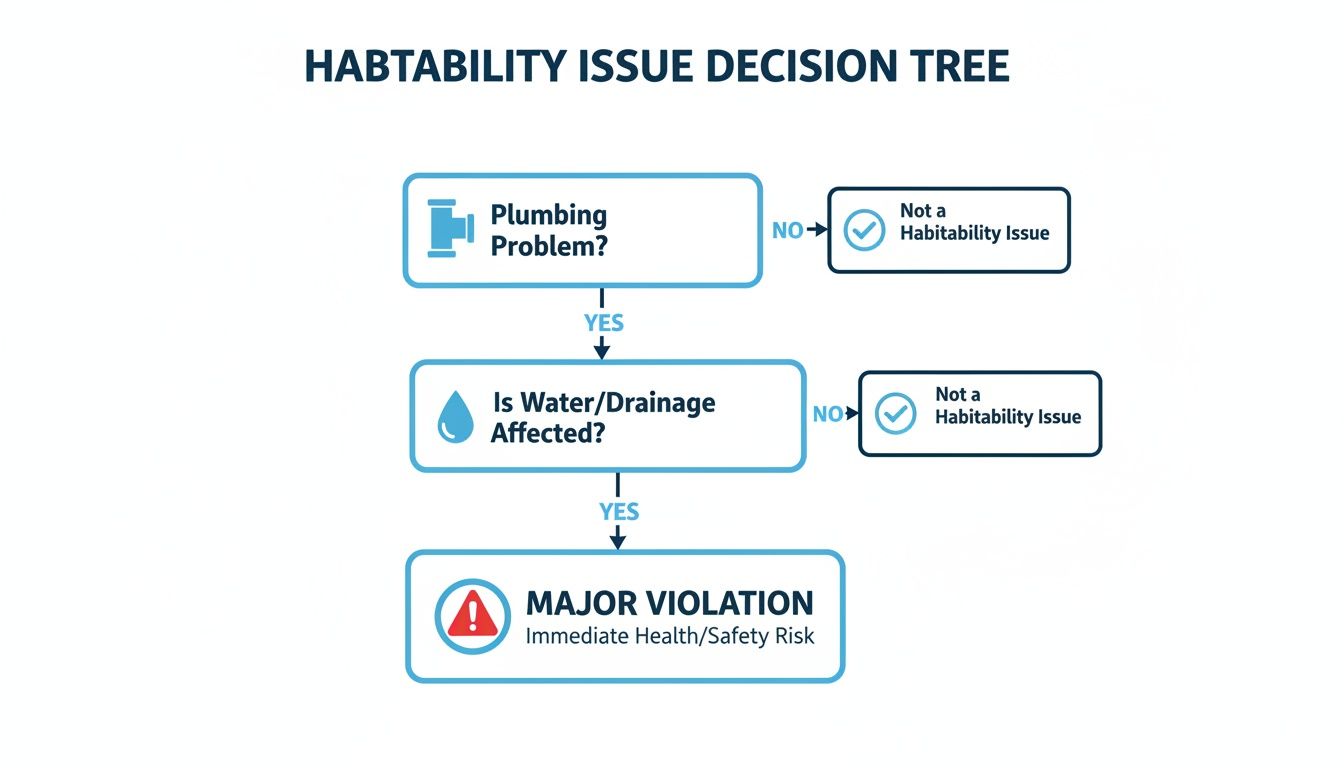
As you can see, any problem that messes with the water supply or drainage is a big deal. It demands your immediate attention to make sure you're upholding your end of the habitability warranty.
How to Document Damage and Bill Tenants
If you're confident a tenant caused the damage, you can't just slap an invoice on their door and call it a day. You need to follow a professional, legally-sound process to avoid turning a repair issue into a bigger dispute.
Here’s how to handle it:
Investigate Immediately: The moment a tenant reports an issue, check it out. If you suspect it's their fault, bring in a licensed Los Angeles plumber to get an official diagnosis.
Get It in Writing: Ask the plumber for a detailed invoice or a formal report that clearly explains the cause of the problem. A simple note like, "Drain clogged due to foreign objects" can be your strongest piece of evidence.
Communicate Formally: Send your tenant a written notice. Make sure to include copies of the plumber’s report and the final bill. In your letter, explain exactly why they are responsible, pointing to the specific clause in their lease agreement.
Use the Security Deposit (If Necessary): If the tenant digs in their heels and refuses to pay, you can legally deduct the cost from their security deposit when they move out. Just be sure to provide them with an itemized statement and all the receipts to back it up.
Clear communication and rock-solid documentation are your best friends in these situations. If you're ever unsure about what's causing a problem or how to proceed, your smartest move is to consult a plumbing professional for an expert diagnosis. A neutral, third-party assessment can stop a simple clogged drain from spiraling into a nasty legal battle.
When to Act: Emergency vs. Non-Emergency Repairs
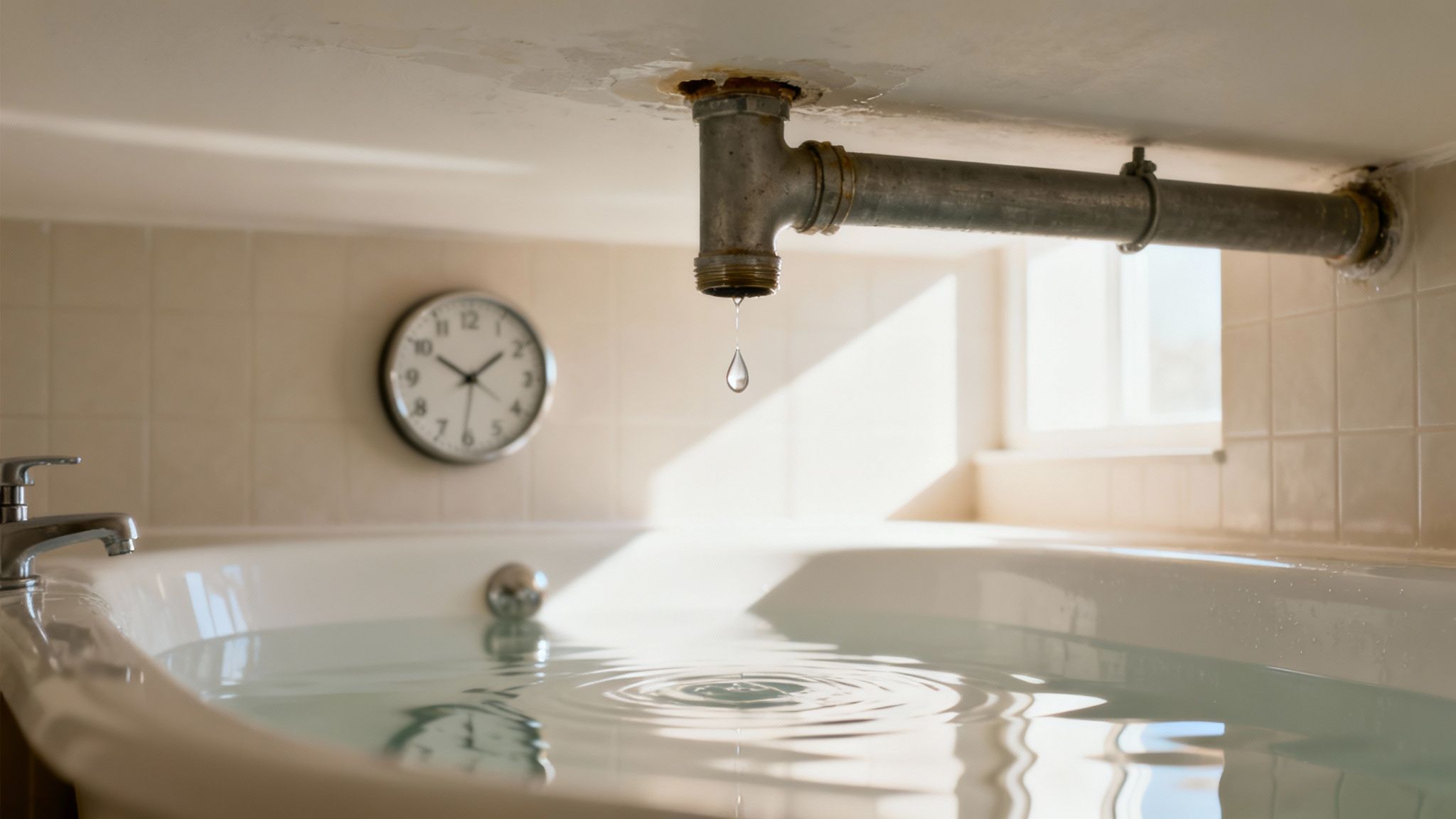
Let's be honest: a slow-dripping faucet in an L.A. apartment is annoying, but a geyser erupting from under the kitchen sink is a full-blown crisis. As a Los Angeles landlord, knowing the difference isn't just good management—it's a legal requirement.
How quickly you jump on a plumbing issue determines whether you're just a great landlord or one who's also complying with California law. Misjudging the severity can lead to massive property damage, unhappy tenants, and even legal trouble. The key is to know when to drop everything and when you have a bit of breathing room.
What Counts as a Plumbing Emergency?
In the eyes of the law, a true plumbing emergency is anything that puts a tenant's health and safety at immediate risk or threatens the structural integrity of your building. These are the "all hands on deck" situations that require a swift, decisive response. Your first move should always be to acknowledge the report and get a professional on the way, stat.
Here’s what typically qualifies as an emergency in Los Angeles County:
Major Leaks or Flooding: Think burst pipes, a failed water heater gushing water, or any other out-of-control water flow.
No Water at All: If the whole unit is dry and it’s not a city-wide shutdown, you have a critical failure on your hands.
Sewer Backup: This is a big one. Raw sewage coming up through drains is a serious health hazard that needs immediate attention.
The Only Toilet Is Out of Commission: If there's just one toilet in the unit and it's completely unusable, the property is considered uninhabitable.
No Hot Water: While not as immediately catastrophic as a flood, a total lack of hot water is a major habitability issue that needs a fast fix, usually within 24 hours.
For these critical events, there's no time to waste. You need a go-to plumber you can trust. It's smart to know ahead of time which local professionals offer 24/7 emergency services so you're not scrambling in a panic.
Handling Non-Emergency Repair Timelines
Thankfully, most of the calls you get will be for less dramatic issues. These are the non-emergency repairs—things that need fixing but aren't an immediate threat. For these, California law gives you a "reasonable" amount of time, which is legally defined as 30 days.
That 30-day window isn't a friendly suggestion; it's the law. The clock starts ticking the moment your tenant gives you written notice. If you don't act within that timeframe, your tenant may have the right to use remedies like "repair and deduct."
Common non-emergency repairs include:
A slow drip from the pipes under a sink.
A toilet that won't stop running after a flush.
A slow-draining tub or kitchen sink.
Minor, contained leaks around the base of a faucet.
Even though you have more time, don't let these issues linger. Good communication is your best friend here. Acknowledge the tenant’s request right away, let them know your plan, and give them a rough timeline. A little transparency goes a long way in keeping minor plumbing problems from turning into major tenant headaches.
What Happens When Repairs Are Delayed
Ignoring a tenant's request for a critical plumbing repair in your Los Angeles property is a bigger gamble than you might think. In California, it’s not just poor form—it can trigger serious legal and financial blowback. Once you fail to act in a "reasonable" amount of time, the law actually empowers your tenants with several remedies to force the issue.
Let's be clear: this isn't about scare tactics. It's about smart property management. Knowing what your tenants are legally allowed to do is the best motivation to handle repairs quickly. It protects your investment, keeps you out of legal hot water, and maintains a professional relationship with the people living in your property.
The Tenant's Right to Repair and Deduct
One of the most common tools a tenant has is the "repair and deduct" remedy, spelled out in California Civil Code § 1942. Here’s how it works: if you've been properly notified in writing about a habitability issue (like no hot water or a major leak) and don't fix it within a reasonable time, usually 30 days, your tenant can step in.
They can call a plumber themselves, get the problem fixed, and then simply subtract the cost from their next rent check. But there are rules they have to follow:
Cost Limitation: The repair bill can’t be more than one full month's rent.
Frequency Cap: They can only use this option twice in any 12-month period.
Proper Notice: This all hinges on them giving you proper written notice first, giving you a fair shot at fixing it.
When a Tenant Can Legally Withhold Rent
Things get much more serious when a tenant decides to withhold rent. This isn't for a leaky faucet; it's reserved for severe problems that make the unit unsafe or truly unlivable. Think of a persistent sewer backup in a Long Beach rental that just isn't getting fixed. In that scenario, a tenant might be legally justified in stopping all rent payments until you resolve it.
This is a high-stakes move for a tenant. To legally withhold rent, the plumbing disaster must be bad enough to fundamentally breach the implied warranty of habitability. A judge would have to agree the problem was severe enough to warrant non-payment, which is why tenants are often told to get legal advice before going down this road.
For you as a landlord, a tenant withholding rent is a massive red flag. It means a critical issue has been ignored for too long and the situation is on the fast track to a legal dispute.
Breaking the Lease and Moving Out
In the most extreme cases of neglect, a tenant can simply pack up and leave. This is called "constructive eviction," and it happens when a landlord’s failure to maintain the property makes it uninhabitable. Essentially, the law says you've "evicted" them by letting the home fall into an unlivable state.
Imagine a major sewer line break that goes unfixed, creating ongoing health hazards from raw sewage. A tenant would have every right to declare the lease void and move out without any penalty. These are the nightmare scenarios that underscore why immediate action is so crucial. If you're worried about a problem underground, understanding the warning signs of a broken sewer line in your Los Angeles home can help you prevent a catastrophe.
Ultimately, the best way to sidestep these costly and stressful outcomes is simple: respond to repair requests promptly and document everything you do.
A Proactive Maintenance Checklist for Landlords
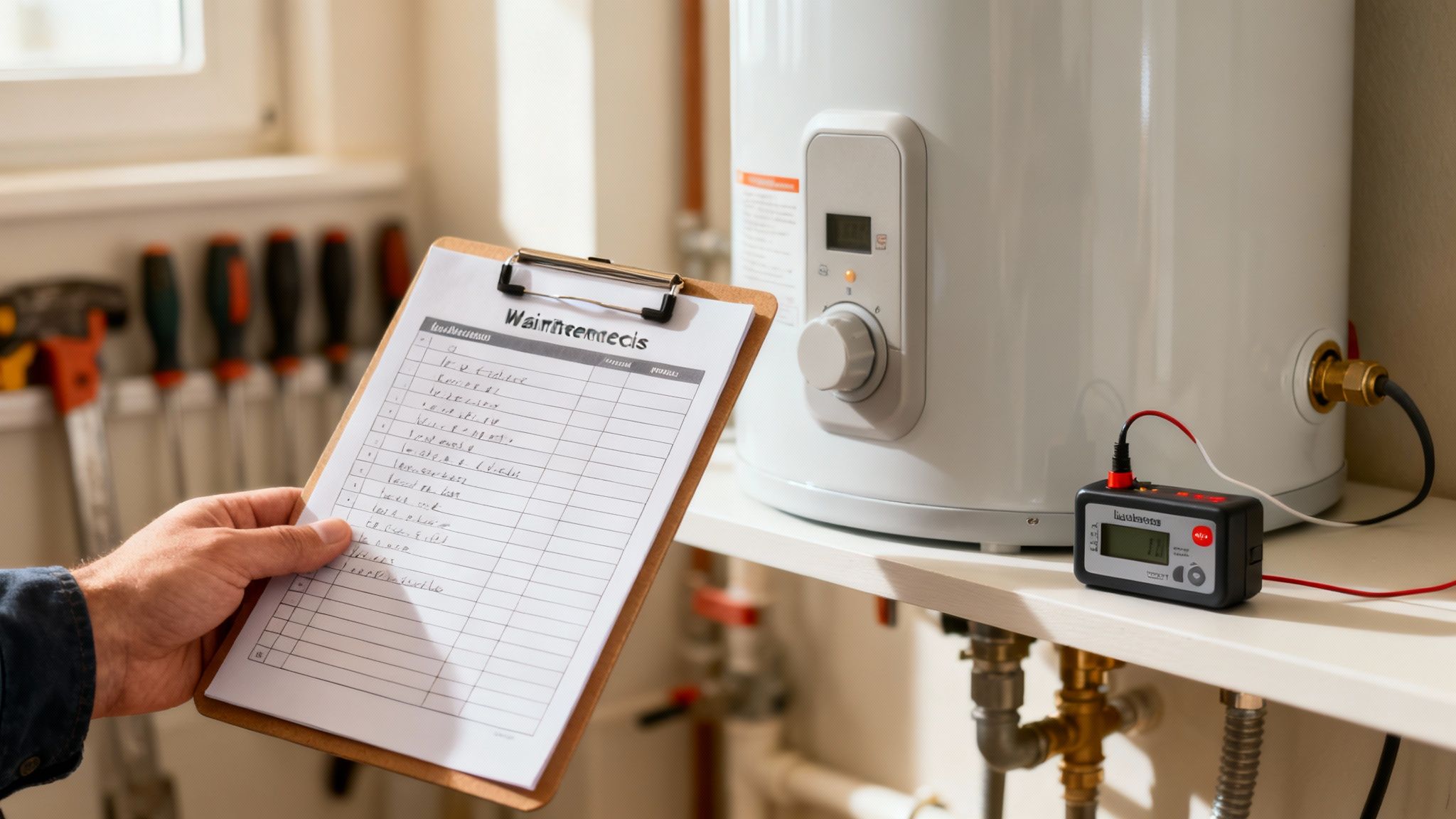
Let’s be honest: the most expensive plumbing repair is always the one you didn’t see coming. Shifting from a reactive, "fix-it-when-it-breaks" mindset to a proactive maintenance schedule is one of the smartest things a Los Angeles landlord can do. It doesn't just save you money and headaches; it protects the long-term value of your property.
Think of it this way: proactive maintenance is about upholding your end of the landlord plumbing responsibilities in California before a problem even has a chance to start. A well-maintained property is a habitable property, and that’s your core legal duty.
Your Seasonal Plumbing Checklist
The best time to perform these checks is between tenancies or on a set annual schedule. Staying consistent means you’ll catch the small stuff—like a bit of corrosion under a sink or a slow-dripping faucet—before it turns into a frantic weekend emergency call from your tenant.
Perform Annually or Between Tenants:
Water Heater Flush: Los Angeles has notoriously hard water. That means sediment builds up in water heaters, killing their efficiency and shortening their lifespan. Flushing the tank once a year clears out all that gunk.
Inspect All Fixtures: Do a walkthrough and check every single faucet, showerhead, and toilet. Look for drips, listen for leaks, and feel for loose fittings. Don't forget to check for telltale signs of water damage, like discolored spots or soft wood in cabinets and on floors.
Test Shut-Off Valves: Gently turn the shut-off valves under every sink and behind each toilet. You need to know they aren't seized up. A valve that won’t turn is completely useless when you have water spraying everywhere.
Check Water Pressure: If the water pressure is too high, it puts constant strain on your pipes and fixtures, leading to blowouts and failures. A simple pressure gauge can tell you if you’re in the safe range (typically 40-60 PSI).
High-Impact Preventative Measures
Beyond the basic annual checks, a few strategic moves can dramatically lower your risk of a full-blown plumbing disaster, especially in older L.A. properties. These might require a bigger initial investment, but the return in avoided damages is massive.
A sewer camera inspection on a Los Angeles property built before 1980 isn't an expense; it's an investment. Identifying root intrusion or a cracked clay pipe before it causes a major backup can save you tens of thousands of dollars in repairs and tenant relocation costs.
Consider these proactive upgrades:
Sewer Line Camera Inspection: If you own property in places like Pasadena or Glendale with mature trees, you know tree roots and old pipes are a constant battle. A camera inspection lets you see exactly what’s happening in your sewer line, spotting cracks or blockages before you have a sewage backup on your hands.
Install Leak Detection Sensors: These small, affordable devices are lifesavers. Place them near water heaters, washing machines, and under sinks. The second they detect moisture, they’ll sound an alarm or send an alert to your phone, turning a potential flood into a minor cleanup.
Tenant Education: You’d be surprised how much a simple one-page guide for new tenants can accomplish. Politely explain what never to put down the drain—grease, coffee grounds, and those so-called "flushable" wipes—to prevent the most common and frustrating clogs.
Proactive care is really the cornerstone of smart, profitable property management. To get a better sense of why this approach works, you can learn more about the importance of regular plumbing maintenance for residential homeowners. By building a simple maintenance routine, you’re not just fixing pipes—you’re building a reputation as a responsible landlord who cares.
Common Questions About California Plumbing Responsibilities
When you're managing a property day-in and day-out here in Los Angeles, you start to see the same questions pop up over and over. Getting clear on the specifics of landlord plumbing responsibilities in California isn't just about following the law—it's about preventing headaches and disputes before they even start. Here are some straight answers to the plumbing dilemmas we see landlords face all the time.
Am I Responsible For A Clog If The Tenant Has Lived There For Years?
More often than not, yes. Unless you can prove the tenant caused the clog—and I mean real proof, like a plumber's report showing they flushed baby wipes—the responsibility falls on you. Think about it: over the years, the main plumbing lines in an older L.A. building naturally accumulate buildup. That’s just wear and tear.
While a single clogged toilet might be a gray area, the overall health of the building's drainage system is squarely in your court.
What Is A Reasonable Response Time For No Hot Water?
No hot water is a big deal. It's considered a major habitability issue and directly violates the "implied warranty of habitability." You need to act fast. A reasonable timeline for a complete fix is 24-48 hours.
Your first move, however, should be immediate. As soon as your tenant reports it, you need to acknowledge the problem and let them know a plumber is on the way. Quick communication shows you're taking it seriously.
A landlord's duty is not just to fix the problem, but to respond with urgency when a basic necessity like hot water is unavailable. Prompt communication and action are key to meeting your legal obligations.
Can I Require Tenants To Handle Minor Plumbing Repairs?
Absolutely not. You can't pass your legal duties off to your tenants. While you can certainly bill a tenant for damage they caused through negligence, the actual responsibility to arrange and carry out every repair—from a tiny drip to a major flood—is always yours.
Any clause in your lease that tries to force a tenant to do their own repairs is simply unenforceable in California.
Do I Have To Fix A Small, Slow Drip Under The Sink?
Yes, you do. It’s not a five-alarm emergency, but a persistent leak needs to be addressed within a "reasonable time," which the law generally considers up to 30 days.
Ignoring a small drip is a classic rookie mistake. It wastes a surprising amount of water, invites mold growth, and can rot out the cabinet underneath—all of which will cost you a lot more to fix later.
Staying on top of these responsibilities is a lot easier when you have a reliable partner. For professional maintenance, emergency repairs, and compliance inspections in the Greater Los Angeles area, trust the experts at ZH Plumbing. Contact us today for a free inspection and ensure your property is protected.
Comments