

.png)

Earthquake Shut-Off Valves: A Homeowner's Guide to LA Safety
Living in Los Angeles, you know the unsettling feeling when the ground starts to shake. But what happens moments after the tremor stops? That’s when ruptured gas lines and broken water mains pose the real threat, leading to catastrophic fires and flooding. An earthquake shut-off valve is your home's first line of defense—an automatic safety device designed to instantly cut off the gas or water supply during a significant quake, protecting your family and property.
The Hidden Threats After the Shaking Stops
For any homeowner in Los Angeles County, the ground shifting is just the beginning. The violent motion of a quake puts incredible stress on the rigid pipes connected to your home. When those gas and water lines bend, break, or disconnect, the consequences can be devastating.
The two biggest post-quake dangers are fire and flooding. A broken gas line can fill your home with flammable natural gas in minutes. A single spark from a downed power line or a pilot light can ignite it, leading to a dangerous explosion and fire. It’s why experts always remind residents to be ready for potential gas leak detection after any seismic activity.
A Lesson from Los Angeles History
This isn't just a "what if" scenario; it's a hard lesson learned from our city's own history. The 1994 Northridge earthquake, a powerful 6.7 magnitude quake, was a brutal reminder of our vulnerability. It caused 57 deaths, over 8,700 injuries, and an unbelievable $20 billion in damages.
A huge chunk of that destruction came from secondary disasters. Gas leaks from ruptured lines ignited fires across the San Fernando Valley and Santa Monica, contributing to about 10% of the total property damage. Without automatic shut-off valves, many of these fires burned uncontrollably. You can learn more about the market impact of these safety devices and see how crucial they've become.
Protecting Your Home Proactively
You can't stop an earthquake, but you can control how your home responds. An automatic earthquake shut-off valve is like having a silent guardian on duty 24/7.
Think of it as a circuit breaker for your utilities. A breaker trips to prevent an electrical overload and fire. In the same way, a seismic valve trips during a quake to stop the flow of gas or water, preventing a much larger catastrophe before it can start.
This proactive measure is the single most effective way to prevent the secondary disasters that often cause more damage than the earthquake itself. It provides critical protection whether you're home or away, securing your property at the moment it matters most.
How Automatic Shut-Off Valves Protect Your Home
Think of an automatic earthquake shut-off valve as a silent guardian for your Los Angeles home. It’s a lot like the circuit breaker in your electrical panel. When the system gets overloaded, a breaker trips to stop a potential fire. Similarly, when the ground starts shaking violently, these valves automatically cut the flow of gas or water to prevent a much bigger disaster.
This device works instantly, on its own. That’s critical, since an earthquake can hit any time—whether you’re home, asleep, or out of town. It means you won’t have to scramble for a wrench in a panic, because the valve has already secured your home from the secondary dangers that often cause the most damage.
The infographic below drives home the two biggest threats your utility lines face during a quake.
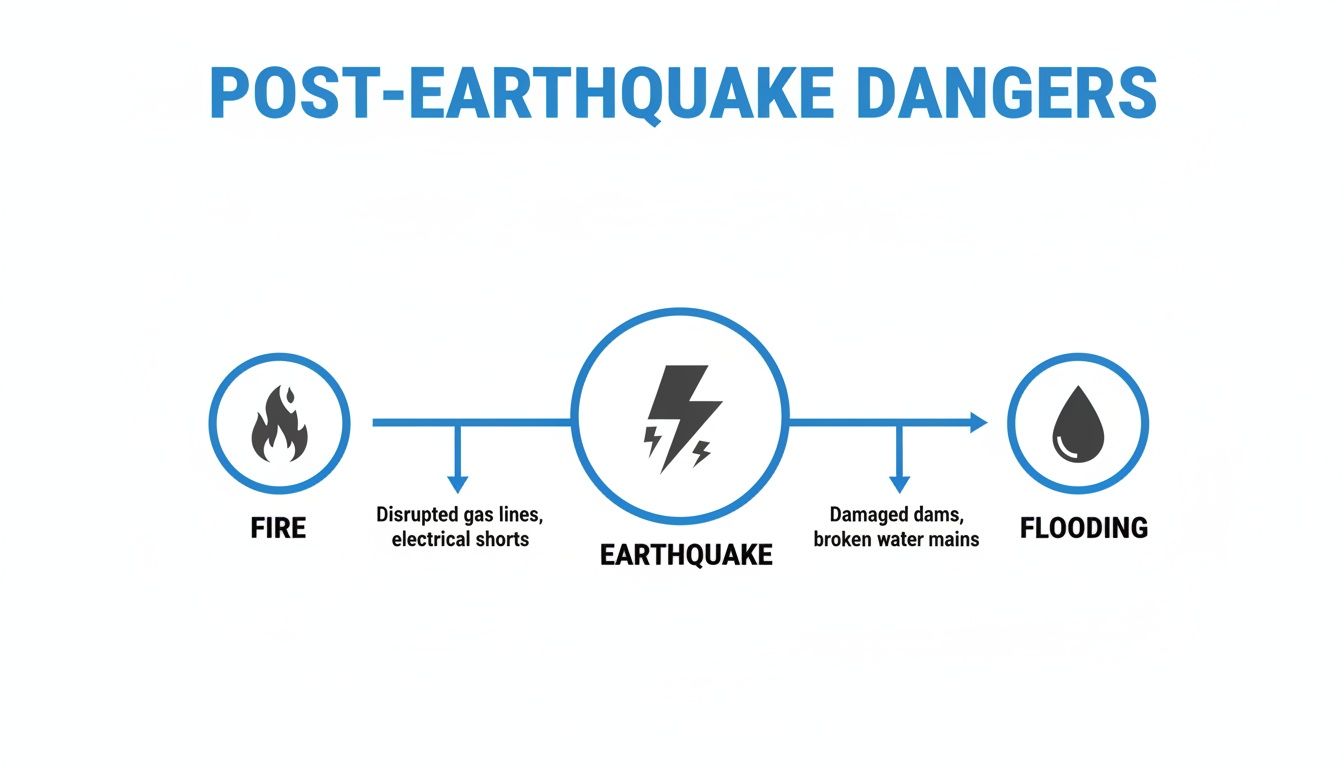
As you can see, a single seismic event can set off a chain reaction, leading to catastrophic fires from gas leaks and devastating floods from broken water mains. It’s a stark reminder of why you need protection on both fronts.
How Seismic Valves Detect An Earthquake
Don't worry, your valve won't shut off every time a heavy truck rumbles down your street. These devices are carefully calibrated to activate only during significant seismic activity, which prevents false alarms. They generally rely on one of two mechanisms to know when a real quake is happening.
1. Seismic (Ball-and-Seat) ValvesThis is the classic mechanical design, and it's brilliantly simple. Inside the valve, a small metal ball is balanced on a tiny ring. When an earthquake hits a certain intensity—usually around a magnitude 5.1 or greater—the violent shaking knocks the ball loose. Gravity does the rest, pulling the ball down into a seat that creates a perfect seal, instantly stopping the flow of gas.
2. Motion-Sensing Electronic ValvesThese are more high-tech. They use electronic sensors to pick up on P-waves and S-waves, which are the different types of seismic waves an earthquake produces. Once the sensors detect ground movement that crosses a pre-set limit, an electronic signal tells the valve to slam shut.
Both valve types are built with Los Angeles in mind. They're calibrated to respond to the specific ground-shaking characteristics of our local fault systems, ensuring they trip when they're supposed to but stay put during everyday vibrations.
Gas vs Water Shut-Off Valves
While they work on a similar principle, it's important to understand the different jobs that gas and water shut-off valves do. Each one protects your home from a unique, and equally destructive, post-earthquake hazard.
The table below breaks down the key differences between these two essential safety devices.
Feature | Automatic Gas Shut-Off Valve | Automatic Water Shut-Off Valve |
|---|---|---|
Primary Purpose | Prevents fires and explosions | Prevents flooding and water damage |
Activation | Triggers from seismic shaking | Triggers from seismic shaking or excess flow |
Damage Prevented | Ruptured gas lines igniting | Broken pipes flooding the property |
As you can see, one handles the risk of fire while the other tackles the threat of water, making both crucial for complete home protection.
Automatic Gas Shut-Off Valves: These have one job: fire prevention. A broken gas line can quickly fill a home with flammable natural gas. A single spark from damaged wiring or a pilot light can cause an explosion. By cutting off the gas right at the meter, these valves remove the fuel from the equation.
Automatic Water Shut-Off Valves: These are your best defense against catastrophic flooding. A break in a water main or a supply line inside your home can unleash hundreds of gallons of water per minute, ruining floors, walls, and your home's foundation. An automatic valve stops the flow cold, preventing massive structural damage and the mold that follows. You can learn more about how automatic water shut-off valves are an essential tool against flooding.
Ultimately, these valves turn a major threat into a manageable situation. By knowing how they detect a quake and which dangers they guard against, homeowners across Los Angeles and surrounding areas can see them for what they are: an indispensable safety feature that delivers true peace of mind.
Meeting California's Legal and Insurance Requirements
For homeowners in Los Angeles, installing an earthquake shut-off valve is often more than a smart safety move—it’s a legal requirement. Navigating local building codes and insurance policies can seem complex, but understanding these rules is key to protecting both your family and your property. These regulations aren’t just red tape; they exist to prevent the secondary disasters that often follow a major quake.
These rules are direct lessons learned from California's long history with earthquakes. The state has been steadily updating its building codes to require these safety devices in certain situations, making communities from the San Fernando Valley to Pasadena more resilient.
Los Angeles Building Codes and Mandates
In many parts of California, including Los Angeles, an earthquake shut-off valve is now required by law under specific circumstances. The mandate usually applies when you're building a new home, doing a significant remodel, or selling your property.
The most common triggers for this requirement include:
New Construction: Every new home and commercial building must have an approved seismic gas shut-off valve installed from the start.
Major Renovations: If you're undertaking a large remodel that involves your gas piping system, you'll almost certainly need to add a valve to bring the property up to current code.
Property Sales: In many LA-area cities, installing an earthquake valve is a point-of-sale requirement, meaning the job must be done before the title can be transferred to a new owner.
These laws are a direct response to past tragedies. We've seen how automatic valves can transform disaster prep, all driven by hard lessons from quakes that flooded homes or sparked fires. California's building codes, especially after the 1971 Sylmar quake, now mandate these devices in high-risk areas.
The Growing Role of Insurance Carriers
It’s not just the city pushing for these valves; the insurance industry has become a major force in making them standard practice. As insurance companies manage their risk in Southern California, they've started putting stricter requirements on homeowners.
Many insurance carriers now consider these valves a non-negotiable part of a home’s safety profile, and not having one can have serious financial consequences.
A growing number of insurance providers in California may refuse to renew a homeowner's policy—or deny a new one altogether—if the property doesn't have a certified earthquake gas shut-off valve. This single device can be the difference between being insured and being left unprotected.
On the flip side, having a professionally installed valve can bring real perks. Some insurers offer discounts on earthquake insurance premiums because they know the device dramatically lowers the risk of a catastrophic fire. It also simplifies the claims process after a quake by showing you took proactive steps to minimize damage. While reviewing policies, it's also a good idea to understand other protections, like premises liability insurance coverage.
Ultimately, meeting these requirements is about fortifying your home against predictable post-quake disasters. To dive deeper into the installation process, check out our guide on earthquake gas shut-off valve installation for all the details.
What to Expect During Professional Installation
So, you’ve decided to protect your home with an earthquake shut-off valve. Now, you’re probably wondering what the installation actually involves. Many Los Angeles homeowners picture a messy, complicated job, but the reality is a professional installation is surprisingly quick and clean, usually finishing in just a few hours.
Knowing what to expect helps demystify the process. A licensed plumber has a precise, safety-first routine to ensure your new valve is installed correctly, meets all local codes, and is calibrated to protect your family when it counts.
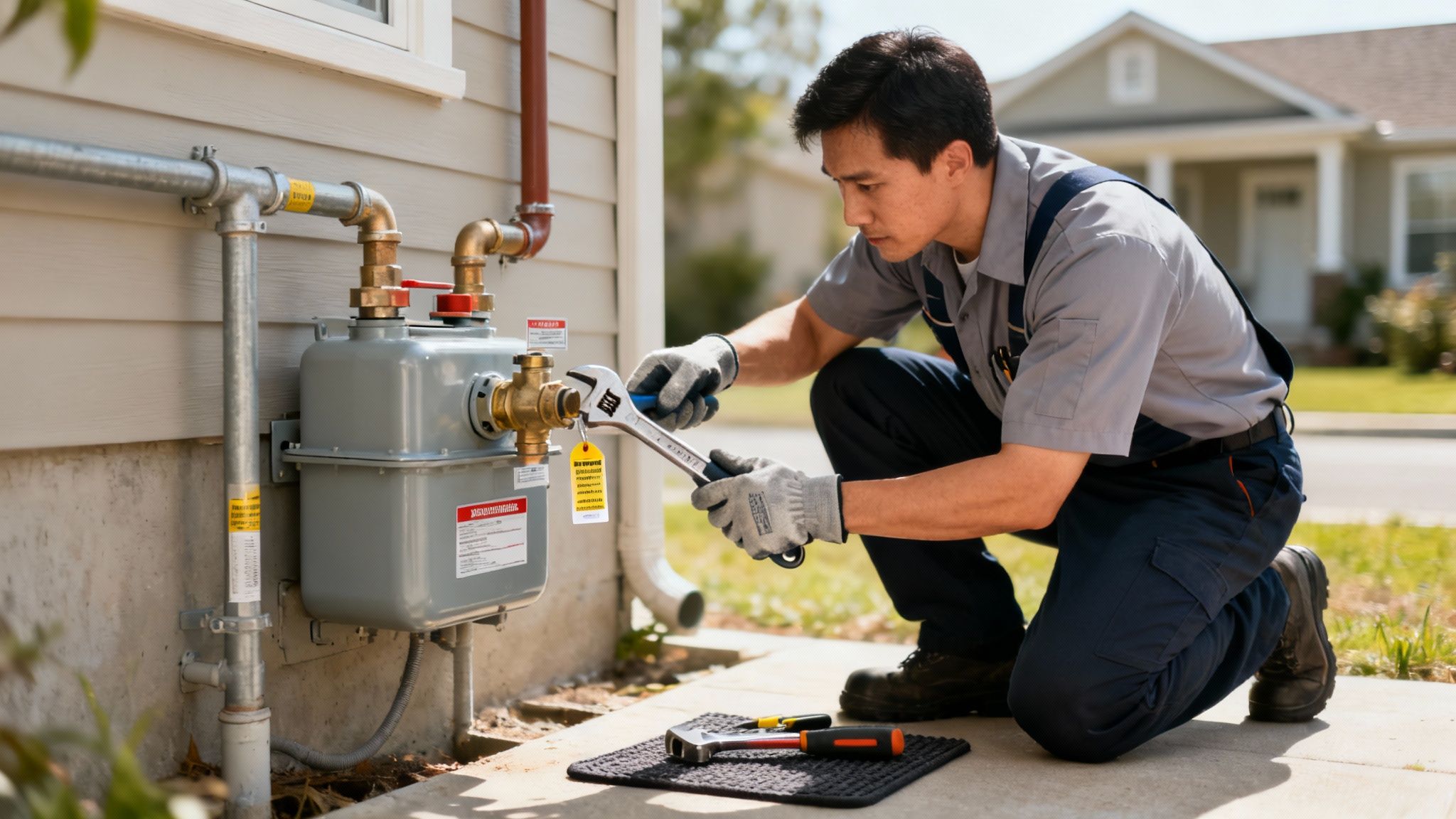
The Step-by-Step Installation Process
When a certified technician arrives, they follow a proven playbook focused on safety and precision. The entire installation is almost always completed in a single visit with minimal disruption to your day.
Here’s a breakdown of what our service call looks like:
Initial Site Inspection: First, our tech will examine your gas or water meter setup. They’ll identify the best spot for the valve—usually right on the main line after the meter—to ensure it’s accessible and fully up to code.
Utility Shut-Off: Before starting, the technician will turn off the main gas or water supply to your home. This depressurizes the line, making the entire process safe.
Precise Pipe Cutting: Using professional-grade tools, the plumber makes a clean, exact cut in the pipe to fit the earthquake shut-off valve. This requires a skilled hand to avoid damaging surrounding plumbing.
Valve Fitting and Securing: The new valve is slotted into place. The technician then creates a perfect, airtight seal on both sides using industry-standard fittings for a permanent, leak-proof connection.
Leak and Pressure Testing: This is the most critical step. Once the valve is in, the tech will slowly turn the gas or water back on and run a thorough pressure test to confirm there are absolutely no leaks at the new connections.
Service Restoration and Final Checks: After the system passes the pressure test, your service is fully restored. For gas lines, the plumber will relight any pilot lights on appliances like your furnace or water heater and do one last check to ensure everything is running smoothly.
Why Professional Installation Is Non-Negotiable
While it might be tempting to DIY some home projects, installing an earthquake shut-off valve is a job strictly for a licensed plumber. The stakes are simply too high to get this wrong.
A licensed plumber brings more than just the right tools. They know the specific building codes for Los Angeles, Glendale, and Pasadena inside and out. This guarantees your installation is 100% compliant, correctly calibrated, and above all, safe.
Hiring a pro ensures:
Code Compliance: The work will pass any city inspection and satisfy your insurance company, which is crucial if you ever sell your home.
Correct Calibration: Your valve will be set to the right seismic sensitivity for Southern California, preventing false trips but ensuring it works in a real quake.
Guaranteed Safety: Professionals run rigorous leak tests that are non-negotiable for gas lines, where even a tiny leak can be a serious fire hazard.
Once the job is done, the technician will place an official certification tag on your meter. This tag is your proof for city inspectors and insurance agents that a certified earthquake shut-off valve was installed by a professional. To make sure you’re hiring the best, take a look at our guide on how to choose the right plumbing professional for your home.
Choosing the Right Valve and Understanding Costs
Picking an earthquake shut-off valve for your Los Angeles home isn’t a one-size-fits-all decision. The right one depends on your property’s setup, your budget, and the level of protection you need. Knowing your options and what they cost turns a confusing purchase into a smart investment in your family's safety.
Navigating the different types can feel overwhelming, but they generally fall into two main categories. Making an informed choice is the first step toward securing your home from post-quake disasters like fires and floods.
Comparing Valve Types for Your LA Home
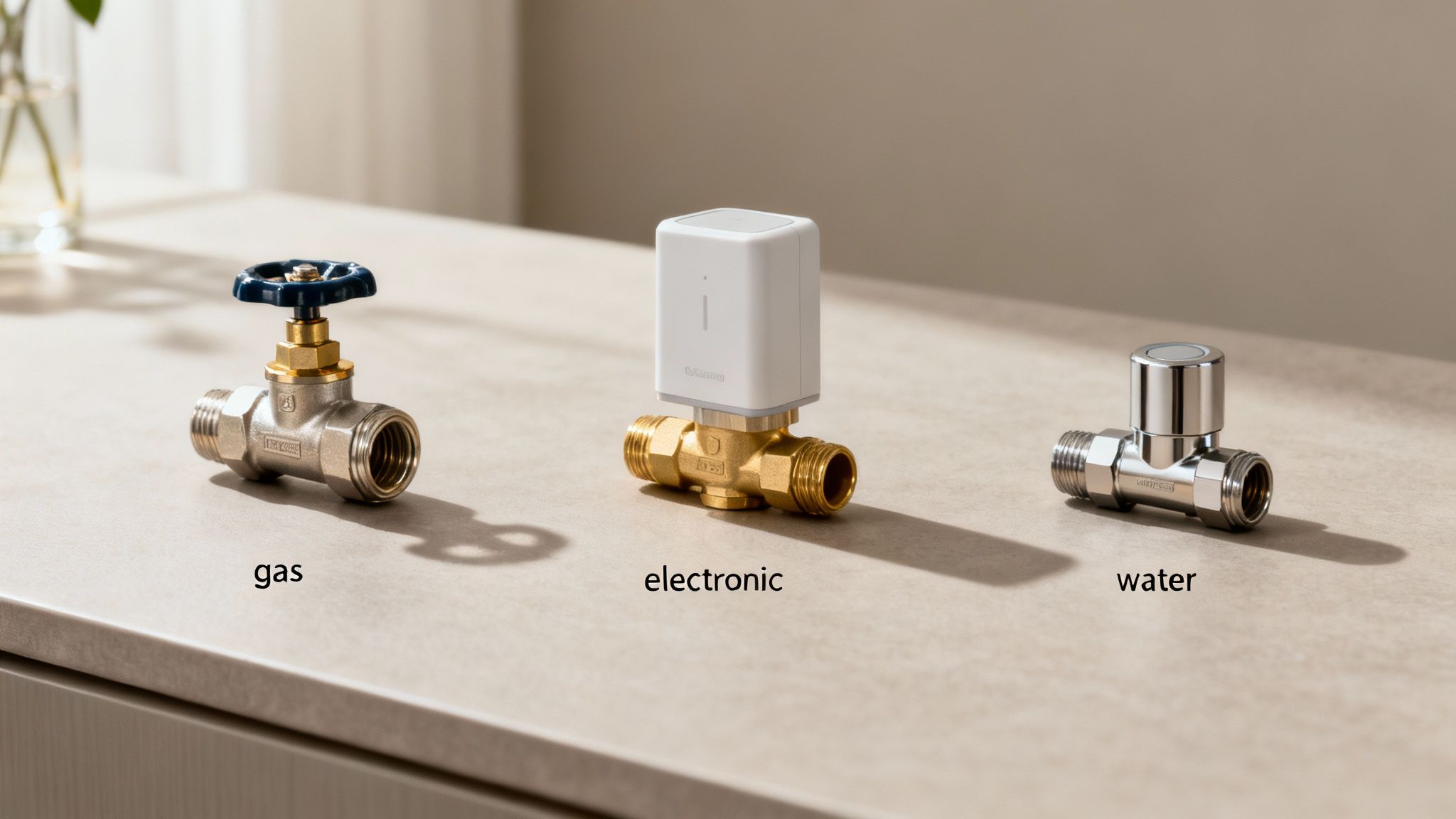
For homeowners here in the Greater Los Angeles area, the decision usually comes down to a seismic valve for the gas line and either a motion-sensing or excess-flow valve for the water line. Each is designed to tackle a specific threat.
Seismic Gas Valves: These are the workhorses for natural gas lines. They rely on a simple and reliable mechanical system—often a metal ball that drops during a quake—to instantly seal the line. They're incredibly durable, don't need power, and are the gold standard for meeting city codes in places like Glendale and Burbank.
Motion-Sensing Electronic Valves: Often used for water lines, these use smart electronic sensors to detect the P- and S-waves of an earthquake or the sudden, excessive water flow from a broken pipe. They offer precise detection but may require a power source, though most have a reliable battery backup.
Excess-Flow Valves: This is another great option for protecting your water lines. These valves don't detect the shaking itself. Instead, they activate when they sense a massive, sudden surge in flow—the kind that can only mean a pipe has burst. They are highly effective at stopping catastrophic flooding.
The push for more resilient infrastructure has put a spotlight on these devices. US earthquakes cause an average of $14.7 billion in damages annually, and these valves play a huge role in bringing that number down. It's no surprise that the market for these safety devices keeps growing, proving their effectiveness at slashing fire risks and preventing massive property damage. You can discover more about the global market for these safety devices and see their worldwide impact.
Breaking Down the Costs in Los Angeles
Let's talk numbers. The total investment for an earthquake shut-off valve in the Los Angeles area includes both the device itself and professional installation by a licensed plumber.
For a standard seismic gas valve installation, homeowners can typically expect the total cost to fall between $450 and $850. This price covers:
The certified valve itself.
Professional labor for a clean installation.
Thorough leak and pressure testing to ensure 100% safety.
The official certification tag needed for city compliance.
Water shut-off valves often land in a similar price range. However, the final cost can vary depending on the complexity of your plumbing and the type of valve you choose. For a more detailed look, you can explore our 2024 pricing guide on water shut-off valve installation.
Making the Upgrade Accessible
We believe every family in the Los Angeles area deserves this essential protection. A large upfront payment shouldn’t stand in the way of safety.
That’s why we offer flexible financing options to make this critical home upgrade more manageable. By spreading the cost over time, you can secure your home and gain priceless peace of mind without straining your budget. It turns a necessary expense into a comfortable, long-term investment in your home's safety.
Still Have Questions About Shut-Off Valves?
It’s normal to have practical, day-to-day questions, even after you've decided a shut-off valve is a smart move. Feeling confident about this upgrade means getting clear, straightforward answers. Let's tackle some of the most common questions we hear from homeowners across Los Angeles.
Can a Passing Truck or Nearby Construction Accidentally Trip the Valve?
This is a top concern, and it's a great question. The short answer? It's extremely unlikely.
These valves are precision-engineered to ignore the minor, high-frequency rattles of daily life—like heavy traffic, a slammed door, or nearby construction.
They are calibrated to respond only to the powerful, low-frequency rolling motion that's unique to a real seismic event, typically an earthquake of magnitude 5.1 to 5.4 or higher. The internal mechanism, whether a steel ball or an electronic sensor, knows the difference. This smart design ensures your utilities stay on when you need them but shut off instantly when danger strikes.
Okay, My Valve Tripped. What's the First Thing I Should Do?
If your valve activates, take a breath. It just did its job. The most critical thing to remember is: do not reset it immediately. Your first priority is to assess the situation safely.
Here are the immediate steps to follow:
Safety First: Ensure everyone is safe. Then, walk through your home and property. Sniff the air for the "rotten egg" smell of natural gas. If you smell it, get everyone out immediately and call your gas company from a safe distance.
Look for Damage: If you don't smell gas, check for visible damage. Look for new cracks in the foundation, and check under sinks and around appliances for signs of broken water pipes.
Wait for the All-Clear: Do not reset the valve until you are 100% certain there are no gas leaks and your plumbing is intact. After a major quake, it's wise to wait for guidance from local authorities.
Resetting a valve when there's an underlying leak is incredibly dangerous. The valve tripped for a reason. Verifying that your home's systems are secure before turning the gas or water back on isn't just a suggestion—it's a non-negotiable safety step.
How Do I Reset the Valve Myself?
Once you've confirmed everything is secure, resetting the valve is usually simple. The exact method depends on the model installed.
Most manufacturers print instructions on a tag attached to the valve. For common seismic gas valves, it typically involves using a small wrench or reset tool to turn a lever. For electronic water valves, it might be as easy as pushing a button.
However, if you have any hesitation, call a licensed plumber. We can reset the valve and perform an expert inspection to confirm your lines weren't damaged. It’s a small price for complete peace of mind.
Do These Valves Need Regular Maintenance?
One of the best things about modern shut-off valves is that they are built to be almost entirely maintenance-free. They’re constructed from durable, corrosion-resistant materials and are designed to be ready for years without any fuss.
That said, a little common sense care helps.
Keep the Area Clear: Make sure the space around your gas and water meters is free of overgrown bushes or other clutter for easy access.
Give It a Quick Look: Once a year, visually inspect the valve for any obvious signs of rust or damage.
Get a Professional Opinion: It’s a great idea to have a plumber give it a quick check during your regular plumbing maintenance visit. We can confirm it's in perfect working order.
A few minutes of attention a year is all it takes to ensure this silent guardian is ready to protect your home.
Your home's safety is our top priority. If you have more questions or are ready to protect your property with a professionally installed earthquake shut-off valve, the team at ZH Plumbing is here to help. We offer free inspections and expert installations across the Greater Los Angeles area to ensure your home meets all safety and insurance requirements. Contact us today to schedule your consultation and secure your peace of mind.
Comments