

.png)

A Guide to Removing Hair Clogs From Drains in Los Angeles
Standing ankle-deep in shower water is a frustratingly common experience for Los Angeles residents. That slow drain is more than just an annoyance—it's the first sign of a stubborn hair clog brewing in your pipes. When hair mixes with soap scum and conditioner, it forms a tough blockage that can bring your morning routine to a halt and, if ignored, lead to foul odors and serious plumbing strain.
From the modern homes in Santa Monica to the classic bungalows in Pasadena, a clogged drain is a universal problem. This guide provides practical, effective methods for removing hair clogs from drains, helping you get your plumbing back in working order and avoid a costly professional call-out.
Why Hair Clogs Are a Persistent Problem
Hair is a nightmare for plumbing because it doesn't dissolve. Instead, it acts like a net, catching soap scum, oils, and other debris that goes down the drain. Over time, this creates a solid mass that water can barely pass through.
In a water-conscious area like Los Angeles, a slow drain is also a source of waste. Waiting for the water to recede during a single shower can waste gallons of water, working against our local conservation efforts. Understanding why you might be dealing with recurring drain clogs is the first step toward a lasting solution. While we're focused on hair, persistent odors can signal other issues, and you can learn about addressing bad smells from kitchen drains as well.
Key Takeaway: A slow-draining shower or sink is an early warning sign from your plumbing. Addressing it quickly with the right method can save you from a major blockage and an expensive repair bill down the road.
Your First-Response Toolkit for Hair Clogs
Before you consider harsh chemicals, several effective and inexpensive DIY methods can clear most hair clogs. This table provides a quick guide to help you choose the best approach for your situation.
Method | Best For | Tools Needed | Time Required |
|---|---|---|---|
Manual Removal | Shallow clogs you can see or easily reach | Gloves, pliers, plastic drain snake | 5-10 minutes |
Baking Soda & Vinegar | Mild clogs bound by soap scum and grease | Baking soda, white vinegar, boiling water | 30-60 minutes |
Plunger | Standing water in sinks and tubs; creates pressure | Cup plunger (sink) or flange plunger (toilet) | 5-15 minutes |
P-Trap Cleaning | Deeper clogs in bathroom or kitchen sinks | Bucket, wrench or pliers, gloves | 20-30 minutes |
These techniques are often all you need to restore flow to your drains. Always start with the simplest, least invasive method first.
Using Manual Tools for Immediate Clog Removal
When you're dealing with a slow-draining shower in your Los Angeles home, the most direct solution is often the most effective: physically removing the clog. This hands-on approach is exactly what a professional plumber would do first, and it’s a skill every homeowner can master to get immediate results.
The goal is to pull the entire clog out, not just push it deeper where it can cause a more serious blockage. This method is safe for all types of pipes, which is a major benefit in older LA-area homes with more delicate plumbing systems.
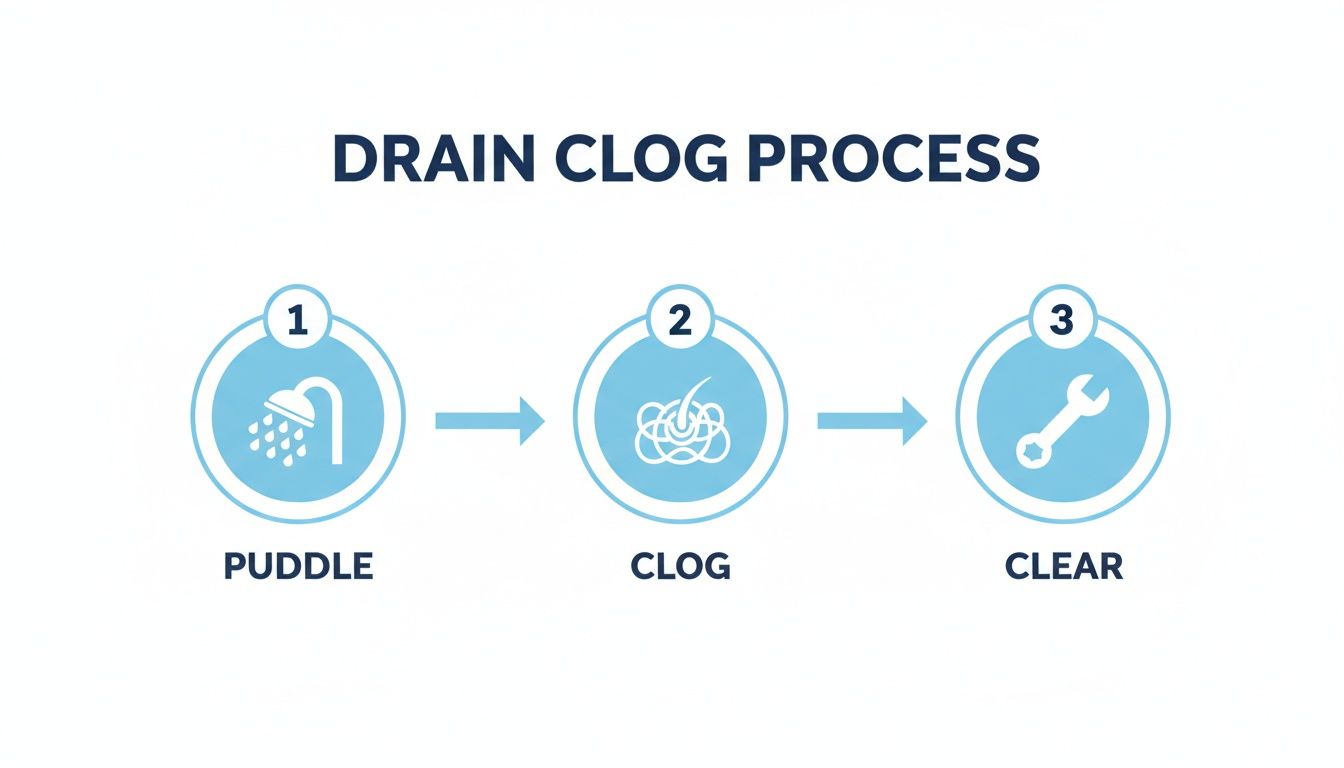
As you can see, the clog is the real villain here. Direct removal with the right tool is the quickest way back to a perfectly functioning drain.
Your Go-To Tool: The Plastic Hair Clog Remover
For most shower and bathroom sink clogs, an inexpensive, flexible plastic hair clog remover (often called a drain stick or zip tool) is your best friend. It's a long strip of plastic with small barbs designed to snag hair and pull the entire mass out.
How to Use a Plastic Remover Effectively
Get Ready: Put on gloves, as this job can get messy. If your sink or tub has a pop-up stopper, you'll likely need to unscrew it or lift it out to access the drain.
Insert the Tool: Gently guide the plastic tool down into the drain opening. Its flexibility allows it to navigate the initial curve of the pipe without force.
Engage the Clog: Push the tool down until you feel resistance—that's the clog. Slowly rotate the tool in a circular motion to allow the barbs to hook into the tangled hair and gunk.
Extract the Blockage: Carefully pull the tool straight back out. You should bring a significant portion of the clog with you. Be prepared; what comes out is often unpleasant.
Repeat this process a few times from different angles to ensure you've removed as much of the blockage as possible. Once you're done, flush the drain with hot water for several minutes to clear any remaining residue.
Tackling Deeper Clogs with a Drain Snake
If the plastic tool isn't long enough or the clog seems to be further down the pipe, it's time to use a drain snake (or plumber's auger). This tool consists of a long, flexible metal cable coiled inside a handle. A drain snake is particularly useful for clearing the P-trap, the U-shaped pipe under a sink where clogs commonly form.
Pro Tip: When using a drain snake, work slowly and avoid forcing it. Aggressive use can damage pipe connections, turning a simple clog removal into a leak repair. Gentle, steady rotation is the key to success.
To use it, feed the cable into the drain until you hit the obstruction. Then, turn the handle to rotate the cable, allowing its corkscrew tip to dig into the clog. Once it grabs on, you can either pull the clog out or break it up so it can be flushed away.
While these tools are excellent for hair, they aren't a universal solution. For example, toilet clogs usually have different causes. For more specific advice, our guide offers some essential toilet repair tips every homeowner should know.
After manually clearing a hair clog, always finish by running hot water down the drain for at least five minutes. This final flush helps wash away any lingering oils and small bits of debris, ensuring your drain remains clear.
Exploring Safer Eco-Friendly Drain Solutions
Many Los Angeles homeowners are rightly concerned about pouring harsh, corrosive chemicals down their drains. These chemicals can damage the mix of older and newer plumbing systems found throughout our neighborhoods, from Hollywood to the San Fernando Valley.
Fortunately, there are safer, eco-friendly alternatives that effectively break down the grease and soap scum that bind hair clogs together. These methods are gentler on your pipes and much better for the local environment, protecting LA's water treatment systems from harmful substances.
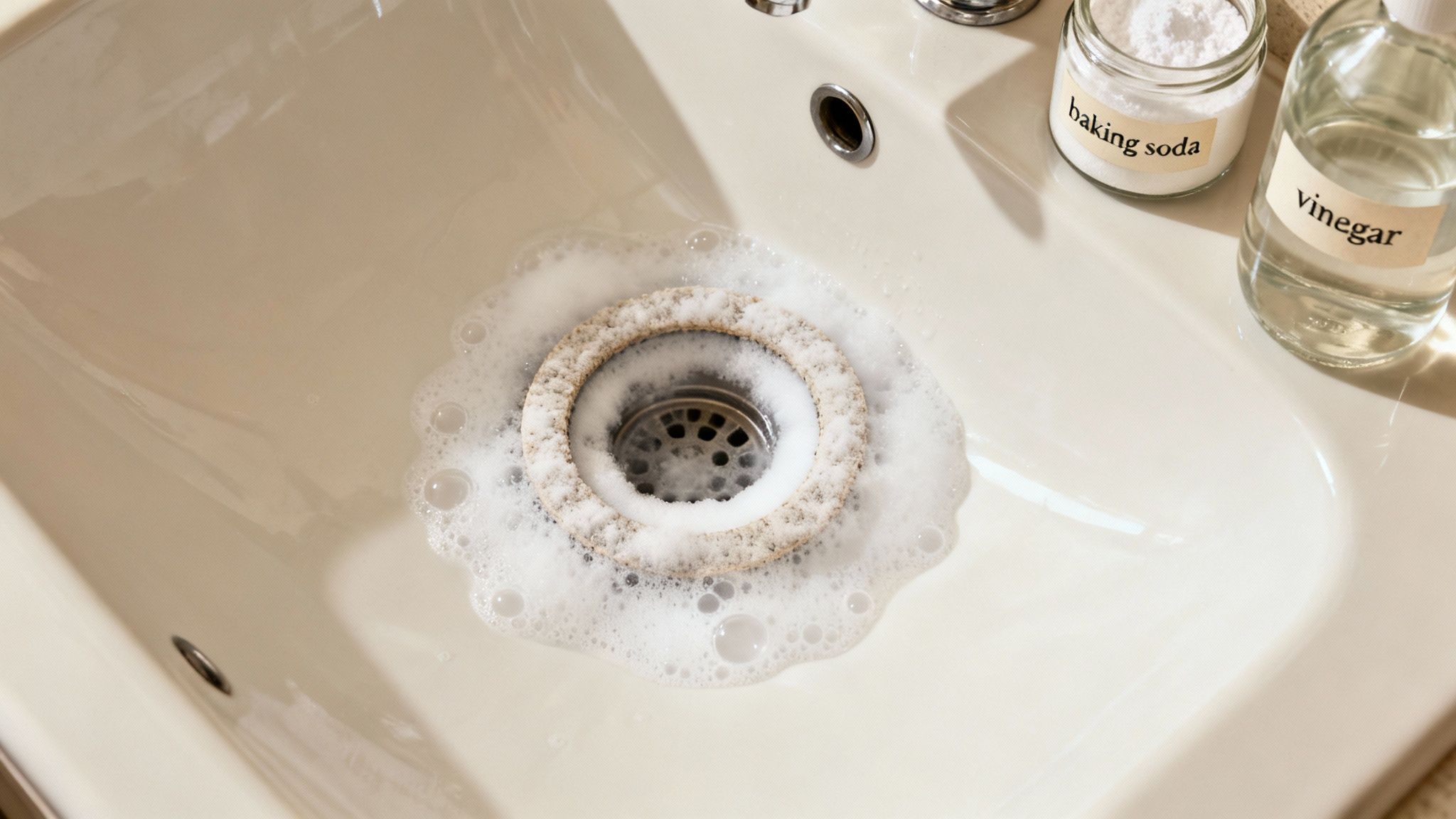
The Classic Baking Soda and Vinegar Method
This timeless DIY solution uses a simple chemical reaction to break up minor clogs. When baking soda (a mild alkali) and vinegar (a mild acid) combine, they produce carbon dioxide gas. This fizzing action physically loosens the grime and soap scum holding a hairball together, making it a perfect first step or regular maintenance tool.
Here's the simple recipe for a clearer drain:
First, a Hot Water Flush: Start by carefully pouring a pot of boiling water down the drain to melt and loosen initial greasy buildup.
Add Baking Soda: Pour one cup of baking soda directly into the drain opening.
Pour the Vinegar: Immediately follow with one cup of white vinegar. Cover the drain with a plug or damp cloth to trap the fizzing reaction inside the pipe.
Let It Sit: Allow the mixture to work for at least 30 minutes. For more stubborn clogs, an hour is even better.
Final Flush: Remove the cover and pour another pot of boiling water down the drain to wash away the dislodged debris.
This method is safe for nearly all plumbing systems, including the older pipes often found in classic Los Angeles homes.
Harnessing the Power of Enzymatic Cleaners
For a more hands-off approach, enzymatic drain cleaners are an excellent choice. Unlike harsh chemical cleaners that burn through clogs, these products use natural bacteria and enzymes to digest organic materials. When poured down the drain, these beneficial organisms colonize your pipes and feed on hair, soap scum, and other gunk causing the blockage.
Key Insight: Think of enzymatic cleaners as a probiotic for your plumbing. They introduce "good" bacteria that systematically break down organic waste, cleaning your pipes from the inside out without any corrosive damage.
This makes them an ideal tool for preventative maintenance. Using an enzymatic cleaner monthly can keep your pipes clear and stop hair clogs before they have a chance to form.
Why Slower and Gentler Is Often Better
Enzymatic cleaners don't offer the instant results of chemical drain openers, but their gentle, slow-acting nature is their greatest strength. Here’s why they are a smarter choice for homes in the LA area:
Pipe Safety: They are 100% safe for all types of pipes, including old cast iron, copper, or modern PVC, as they won't cause corrosion.
Environmental Impact: The ingredients are biodegradable and non-toxic, so they won't harm the environment after entering the city's water system.
Long-Term Effectiveness: By establishing a colony of beneficial bacteria, they continue working long after application, preventing future buildup.
For homeowners interested in a whole-house approach to sustainability, you can learn more about how to upgrade your Encino home with Z.H. Plumbing’s eco-friendly solutions. Choosing these safer methods solves your current clog while contributing to the long-term health of your home's plumbing.
Don't Reach for That Bottle: The Hidden Dangers of Chemical Drain Cleaners
When faced with a sink full of murky water, the brightly colored bottle of chemical drain cleaner at the hardware store can seem like a quick fix. However, before you pour those aggressive chemicals down your drain, it’s crucial to understand the risks. These products are far from a harmless solution and can cause permanent damage to your plumbing system while posing serious health hazards.
The truth is that most commercial drain cleaners use powerful chemicals to create a violent reaction that dissolves clogs. From our years of experience serving the Los Angeles area, we've seen firsthand how this short-term fix can lead to long-term disaster.
What’s Actually in That Bottle?
Chemical cleaners work by triggering a powerful, and often destructive, chemical reaction. They generally fall into three categories:
Caustic Cleaners: These lye-based (sodium hydroxide) products turn grease and hair into a soapy sludge. The reaction generates intense heat, which can soften PVC pipes or damage the older metal pipes common in many Los Angeles homes.
Oxidizing Cleaners: Using high-powered bleach (sodium hypochlorite), these cleaners dissolve clogs by stripping them of electrons. They are extremely corrosive and can eat away at your pipes with each use.
Acidic Cleaners: These are the most dangerous, often restricted to professional use. Containing powerful acids like sulfuric acid, they can dissolve hair, paper, and grease almost instantly—but they can also dissolve nearly every type of plumbing material, including stainless steel and copper.
The Real-World Risks to Your Pipes and Your Health
Using these products can set off a chain reaction of problems. The heat from caustic cleaners can warp plastic pipes, leading to leaks. The corrosive nature of other formulas can thin pipe walls, creating weak spots that are prone to bursting.
Beyond the plumbing, the health risks are significant. Accidentally mixing different chemical cleaners can release toxic chlorine gas, a severe respiratory irritant. Furthermore, stagnant water from clogs is a breeding ground for bacteria. Blockages can increase the risk of waterborne pathogens in a home, and since the pandemic, we've seen a rise in calls across Los Angeles as clogs foster mold growth, impacting respiratory health, particularly in coastal areas like Santa Monica. You can learn more about the environmental and health impacts over at iFixPipe.com.
A Plumber's Tip: If a clog is so severe that you're considering a harsh chemical cleaner, it's a major red flag that the problem requires professional attention. Put the bottle down and call a licensed plumber.
Why Chemicals Often Dig a Deeper Hole
Here’s the biggest issue: chemical cleaners don't always work. If the liquid fails to completely dissolve the clog, you're left with a pipe full of highly corrosive, toxic chemicals sitting in stagnant water.
This creates an incredibly hazardous situation for anyone who has to work on the drain next, including a professional plumber. That toxic mixture slowly eats away at your pipes and makes mechanical removal with a drain snake dangerous, as any splashback can cause severe chemical burns. The safest and most effective approach is to always skip these products and opt for mechanical removal or professional assistance.
Proactive Tips to Prevent Future Hair Clogs
Clearing a stubborn hair clog is a relief, but preventing it from happening again is the real victory. A few simple, proactive habits can save you the stress of another plumbing emergency and protect your Los Angeles home’s plumbing for the long term. The best defense is a good offense, and incorporating these easy steps into your routine can stop hair from ever forming a major blockage.
Invest in a Quality Drain Hair Catcher
This is the single most effective tool for preventing hair clogs. A quality drain hair catcher or strainer sits over or inside your drain, physically stopping hair before it enters the pipes. This small investment pays huge dividends by preventing hair from mixing with soap and conditioner to form sticky, stubborn blockages.
Silicone and Stainless Steel Models: Look for options made from durable, rust-proof materials. Silicone models are flexible and easy to clean, while stainless steel offers a sturdy, long-lasting barrier.
Pop-Up Drain Solutions: If your drain has a built-in stopper, specialized catchers are available that fit around it to ensure nothing slips through.
Weekly Cleaning is Key: Make it a habit to clean the catcher at least once a week—more often if you have long hair or multiple people in your household. Simply lift it out, dispose of the trapped hair in the trash (never flush it!), and place it back.
Understanding understanding normal hair shedding patterns can help you gauge how often your drain catcher will need cleaning.
Adopt a Weekly Hot Water Flush
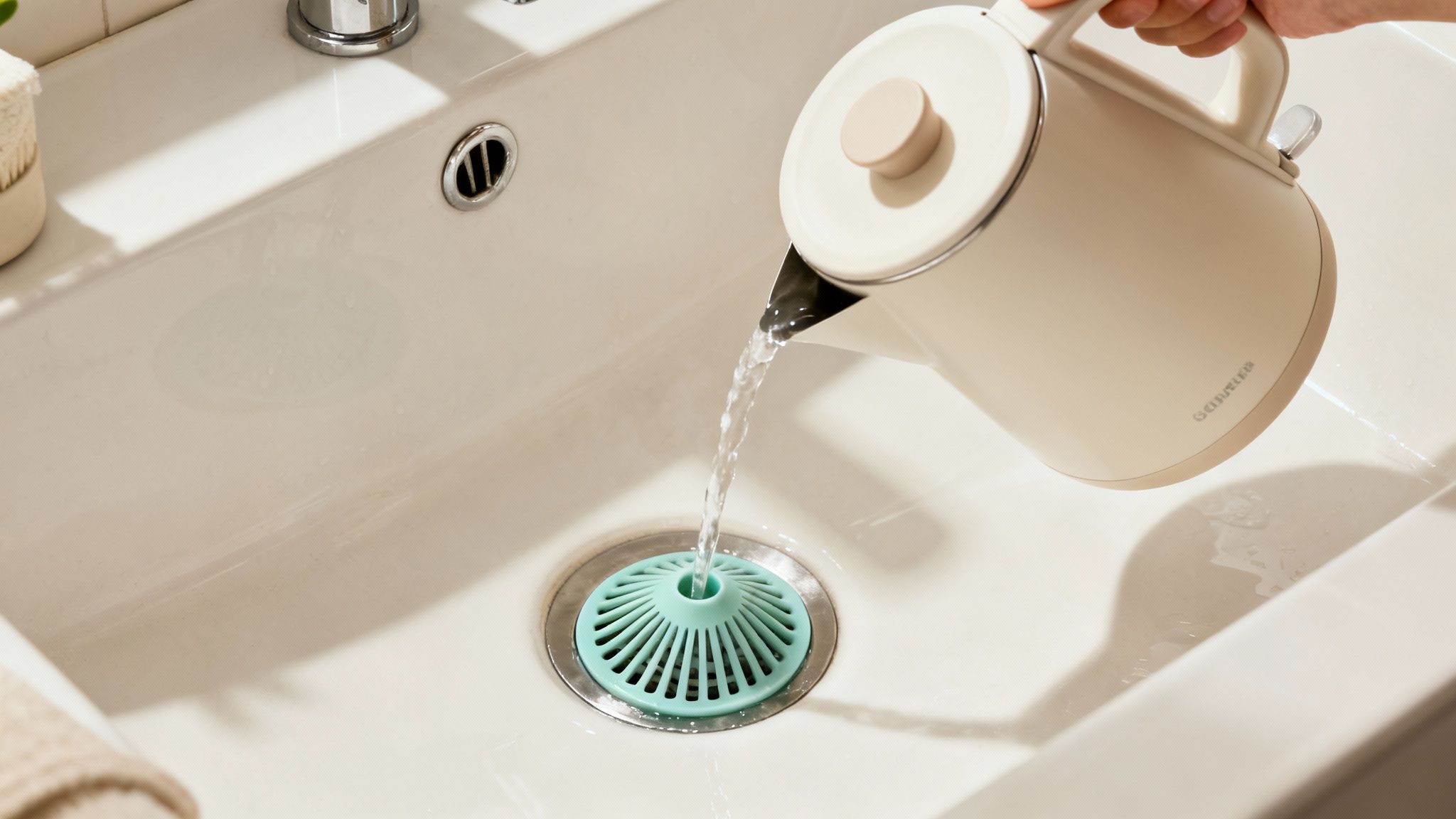
Soap scum and conditioner residue act as the glue that turns loose hair into a formidable clog. A simple weekly hot water flush can dissolve these binding agents before they build up. Once a week, boil a kettle of water and carefully pour it down your shower and sink drains. This melts away the greasy buildup that hair clings to, keeping your pipes clear. This is especially helpful in Los Angeles, where hard water can accelerate mineral and soap scum buildup.
Important Note: This method is great for metal pipes. If you have PVC plumbing, use the hottest water from your tap for five minutes instead, as boiling water can potentially soften PVC pipes over time.
Implement a Monthly Maintenance Routine
For a deeper, preventative clean, adopt a monthly maintenance routine with an enzymatic cleaner. As discussed earlier, these products use natural bacteria and enzymes to safely digest organic matter like hair and soap scum without harming your pipes. This proactive approach keeps the inside of your pipes free from the residue that initiates clogs. It’s a core component of smart home care, and you can learn more about the importance of regular plumbing maintenance for residential homeowners on our blog. This small monthly effort is the best way to maintain clear drains all year long.
When to Call a Professional Los Angeles Plumber
While DIY methods are effective for minor clogs, there are times when your plumbing requires professional expertise. Pushing a tool too far or using the wrong approach can escalate a simple issue into a costly repair. Knowing when to call for help is crucial.
If you’ve tried a drain snake and gentler solutions without success, or if a clog returns shortly after you’ve cleared it, it’s time to stop. These are signs that the real problem lies deeper in your plumbing system than DIY tools can reach.
Warning Signs of a Serious Clog
Pay close attention to these symptoms, as they often indicate a more severe issue that needs a professional diagnosis:
Foul Odors That Won't Go Away: A persistent sewer smell coming from your drains, even after cleaning, can signal decaying matter trapped deep in the pipes or a problem with your plumbing's vent system.
Gurgling Sounds: Hearing strange gurgles from a toilet when the shower is running is a classic sign of trapped air in your drain lines, usually caused by a significant blockage creating negative pressure.
Multiple Drains Backing Up: If your shower, toilet, and sinks are all draining slowly or backing up simultaneously, the clog is likely in your main sewer line, not an individual fixture.
A main sewer line blockage is a serious plumbing emergency. DIY methods are ineffective against such problems, and delaying a professional call can lead to widespread water damage and expensive repairs.
Our Professional Approach to Removing Hair Clogs from Drains
When you call Z.H. Plumbing, we provide a thorough, lasting solution for residents across Greater Los Angeles, from Hollywood to Santa Monica. We understand the unique plumbing challenges local homeowners face, including the summer spike in service calls as more frequent showers lead to more clogs. While professional clog removal can seem like an expense, it’s a small price to pay to avoid the thousands of dollars in damage a neglected blockage can cause. As you can discover in more detail from industry research, a slow drain also has a real environmental impact in water-conscious California.
We use advanced tools to resolve even the toughest clogs:
Sewer Camera Inspections: We start by inserting a high-resolution camera into your pipes to see the exact location and cause of the clog, eliminating guesswork.
Hydro-Jetting: For severe blockages, we use high-pressure water streams to blast away everything inside your pipes—hair, grease, soap scum, and mineral scale—leaving them scoured clean.
If you're facing a stubborn clog, our team has the expertise to handle it safely and effectively. You can learn more about why Z.H. Plumbing is the best choice for drain cleaning in North Hollywood and surrounding communities. Don’t let a clogged drain disrupt your life—let us provide a reliable, stress-free solution.
Common Questions We Hear About Drain Clogs
Even after clearing a clog, you might still have questions. As plumbers serving the Los Angeles area, we've heard them all. Here are quick answers to some of the most common questions homeowners ask.
How Often Should I Be Cleaning My Drains?
Proactive maintenance is always easier than dealing with a full-blown blockage. A little weekly attention goes a long way. Make it a habit to clean your hair catchers at least once a week—or more often if you have family members with long hair. Once a month, give your drains a preventative flush with hot water or, for better results, an enzymatic cleaner. This simple routine is the best way to prevent hair clogs from forming in your drains in the first place.
Is It Okay to Use a Wire Coat Hanger to Get a Clog Out?
We strongly advise against this common DIY hack. A straightened metal coat hanger can easily scratch or gouge the inside of your pipes, especially in the older homes found across Los Angeles. More often than not, you'll just push the clog deeper, turning a simple problem into a more serious and expensive one. It's always better to use tools designed for the job, like an inexpensive plastic drain stick or a proper plumber's snake, which are safer and far more effective.
I Pulled Out a Huge Hair Clog, So Why Does My Drain Still Smell?
A lingering odor after removing a clog is a sign that the job isn't finished. That foul smell is caused by bacteria feeding on the organic residue—soap scum, body oils, and small hair particles—still clinging to the pipe walls. A thorough cleaning with an enzymatic cleaner is the best way to eliminate this leftover gunk. If the smell persists, it could indicate a deeper issue, like a problem with your plumbing's vent system or another partial blockage further down the line.
If you've tried all the DIY methods and a clog still won't budge, or if you're dealing with a recurring blockage, don't keep fighting it. The Z.H. Plumbing team is on call 24/7 throughout Greater Los Angeles to deliver a fast, professional solution. Contact us today for expert drain cleaning services and let our experts take care of the problem for you.
Comments