

.png)

Cost to Install a Water Shut Off Valve: A 2024 Pricing Guide
Dealing with a leaky pipe or a burst hose is stressful enough without discovering your water shut-off valve is seized shut. A faulty valve can turn a minor plumbing issue into a catastrophic flood, causing thousands in damages. If you're considering an upgrade, you're likely wondering about the cost to install a water shut off valve. In the Los Angeles area, a standard manual valve installation typically ranges from $250 to $700. For an automatic shut-off system with leak detection, expect to pay between $500 and $1,500+.
These price ranges include both the valve itself and the crucial professional labor required to ensure a leak-free, reliable installation.
Your Quick Guide to Water Shut Off Valve Installation Costs
When a pipe bursts or a sink suddenly springs a leak, being able to kill the water supply in seconds is everything. Without a reliable shut-off valve, a small drip can quickly escalate into a full-blown flood, leaving you with extensive water damage and a massive insurance headache. Understanding the costs upfront helps you budget effectively and make a smart choice to protect your home.
The price tag primarily depends on whether you opt for a traditional manual valve or a modern automatic one. Each has its specific advantages, price point, and purpose. Let’s break down the details so you can decide what makes the most sense for your property.
Estimated Installation Costs: Manual vs. Automatic Valves
To simplify your decision, we've created a clear breakdown of the all-in costs you can expect for both types of valves in a typical residential setting. This table factors in the hardware, professional installation, and other common variables. For more context on how this project fits into your home's overall health, you can check out our overview of comprehensive plumbing services.
Valve Type | Typical Hardware Cost | Average Installation Cost (Labor Included) | Total Estimated Cost |
|---|---|---|---|
Manual Shut-Off Valve | $20 - $80 | $200 - $600 | $250 - $700 |
Automatic Shut-Off Valve | $150 - $600 | $350 - $1,000+ | $500 - $1,600+ |
As you can see, manual valves are more budget-friendly upfront. However, automatic systems provide 24/7 protection that can save you a fortune in the long run—which is why many California insurance providers are now recommending, or even requiring, them for policy compliance.
What Factors Determine Your Final Installation Cost?
Ever get two quotes for the same plumbing job and wonder why they're hundreds of dollars apart? When it comes to installing a new water shut-off valve, the final price is influenced by more than just the valve itself.
A few key variables can dramatically shift the final bill. For example, a simple, easily accessible installation under a sink is a quick fix. But if a plumber needs to cut into drywall or access pipes in a tight crawlspace, the time and complexity add up quickly. Understanding these factors will help you see exactly what you're paying for.
The Key Cost Drivers for Your Installation
The biggest difference between a straightforward job and a complicated one boils down to two things: time and materials. Every plumber must account for potential hurdles when creating an estimate, and a few common issues tend to drive up the cost.
Here are the main factors that will influence the cost to install a water shut off valve:
Valve Accessibility: Is the valve located conveniently under a sink, or is it hidden behind a wall? Perhaps it's in a cramped crawlspace or buried outside. The more difficult it is for a plumber to access, the more labor you can expect to pay for.
Plumbing Complexity: Older homes can present a Pandora's box of plumbing surprises, from corroded pipes to outdated, non-standard fittings. A plumber might need to cut out and replace a section of pipe just to ensure a secure, leak-proof connection, adding to both time and material costs. In some cases, this could be a sign you need to learn when it's time to replace your home's pipes.
Permit Requirements: It might surprise you to learn that many municipalities, including those in the Los Angeles area, require a permit for any work on a main water line. These fees are a direct cost that gets passed on to you and can add a significant amount to the final invoice.
This diagram helps visualize how the total cost breaks down for the two main types of valves.
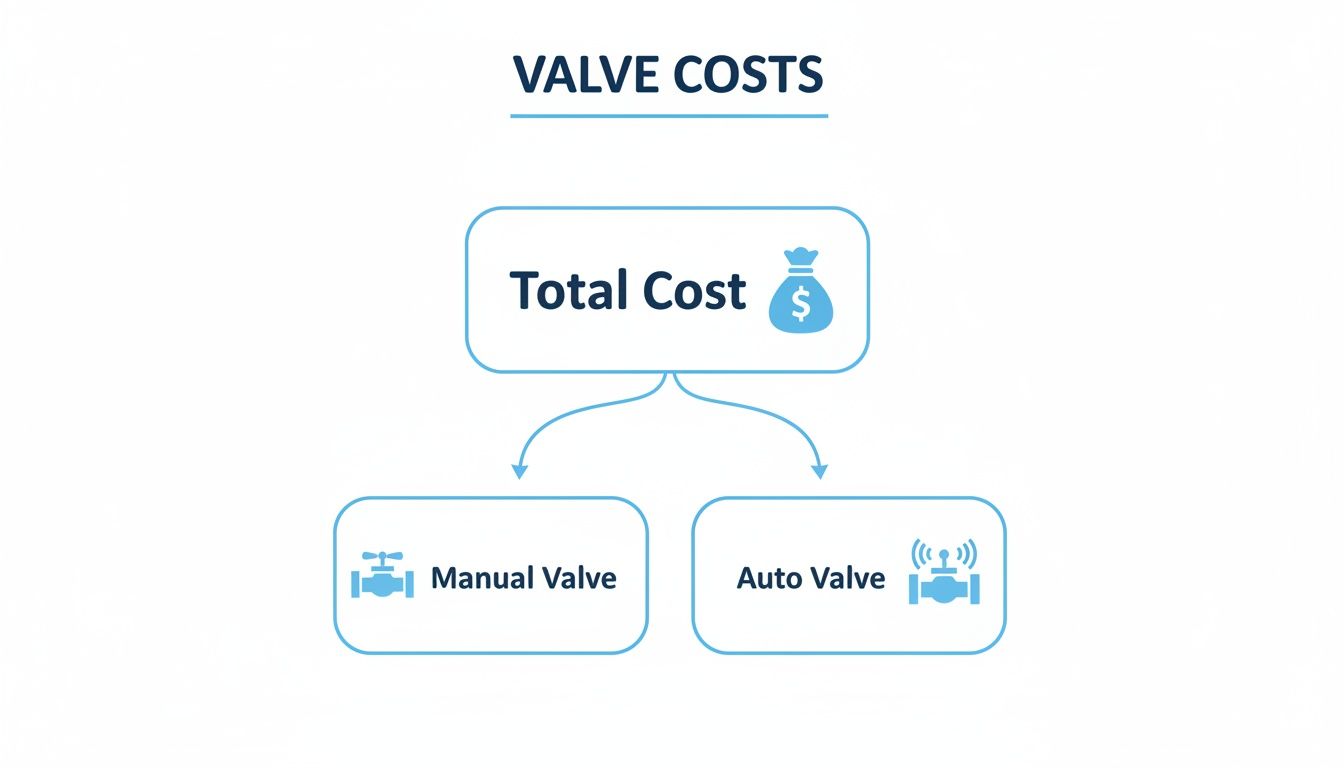
As you can see, although automatic valves have a higher upfront hardware cost, both types are affected by the same installation variables that shape the final price.
National Averages vs. Local Los Angeles Realities
Nationally, the average cost to replace a main water shut-off valve is around $500, with most homeowners paying between $375 and $600.
Of course, that's for a relatively standard job. If the installation requires digging or trenching to reach the main line, you could see costs push past $1,000 quickly. Another hidden cost driver is permit fees, which can run anywhere from $50 to $500 depending on your location.
Here in the Los Angeles area, a simple indoor replacement will likely land in the $400–$700 range. It might be tempting to put off that expense, but it's a risky gamble. The average insurance claim for moderate water damage easily exceeds $5,000, which makes a few hundred dollars for a new, reliable valve feel like a very smart investment in your home's protection.
Choosing Between Manual and Automatic Shut Off Valves
Deciding on a new water shut-off valve is no longer a simple plumbing choice. Today, it’s a major decision that impacts your home's protection, daily convenience, and even your ability to comply with new California insurance requirements. The choice boils down to two options: classic manual valves and modern automatic systems.

Manual valves are the tried-and-true option everyone recognizes—the simple ball or gate valves you see under sinks or at your main water line. They are dependable, straightforward, and much easier on the wallet upfront. The catch? They only work if you are physically there to turn the handle when disaster strikes.
Automatic shut-off valves, on the other hand, act like a full-time security guard for your plumbing. These smart systems are designed to detect a leak or unusual flow and instantly cut the water supply, whether you're home or halfway across the world. This proactive layer of security is precisely why many California insurance carriers are now encouraging—or even mandating—their installation to maintain an active policy.
Comparing Your Valve Options
Ultimately, the choice between manual and automatic comes down to balancing your budget against your tolerance for risk. A lower initial cost to install a water shut off valve is tempting, but the peace of mind an automatic system provides can be invaluable.
The real game-changer is reaction time. A manual valve’s effectiveness depends entirely on you finding a leak and getting to the valve in time. An automatic valve reacts on its own within seconds, potentially saving you from thousands of dollars in water damage.
To help lay it all out, here are the key differences:
Manual Valves (Pros): Lower cost for the valve itself, simpler installation, and a long history of reliability with very little maintenance.
Manual Valves (Cons): Useless if no one is home to turn it off, offering zero protection from leaks that happen while you're at work or on vacation.
Automatic Valves (Pros): Provides 24/7 leak detection, can often be controlled from your phone, and may qualify you for insurance discounts.
Automatic Valves (Cons): Higher upfront investment for the device and installation, requires a power source, and involves more complex technology.
The Financial Side of Smart Protection
There's no sugarcoating it: automatic water shut-off valves cost more at the outset. But they're part of a fast-growing market, largely driven by insurance incentives and the push for water conservation. Industry data shows that advanced, sensor-based shut-offs are typically 30–40% pricier than their manual cousins, reflecting the tech inside. For a homeowner, that might mean a smart valve runs $200–$500, while a basic manual one is just $10–$50.
For those in drought-prone areas like Southern California, that higher cost is increasingly seen as a smart investment in long-term risk management. You can get a deeper dive into the numbers by reading the full research on the automatic shutoff valve market from Market Report Analytics.
Want to learn more about how this technology works and if it’s the right fit for your home? Check out our detailed guide on the advantages of automatic water shutoff valves.
Weighing a DIY Installation Against Hiring a Professional
Thinking about tackling that shut-off valve installation yourself to save a few bucks? It’s a tempting thought. On the surface, going the DIY route seems like an easy way to cut down the cost to install a water shut off valve, but the reality is often messier—and riskier—than you might expect.
While you might save money upfront, one tiny mistake can blossom into a massive headache. Improper soldering could lead to a slow, hidden leak inside your walls, silently causing rot and mold. You could also accidentally violate a local plumbing code, leading to fines or major problems when you sell your home. Even worse, a botched installation might give your homeowner's insurance a reason to deny a future water damage claim.
The True Cost of a DIY Mistake
Hiring a professional plumber isn't just about paying for an extra set of hands; it's an investment in peace of mind. A licensed expert arrives with the right tools, years of experience, and a thorough understanding of local building codes. They ensure the job is done right the first time, and their work is typically backed by a warranty that protects your home and your wallet.
When weighing DIY against hiring a pro, it's helpful to understand the role of professional plumbing companies. These experts are trained to handle the unexpected curveballs that can turn a simple weekend project into a nightmare—like corroded pipes, non-standard fittings, or a main line that won’t budge.
The biggest risk of a DIY installation isn't the valve itself—it's everything connected to it. A professional plumber isn't just installing a part; they are protecting your entire plumbing system and your home from catastrophic water damage.
Breaking Down the Professional Fee
When you examine a plumber’s invoice, you'll notice the valve itself is often the least expensive part. What you're really paying for is the professional labor, expertise, and operational overhead.
For example, a simple fixture valve might only cost $10–$50, but the total bill for a professional installation will likely land between $150–$300. That means 80–90% of your payment covers the plumber’s time, travel, and specialized skill set. For more complex jobs, like a main line valve, labor costs can easily climb to $200–$400 because the stakes are much higher.
A DIYer might see a theoretical saving here, but that figure assumes you have all the necessary tools and, more importantly, that you make zero mistakes. For most Los Angeles homeowners, the professional fee is a small price to pay for guaranteed, code-compliant work and the liability coverage that comes with it.
Of course, choosing the right professional is key. Our guide on how to choose the right plumber for your home can walk you through what to look for, ensuring your installation is handled correctly from the start.
How We Ensure Your Installation is Safe and Reliable
Choosing the right plumber is just as important as selecting the right valve for your home. Here at ZH Plumbing, we understand that installing a new water shut-off valve is a critical investment in your property's safety. That’s why our process is designed from the ground up to deliver durable, high-quality work for homeowners throughout the Greater Los Angeles area.
It all starts with being there when you need us. Plumbing emergencies don’t keep a 9-to-5 schedule, which is why we offer 24/7 emergency service. Whether you're dealing with a sudden gusher or planning a proactive upgrade, our licensed and insured team is always ready to respond quickly and efficiently.
Our Straightforward Installation Process
We believe in keeping things simple and transparent. You won’t find hidden fees or last-minute surprises with us—just honest, professional work designed to protect your home.
Here’s exactly what you can expect when you call us:
A No-Obligation Inspection: First, we conduct a thorough assessment of your current plumbing system. This is a critical step that helps us identify the best type of valve and the ideal location for your specific setup.
A Detailed, Transparent Quote: After our evaluation, we provide a clear, itemized quote. You’ll see the full cost to install a water shut off valve—including parts, labor, and any necessary permits—before we begin any work.
Expert Installation: Our seasoned technicians will handle the installation with precision, whether it's a simple manual valve or a more complex automatic system needed to meet new California insurance standards.
Final Testing and Cleanup: We aren't finished until we’ve rigorously tested the new valve to ensure it’s completely leak-free. And, of course, we’ll leave your home just as clean as we found it.
Peace of mind is what this is all about. A properly installed shut-off valve is your home's first line of defense against water damage, and our job is to make sure that defense is rock-solid.
That initial inspection is a vital part of our service. Getting the full picture is essential, which is why we always stress the importance of plumbing inspection services for maintaining your home's health long-term. Our focus is on providing real solutions that keep your property safe and secure.
Common Questions About Water Shut Off Valves
If you're planning to install a new water shut-off valve, it’s natural to have questions. To help Los Angeles homeowners feel more prepared, we've gathered the most common queries we receive and provided clear, direct answers.
How long does it take to install a new water shut off valve?
The good news is that it's often a quick job for a professional. The exact time, however, depends on the valve's type and location.
Fixture Valves: A simple valve under a kitchen sink or behind a toilet is usually a 30 to 60-minute job, as access is easy and the connections are standard.
Main Water Shut-Off Valves: Replacing your home's main valve is more involved. If it's easily accessible, it typically takes 1 to 2 hours. If the valve is inside a wall or underground, the job can extend to 3-5 hours or more to account for cutting and patching drywall or digging.
Do you need to shut off the main water supply to replace a smaller valve?
Yes, absolutely. This is a non-negotiable safety step for any valve replacement. Before a plumber can work on any valve—whether it’s for a single faucet or the main line—the water supply to the entire property must be turned off. This depressurizes the pipes, preventing an uncontrolled gusher of water that would cause immediate flooding. Once the new valve is securely installed, the main supply is turned back on slowly, and the work is meticulously checked for leaks.
How do I know if my insurance requires an automatic shut off valve?
This question is increasingly common, especially for homeowners in California. Many insurance companies now require automatic water shut-off systems to issue or renew a policy, particularly for high-value properties or homes in areas with a history of expensive water damage claims.
The best way to know for sure is to contact your insurance agent directly or review your policy documents. They can tell you exactly what is required to keep your home in compliance.
Many insurers see automatic shut-off valves as a key tool for risk management. Installing one not only meets a potential requirement but also demonstrates that you are proactive about protecting your property, which can sometimes lead to a discount on your premiums.
What is the average lifespan of a new water shut off valve?
A new valve is an investment in long-term reliability. Its lifespan depends on the valve type, material quality, and your local water hardness.
Manual Ball Valves: Modern brass ball valves, the current industry standard, are built to last. A quality valve can provide 20 to 30 years of service or more with minimal maintenance. They are a significant upgrade from older gate valves, which were prone to seizing or leaking.
Automatic Shut-Off Valves: The mechanical valve component has a similar lifespan. The electronic parts, like sensors and the control unit, generally last about 10 to 15 years, consistent with other smart home technology.
Protecting your home from water damage starts with having reliable shut-off valves. Whether you’re looking to satisfy an insurance requirement or simply want the peace of mind that a modern plumbing system offers, our team is here to help. At ZH Plumbing, we provide free inspections to determine your exact needs and offer expert installation of both manual and automatic shut-off valves.
Comments