

.png)

8 Crucial Signs You Need a New Water Heater in Your Home for 2025
Is your morning shower cut short by ice-cold water? Are you hearing strange rumbling sounds from the utility closet? These aren't just minor annoyances; they are often clear signals that your water heater is failing. Ignoring these warnings can lead to a sudden breakdown, a damaging leak, or an expensive emergency replacement that disrupts your entire household. For property managers and landlords, a proactive approach to home care, including utilizing an ultimate rental property maintenance checklist, can help identify early signs of a failing water heater before they escalate into costly problems for your tenants.
This guide breaks down the 8 critical signs you need a new water heater, moving beyond the obvious to give you actionable insights. We'll explain what each symptom means, from discolored water to inconsistent temperatures, and help you differentiate between a simple fix and a mandatory replacement. By understanding these key indicators, homeowners in the Greater Los Angeles area can protect their property, avoid unexpected failures, and ensure they always have reliable hot water.
1. Rusty or Discolored Water
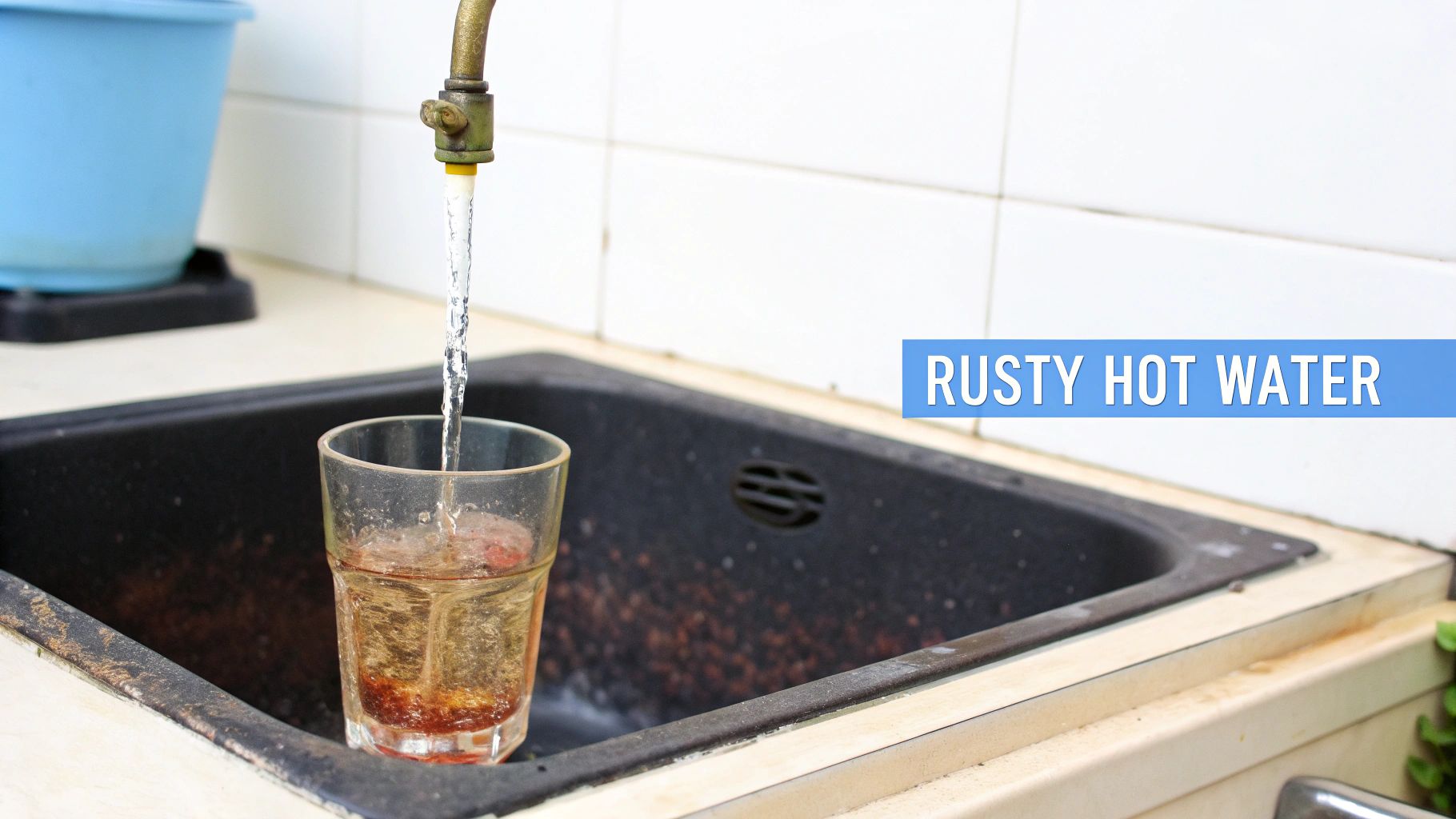
One of the most visually alarming signs you need a new water heater is rusty, brown, or yellowish water coming exclusively from your hot water taps. This discoloration is a strong indicator that the inside of your water heater's storage tank is corroding. The primary cause is often a depleted anode rod, a component designed to sacrifice itself to rust to protect the steel tank lining. Once the anode rod is gone, the tank itself begins to rust from the inside out.
Why It Signals Replacement is Imminent
This isn't just an aesthetic issue; it's a structural one. The rust you see is physical evidence that the tank's integrity is compromised. This corrosion weakens the metal, making a leak or catastrophic tank failure significantly more likely. We often see this issue in older apartment buildings across Glendale and Hollywood, where water heaters have surpassed their 10-year service life without an anode rod replacement.
It's also important to distinguish between rusty pipes and a failing water heater. If both your hot and cold water are discolored, the problem may lie within your home's plumbing pipes. You can explore potential issues with your home's supply lines by reading more about identifying when your pipes may need replacing.
Quick Checks and Next Steps
To confirm the source, follow these steps:
Isolate the Problem: Fill a clear glass with only hot water from a tap close to the heater. If it's rusty and the cold water runs clear, the heater is the likely culprit.
Document Everything: Take photos of the discolored water to show your plumber for a faster, more accurate diagnosis.
Schedule an Inspection: Do not wait for a leak. If you see rusty hot water, schedule a professional inspection immediately. A service like ZH Plumbing's 24/7 diagnostic can pinpoint tank corrosion and help you decide between a risky repair and a necessary replacement.
2. Strange Noises (Rumbling, Popping, or Sediment Buildup)
If your water heater sounds more like a popcorn maker, it's a clear cry for help. Loud rumbling, popping, or crackling noises almost always point to significant sediment buildup at the bottom of the tank. This is especially common in Greater Los Angeles, where hard water contains high mineral content. As these minerals settle, they form a hardened layer that traps water underneath. When the burner ignites, this trapped water boils, creating popping and banging sounds as it escapes.
Why It Signals Replacement is Imminent
This isn't just an annoying sound; it’s the sound of your water heater working itself to death. The sediment layer acts as an insulator, forcing the burner to work harder and longer to heat the water. This constant overheating can damage the tank's inner lining and weaken the steel, making it brittle and highly susceptible to leaks. We frequently see this issue in Pasadena and Glendale homes with heaters over eight years old that have never been flushed, leading to premature failure.
This buildup also destroys the lower heating element in electric models and severely reduces the unit's efficiency. While a tank flush can sometimes help, if the sediment has calcified for years, it may be impossible to remove, making replacement the only safe option.
Quick Checks and Next Steps
Before calling for a replacement, you can try to diagnose the severity:
Listen Closely: Note when the noises occur. Is it only when the heater is actively running? Does it sound like rocks are tumbling inside? Documenting this for your plumber is very helpful.
Attempt a Flush (with caution): If you are experienced with home maintenance, you can try flushing the tank. However, if the unit is old and noisy, flushing can sometimes dislodge sediment that was plugging a pre-existing leak, making the problem worse.
Schedule a Professional Flush & Inspection: The safest route is to have a professional perform a system flush and inspect the unit. A plumber can tell if the noise is a sign of irreversible damage. Learn more about professional maintenance by exploring these essential water heater maintenance tips for Los Angeles homeowners. If the noise persists after a professional flush, it's time to budget for a new heater.
3. Water Leaks or Puddles Around the Tank
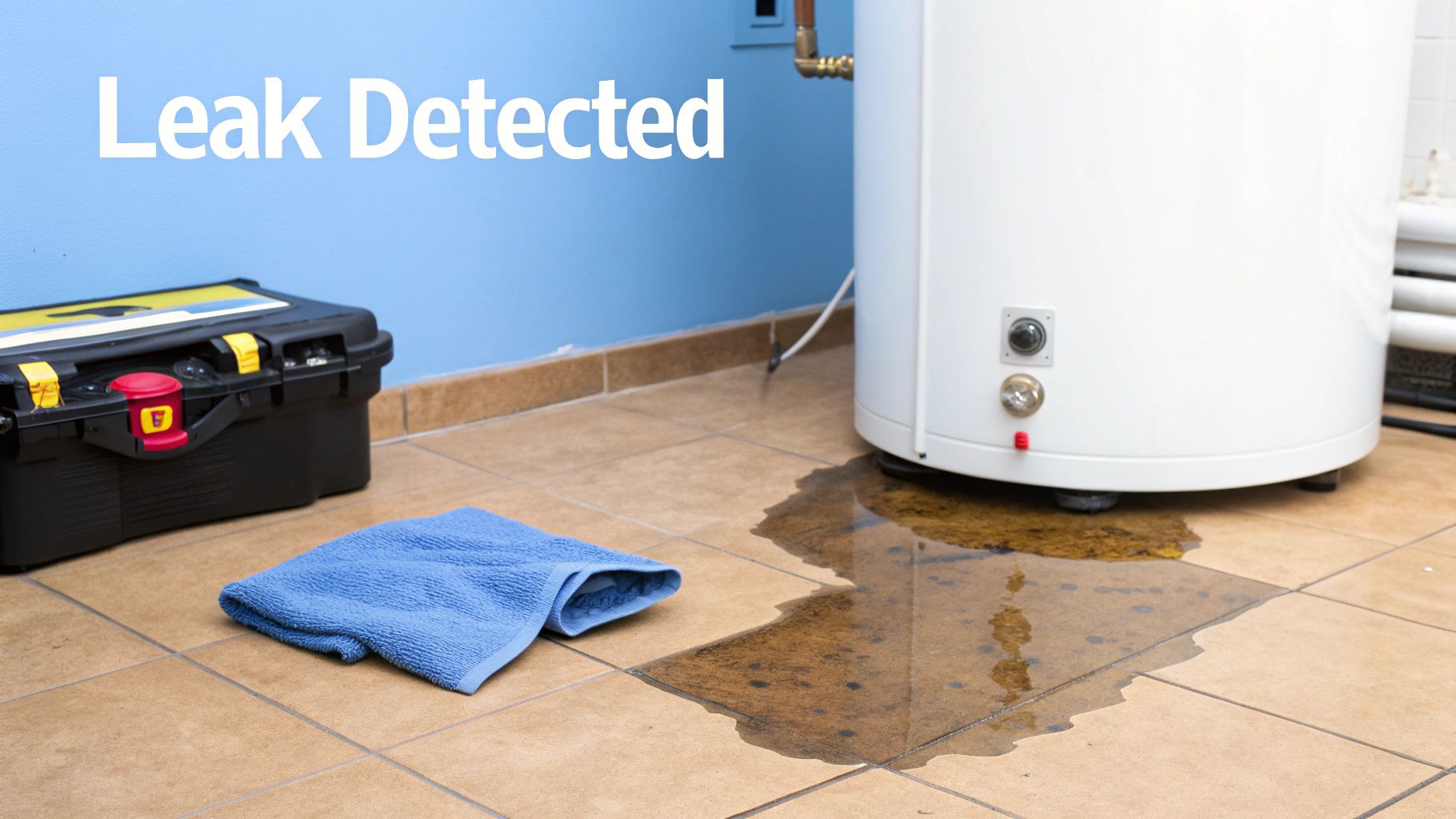
Finding water pooling around the base of your water heater is one of the most urgent signs you need a new water heater. While a minor drip from a valve might be repairable, any moisture originating from the tank itself is a critical warning. This usually indicates that internal corrosion has created a crack or fissure, meaning the structural integrity of the tank has failed.
Why It Signals Replacement is Imminent
A leaking tank cannot be repaired; it must be replaced. The small puddle you see today can quickly escalate into a full-blown flood, causing extensive and costly water damage to your floors, walls, and personal belongings. In multi-unit properties, like those common in Pasadena and Glendale, a single leaking heater can damage adjacent units, compounding the problem. This is not a "wait and see" situation; a leaking tank is a ticking time bomb.
It's crucial to act fast, as even slow drips can be signs of a more significant problem. If you suspect a leak but can't find the source, it's wise to understand the common signs of a hidden water leak in your home to rule out other plumbing issues.
Quick Checks and Next Steps
If you discover water near your heater, take these immediate actions:
Identify the Source: Carefully dry the area and try to pinpoint where the water is coming from. Check the temperature and pressure (T&P) relief valve, drain valve, and inlet/outlet connections first. If water is seeping from the tank seams or bottom, replacement is unavoidable.
Shut Off Utilities: For a significant leak, immediately shut off the water supply to the heater. If you have a gas heater, also turn off the gas supply. This minimizes the risk of further damage and potential safety hazards.
Call for Emergency Service: A leaking water heater tank is a true plumbing emergency. Contact a 24/7 service like ZH Plumbing immediately to get a professional on-site for a rapid assessment and replacement plan.
4. Water Heater Age Over 10-12 Years
Sometimes the most reliable sign you need a new water heater isn't a dramatic failure but simple arithmetic. Conventional tank-style water heaters are engineered to last between 8 and 12 years. Once a unit surpasses the 10-year mark, its internal components, including the tank lining and heating elements, begin to degrade significantly, dramatically increasing the risk of an unexpected leak. The hard water common in Los Angeles can accelerate this aging process.
Why It Signals Replacement is Imminent
Age is not just a number; it’s a direct measure of wear and tear. After a decade of constant expansion and contraction from heating cycles, the steel tank becomes fatigued and vulnerable to cracks and corrosion. We frequently see original water heaters from the early 2000s in homes across Pasadena and Santa Monica that are operating on borrowed time. Continuing to use an old unit is a gamble where the potential cost of water damage from a burst tank far outweighs the cost of a proactive replacement.
The decision often comes down to weighing the age against performance issues. An older unit that also struggles to produce enough hot water is a clear candidate for replacement. Understanding the key factors in this decision can help you plan effectively; you can read more about whether to repair or replace your water heater to make an informed choice.
Quick Checks and Next Steps
To determine if your water heater's age is a pressing concern, take these steps:
Find the Manufacturing Date: Look for the manufacturer's sticker on the side of the tank. The installation or manufacturing date is often clearly printed.
Decode the Serial Number: If there's no date, the serial number holds the key. The first few characters typically represent the year and week of production (e.g., a serial number starting with "1425..." was likely made in the 25th week of 2014).
Plan Ahead: If your heater is approaching 10 years old, start budgeting for a replacement now. Scheduling this during a slower season can help you avoid emergency rates and explore modern, energy-efficient models.
5. Insufficient or Inconsistent Hot Water
One of the most frustrating signs you need a new water heater is when your hot showers become shorter and your taps produce lukewarm water. This gradual loss of hot water or inconsistent temperature is often caused by a failing heating element in an electric heater or a malfunctioning gas burner. Another major culprit is sediment buildup, where years of mineral deposits at the bottom of the tank insulate the water from the heat source and reduce the tank's usable volume.
Why It Signals Replacement is Imminent
While a single faulty thermostat or heating element can sometimes be repaired, a persistent decline in performance on an older unit (10+ years) points to systemic failure. The sediment that displaces hot water also forces the heater to work harder, causing excessive wear and tear on all its components. We frequently see this in larger households across Los Angeles, where an aging heater can no longer meet peak demand. Eventually, the unit will fail to produce any significant hot water.
For many families struggling with this issue, it’s an opportunity to upgrade. Exploring the differences between tankless and traditional water heaters can help you find a solution that provides endless hot water and better energy efficiency.
Quick Checks and Next Steps
To determine if replacement is on the horizon, try these steps:
Check the Thermostat: Ensure your water heater’s thermostat is set to 120°F. If it's set correctly but the water isn't hot enough, the problem is mechanical.
Time Your Hot Water: Track how long you get truly hot water during a shower. If this duration decreases over a few weeks, the unit's capacity is diminishing.
Schedule a Professional Diagnostic: A plumber can distinguish between a simple sediment issue and a failing heating element. A professional flush may provide a temporary fix for an aging tank, but you should start planning for a replacement.
6. Visible Cracks or Damage to Tank Exterior
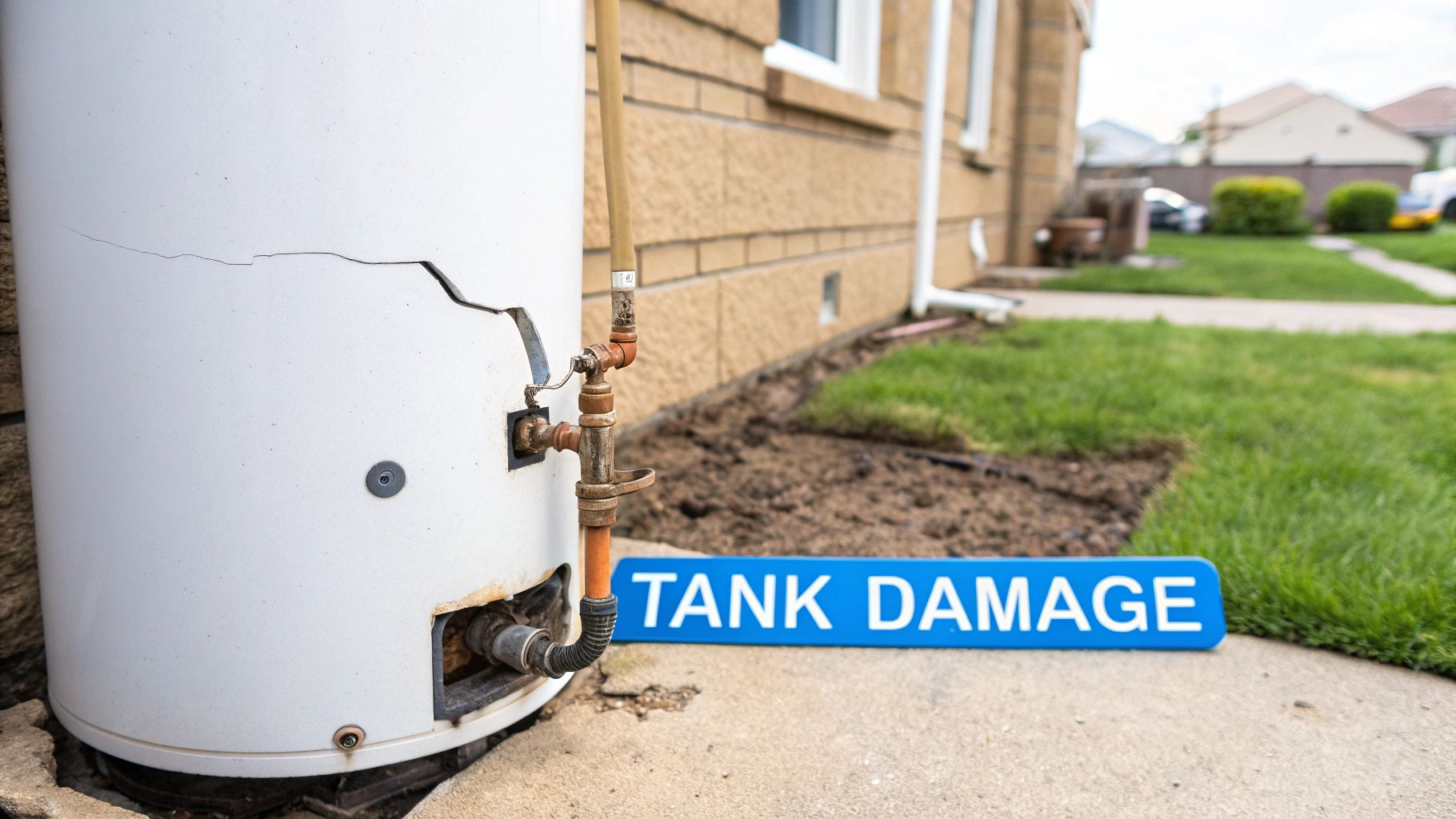
One of the most urgent and non-negotiable signs you need a new water heater is any form of visible damage to the tank's exterior. This includes stress cracks, corrosion holes, significant dents, or splits along welded seams. Unlike subtle internal issues, external damage is a direct and immediate threat to the structural integrity of the pressurized tank. Constant expansion and contraction from heating cycles can cause a small crack to fail catastrophically without warning.
Why It Signals Replacement is Imminent
A compromised tank exterior is not a repairable issue; it is a ticking time bomb for a major flood. The internal pressure of a water heater is significant, and a weakened outer shell cannot contain it reliably. We have responded to emergency calls across the Los Angeles area where pre-existing weaknesses in a tank turned into full-blown ruptures. From commercial facilities with impact damage to homes where coastal air has accelerated corrosion, a visibly damaged tank requires immediate replacement.
The risk extends beyond water damage. If the damage affects a gas water heater, it could compromise the burner assembly or gas lines, creating a potential fire or carbon monoxide hazard.
Quick Checks and Next Steps
If you notice any external damage, act immediately:
Perform a Visual Inspection: Use a flashlight to carefully inspect the entire surface of your tank, paying close attention to seams and connections.
Take Detailed Photos: Document any cracks, holes, or significant dents from multiple angles. This is crucial for insurance claims and for providing your plumber with an accurate picture of the situation.
Call for Emergency Service: Do not attempt a temporary patch. A crack or hole warrants an immediate call to a 24/7 emergency plumber. At ZH Plumbing, we treat visible tank damage as a top-priority call to prevent catastrophic failure.
Prioritize Safety: If you have a gas heater with visible damage and suspect a leak, shut off the water supply to the tank.
7. Pressure Relief Valve (TPR/PRV) Leaking or Discharging Continuously
A constant drip or a sudden gush of water from a pipe connected to the side of your water heater is a serious warning sign. This comes from the Temperature and Pressure Relief (TPR) valve, a critical safety device designed to release water if the temperature or pressure inside the tank becomes dangerously high. While minor discharge can happen during a heating cycle, continuous leaking points to a significant problem.
Why It Signals a Potential Hazard
A constantly discharging TPR valve is an alarm bell for the system. The issue could be a faulty valve, but more often it signals that the tank is experiencing excessive pressure. This is common in areas across Los Angeles where incoming municipal water pressure can exceed the safe operating limit of 80 PSI for residential plumbing. Left unaddressed, this high pressure can lead to a catastrophic tank rupture.
It's crucial to understand that the TPR valve is doing its job by indicating a dangerous condition. Simply replacing the valve without diagnosing the root cause is like silencing a smoke detector during a fire. The underlying issue will remain, compromising the tank's integrity and your safety.
Quick Checks and Next Steps
To assess the situation safely, follow these recommendations:
Observe the Discharge: Check the discharge pipe for water stains, active dripping, or pooling water. Note if the leaking is constant or happens only when the heater is running.
Check the Temperature Setting: Ensure your water heater's thermostat is set to 120°F. Higher settings can contribute to excessive pressure.
Never Cap the Valve: Under no circumstances should you ever block or cap the TPR valve's discharge pipe. This can turn your water heater into a high-pressure bomb.
Schedule a Professional Pressure Test: The only way to know the true cause is to measure the pressure inside the tank. A qualified plumber can test your system's PSI and determine if a faulty valve, high municipal pressure, or a failing tank is the culprit.
8. Rapidly Increasing Water and Energy Bills Without Increased Usage
One of the most subtle yet significant signs you need a new water heater is a sudden, unexplained spike in your utility bills. If your household's hot water usage has remained consistent but your gas or electric bills are steadily climbing, it's often due to your water heater losing its efficiency. Over time, sediment buildup coats the heating elements or the bottom of the tank, forcing the unit to work harder and longer to heat the same amount of water, consuming more energy in the process.
Why It Signals Replacement is Imminent
A gradual loss of efficiency is a natural part of a water heater's aging process. Components wear out, insulation degrades, and mineral deposits accumulate, creating an energy drain that directly impacts your wallet. This financial drain is a clear indicator that the unit is on its last legs and operating far below modern efficiency standards. Continuing to use it means you're paying a premium for subpar performance.
While flushing the tank can provide a temporary boost, it cannot reverse the permanent efficiency loss from age-related wear. At this stage, the ongoing cost of wasted energy often makes replacement a more financially sound decision.
Quick Checks and Next Steps
To confirm if your water heater is the source of high bills, follow these steps:
Analyze Your Bills: Gather your utility bills from the past 24-36 months. Compare the usage (therms for gas, kWh for electricity) year-over-year, accounting for any rate hikes from the utility company. A consistent upward trend in usage despite stable habits is a major red flag.
Factor in Seasonal Changes: Ensure you are comparing similar months (e.g., this January vs. last January) to rule out fluctuations from seasonal heating or cooling needs.
Schedule an Efficiency Assessment: A professional can perform a diagnostic to measure your unit's current performance against its original factory rating. ZH Plumbing offers efficiency assessments and bill comparison analyses to help Los Angeles homeowners identify the source of rising costs.
8-Point Comparison: Signs You Need a New Water Heater
Item | Implementation Complexity 🔄 | Resource Requirements ⚡ | Expected Outcomes 📊 | Ideal Use Cases 💡 | Key Advantages ⭐ |
|---|---|---|---|---|---|
Rusty or Discolored Water | Low–Medium — visual diagnosis; likely replacement if anode failed | Moderate — plumber inspection; possible anode replacement or new heater ($800–$2,500) | Restored water quality if replaced; temporary filtration may be needed | Hot-water discoloration from single taps; visible rust in containers | Clear visual indicator enabling prompt action before full failure |
Strange Noises (Rumbling/Popping) | Low–Medium — diagnostic listening and flushing; may need replacement | Low–Moderate — professional flush, possible softener or element work | Temporary noise reduction and efficiency gain; recurrence likely in hard water | Hard-water areas with audible tank noise during heating cycles | Audible early warning that allows planned maintenance or replacement |
Water Leaks or Puddles Around Tank | Medium–High — fast diagnosis; often emergency replacement | High — emergency plumber, replacement, water damage mitigation | Stops ongoing leakage and prevents flood damage; usually requires new unit | Any visible pooling, wet base, or intermittent leaks after heating | Highly visible sign requiring immediate action to prevent property loss |
Water Heater Age Over 10–12 Years | Low — assessment and planned replacement scheduling | Moderate–High — replacement, permits, optional upgrades (tankless/hybrid) | Long-term reliability and efficiency improved when replaced proactively | Heaters approaching or exceeding 9–10 years, expiring warranties | Allows planned upgrade, avoids emergency premiums and frequent repairs |
Insufficient/Inconsistent Hot Water | Medium — diagnostic testing of elements, thermostat, sediment | Moderate — diagnostics, flushing, element/thermostat repair or replacement | Restored capacity if repaired; replacement yields permanent solution (or tankless) | Homes with declining supply, long recovery times, or fluctuating temps | Identifies fixable components or justifies efficient upgrade (tankless/hybrid) |
Visible Cracks or Damage to Tank Exterior | High — immediate safety assessment; emergency replacement required | Very High — same‑day replacement, possible gas/water shutoff, mitigation | Eliminates imminent rupture risk; prevents catastrophic flooding and hazards | Any visible cracks, holes, severe corrosion, or post‑quake damage | Definitive safety failure — mandates immediate replacement to protect property |
Pressure Relief Valve Leaking/Discharging | Low–Medium — valve test and pressure/temperature checks | Low–Moderate — TPR valve replacement ($150–$300); regulator if needed ($300–$500) | Stops unsafe discharge if root cause corrected; may reveal deeper tank issues | Continuous dripping from TPR or frequent discharges during heating | Safety system alert; sometimes resolved with simple valve or pressure fixes |
Rapidly Increasing Water & Energy Bills | Low–Medium — bill audit and heater efficiency assessment | Low–Moderate — utility analysis, diagnostic visit, possible replacement | Quantified ROI for upgrades; lower ongoing energy/water costs if replaced | Year‑over‑year bill increases without usage change | Objective data to justify replacement; potential rebates and measurable savings |
Making the Right Choice for Your Home's Hot Water
Recognizing the warning signs your water heater sends is a crucial step in safeguarding your property and ensuring your family’s comfort. Throughout this guide, we’ve detailed the key signs you need a new water heater, from the initial appearance of rusty water to the unmistakable sounds of sediment buildup or the alarming sight of a leak. Each symptom tells a story about your unit's internal health.
Ignoring these indicators often leads to a much bigger problem. A slow leak can become a catastrophic flood, causing extensive water damage. An aging, inefficient unit quietly drives up your energy bills, costing you more in the long run than a timely replacement. The most critical takeaway is to be proactive. Instead of waiting for a cold shower or an emergency call for a burst tank, you can take control of the situation.
Your Actionable Next Steps
If several of these warning signs resonate with your current situation, the path forward is clear. A professional assessment is your most valuable tool for making an informed decision. An expert can definitively diagnose whether a simple repair will suffice or if a full replacement is the most cost-effective and safest solution.
This proactive approach provides several key benefits:
Preventing Emergencies: You avoid the stress, cost, and damage associated with a complete system failure.
Informed Decision-Making: You have the time to research modern, high-efficiency options that better suit your family’s needs and budget.
Maximizing Value: A planned installation allows you to choose the right system for long-term energy savings, rather than being forced into a quick, expensive fix.
Ultimately, understanding these signs empowers you as a homeowner. It transforms a potential disaster into a manageable upgrade, protecting your investment and ensuring a reliable supply of hot water for years to come.
Don't wait for a small issue to become a major headache. If you've noticed any of these signs you need a new water heater, contact the experts at ZH Plumbing for a comprehensive, no-obligation inspection. Our licensed technicians are available 24/7 across the Greater Los Angeles area to provide honest diagnostics and help you choose the best solution for your home.
Comments