

.png)

A Homeowner's Guide to Burst Pipe Repair in Los Angeles
The sound of gushing water where it shouldn't be is a nightmare for any homeowner. Whether you're in a Santa Monica bungalow or a hillside home in Pasadena, a burst pipe kicks your adrenaline into high gear, starting a race against the clock to prevent a small problem from becoming a catastrophe. Knowing exactly what to do can save you thousands in damages and immense stress.
Panic is understandable, but a clear head and a quick response will make all the difference. The mission is simple: stop the water, secure the area, and get a professional on the way. Honestly, what you do in that first hour is often more critical than anything else.
Your Immediate Response to a Burst Pipe in LA
Stop the Water at the Source
First thing's first: you have to shut off your home’s main water valve. This is non-negotiable. It’s the only way to stop the flood and keep things from getting worse. If you’re not sure where it is, now’s the time to find it before you need it.
In most Southern California homes, you can usually find the main shut-off valve in one of these spots:
Outside your home: Look for a concrete box near the street, often marked "WATER."
In the garage: Typically, it's on a wall where the main water line enters the house.
In a utility closet or basement: Check for it near your water heater.
Once you’ve found it, turn the knob or handle clockwise all the way. If it's a lever-style valve, a simple quarter-turn will do the trick.
Eliminate Electrical Dangers
Water and electricity are a lethal mix. If there's standing water anywhere near electrical outlets, appliances, or your circuit breaker panel, you need to kill the power immediately. Head to your breaker box and flip the main breaker off, or at the very least, shut off the breakers for all the affected rooms.
Do not, under any circumstances, step into standing water if you think live electricity might be involved. If you can’t get to your breaker box safely, wait for an emergency plumber or an electrician to handle it. Your safety is worth more than any property.
Document and Begin Cleanup
With the immediate threats of water and electricity handled, your next job is to become a detective. Grab your phone and start taking pictures and videos of everything—the burst pipe itself, the path of the water, and any damage to your floors, walls, furniture, and personal items. This documentation is gold when it comes to filing an insurance claim.
After you've recorded the scene, it’s time to start cleanup. Use buckets, mops, old towels, or a wet/dry vac to get as much water out as you can. The longer water sits, the deeper the damage goes, and the faster mold and mildew can set in.
The infographic below breaks down these first three critical steps.
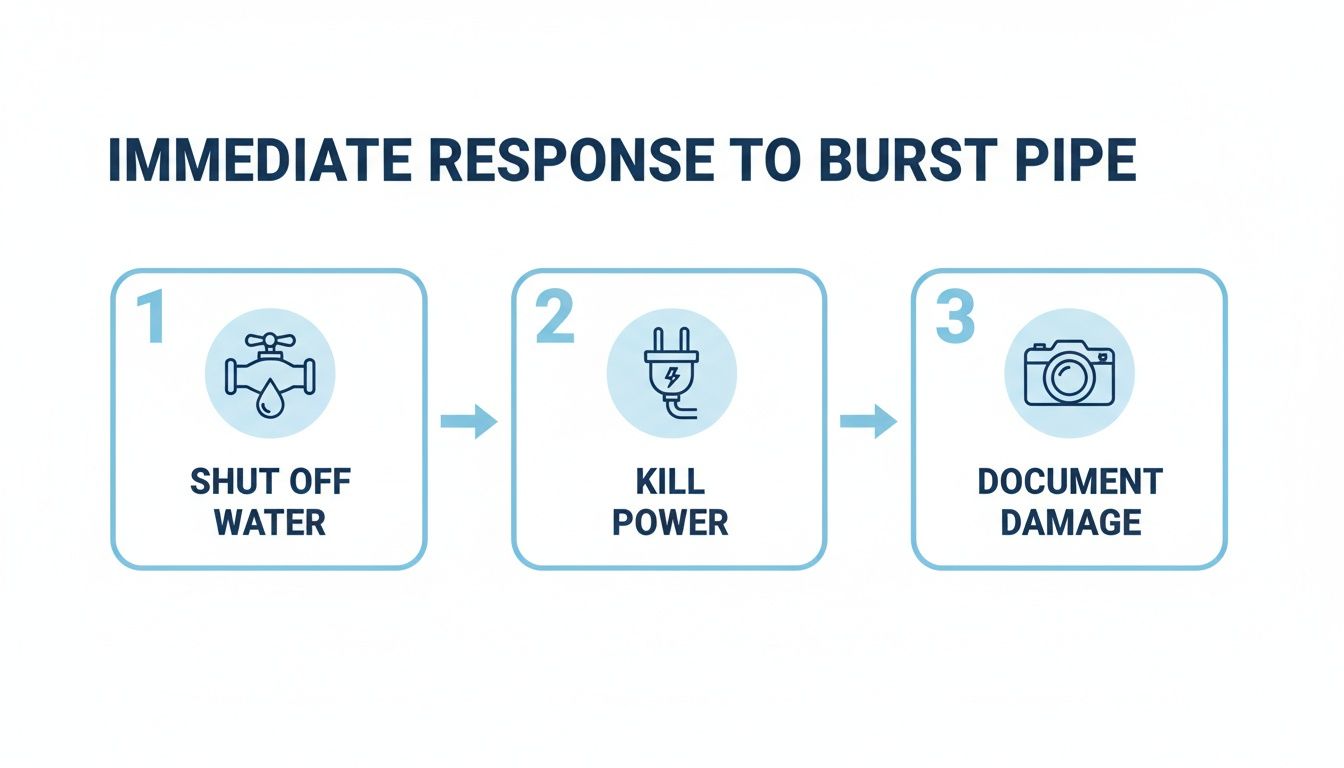
This sequence—water control, electrical safety, evidence collection—is your playbook. Once the immediate crisis is over, you'll need to tackle the aftermath. Dealing with soaked carpets quickly is a big part of preventing long-term issues, so it helps to know how to get rid of wet carpet smell before it becomes a problem.
Why Pipes Fail in Southern California Homes
Pipes don't just burst out of the blue; there's always an underlying reason. Here in Los Angeles, our homes face a unique cocktail of aging infrastructure and serious environmental stress. Understanding these local factors is your first move in preventing a future plumbing disaster.
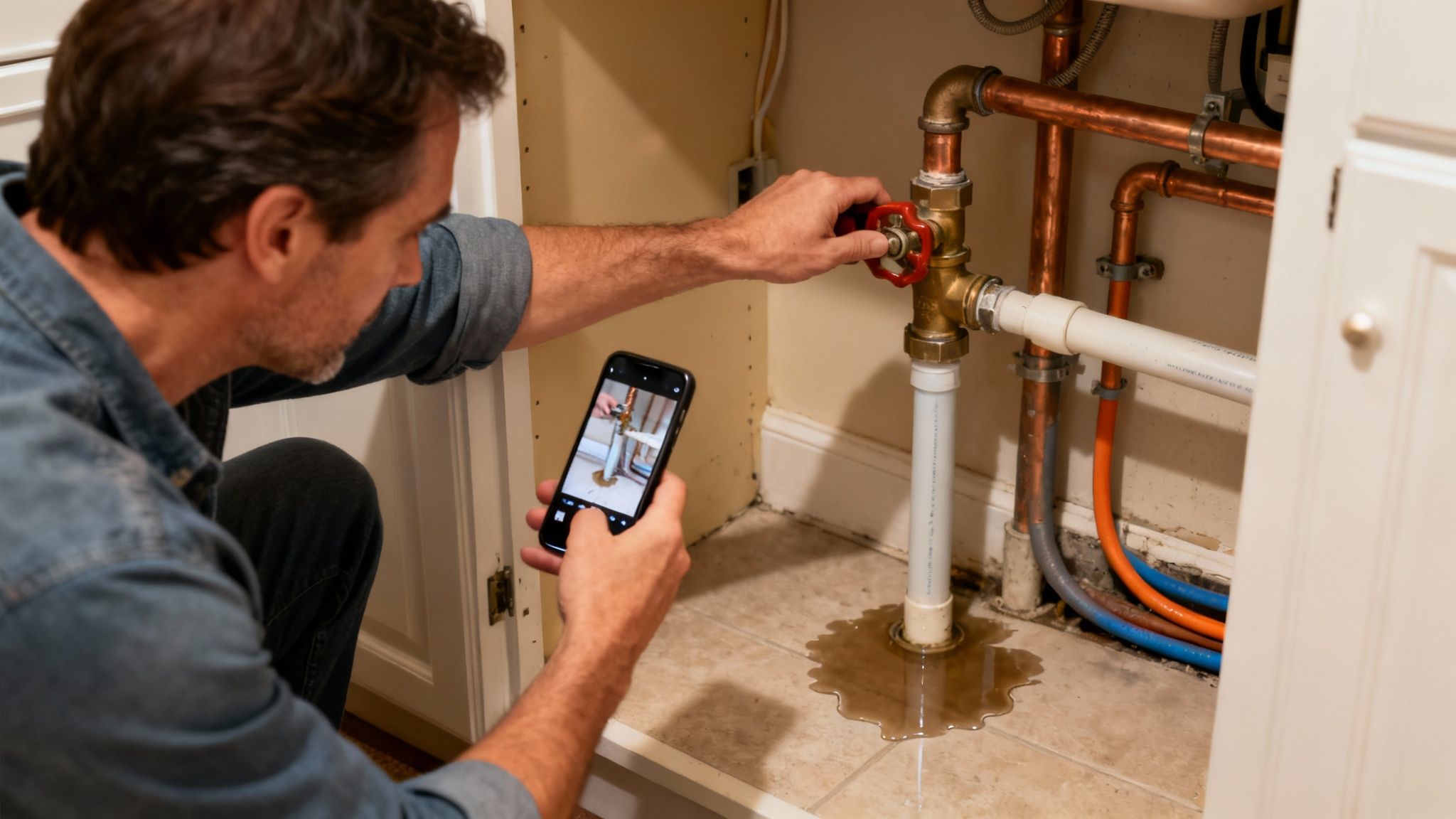
So many homes across our area, from Hollywood to the San Fernando Valley, were built back in the mid-20th century. That means a lot of them are still running on their original galvanized steel or copper pipes, which are now well past their prime. After decades of use, these old materials simply get tired, thin out, and become ticking time bombs.
The Problem with Aging Infrastructure
Let's be honest: a huge chunk of the plumbing hidden under our homes is just plain old. These pipes are fighting a daily battle against internal and external pressures they were never meant to handle for this long.
Galvanized Steel Pipes: Once the industry standard, these pipes are infamous for rusting from the inside out. As rust builds up, it chokes off water flow and eats away at the pipe walls until they can't take the pressure anymore.
Copper Pipes: While they hold up better than steel, even older copper pipes can spring tiny pinhole leaks. We often see these as the first warning sign of widespread corrosion that's setting the stage for a sudden, catastrophic burst.
This isn't just a local problem. Nationally, the estimate to fix our failing water infrastructure is a staggering $1 trillion over the next 25 years, and burst pipes are a massive piece of that puzzle. For homeowners in Greater LA, where mid-century pipes deal with some unique challenges, the risk is especially real.
Environmental Stressors Unique to LA
On top of just getting old, our Southern California environment piles on extra layers of stress that can make pipes fail much faster. These factors can turn a small issue into an urgent crisis that demands emergency burst pipe repair.
High Water PressureLook around—Los Angeles has a lot of hills. To get water to every home, municipal systems have to pump it at some seriously high pressures. That's great for your morning shower, but any pressure over 80 PSI puts constant, heavy strain on your pipes, joints, and fixtures. It dramatically raises the risk of a blowout.
Hard Water CorrosionSoCal is famous for its hard water, which is loaded with minerals like calcium and magnesium. These minerals create limescale that builds up inside your pipes. Not only does this narrow the pipe and restrict flow, but it also actively corrodes the metal, weakening it from the inside over time.
A slow, hidden leak is often the quiet prelude to a full-blown flood. Learning to spot the early signs of water damage in walls, like staining or bubbling paint, is crucial. It can help you catch a failing pipe before it turns your living room into a swimming pool.
Seismic Activity and Invasive RootsEven the small, frequent earthquakes we barely notice can shift the ground under your house. That movement puts a ton of stress on pipe connections, leading to cracks and leaks. Plus, the beautiful trees that give our neighborhoods character have aggressive root systems. Those roots are always searching for water, and they have no problem breaking right into sewer lines and water mains to get it.
When you put all these risks together, it's a lot to handle. If you're living in an older LA home, it might be a good time to get a professional to take a look under the hood. You can learn more about when to make that call in our guide on when it is time to replace your home’s pipes.
Modern Pipe Repair Methods for LA Properties
Once you’ve stopped the immediate flood, the big question becomes: how do we fix the pipe for good? A temporary clamp is just a band-aid. For a lasting solution, modern plumbing offers incredibly effective methods that go far beyond a simple patch job, each one suited to the unique situations we see across Los Angeles properties.
The choice of repair isn't just about plugging a leak; it’s about protecting your property, minimizing disruption, and investing wisely in your home's future. Your plumber will recommend a strategy based on where the burst pipe is, what it's made of, and the extent of the damage.
Traditional Dig-and-Replace Repairs
The classic approach to a burst pipe repair has always been the dig-and-replace method. It’s exactly what it sounds like: we excavate the area around the damaged pipe, cut out the broken section, and swap in a brand-new piece.
This method is straightforward and highly effective, especially for pipes that are easy to get to. If a pipe bursts inside an exposed wall or in a shallow, open part of your Glendale yard, this is often the most direct and budget-friendly solution.
But here’s the catch—the disruption. If that burst pipe is hiding under your new concrete driveway, a mature oak tree, or that beautiful Pasadena patio you just installed, digging becomes a destructive and costly nightmare. It means bringing in jackhammers or tearing up established landscaping, which adds significant restoration costs on top of the plumbing bill.
Trenchless Technology: The Smart Choice for LA
In a dense, built-up environment like Los Angeles, tearing up property is the last thing anyone wants. This is where trenchless repair methods really shine. These techniques allow plumbers like us to repair or even replace entire underground pipes with minimal digging, saving your landscape and hardscaping from destruction.
For Southern California homes, where space is tight and landscapes are valuable, two primary trenchless solutions have become the go-to options.
Pipe Lining (CIPP): Think of Cured-in-Place Pipe (CIPP) lining as creating a brand-new, seamless pipe right inside the old one. We insert a flexible, resin-coated liner into the damaged pipe and inflate it. The resin then hardens, forming a tough, durable pipe that seals every crack and hole. This is perfect for pipes with extensive cracks that are still structurally sound.
Pipe Bursting: When a pipe is too collapsed or damaged to be lined, pipe bursting is the answer. We pull a new pipe through the old, fractured one while a specialized "bursting head" breaks the old pipe apart, pushing the fragments harmlessly into the surrounding soil. This effectively replaces the entire line without having to dig a long, messy trench.
For a burst sewer line under a manicured lawn in Santa Monica or a water main under a historic Hollywood driveway, trenchless methods are an absolute game-changer. They turn what would be a multi-day excavation project into a much faster, cleaner, and often more affordable repair once you factor in the cost of restoring your property.
Comparing Pipe Repair Methods for LA Homes
When it comes to pipe repairs, one size doesn't fit all. The best approach depends entirely on your specific situation, from the pipe's location to the extent of the damage. Below is a quick comparison to help you understand the options a professional plumber might discuss with you.
Repair Method | Best For | Property Disruption | Typical Cost | Longevity |
|---|---|---|---|---|
Traditional Dig-and-Replace | Easily accessible pipes (in walls, shallow yards) | High: Requires excavation, trenching, and property restoration. | Moderate (plus restoration costs) | Very High: New pipe section lasts for decades. |
Pipe Lining (CIPP) | Pipes with cracks or leaks but still structurally intact | Low: Requires small access points, no major digging needed. | Moderate to High | High: Creates a new, seamless pipe that lasts 50+ years. |
Pipe Bursting | Severely damaged or collapsed underground pipes | Low: Requires small entry/exit pits, avoids trenching. | High | Very High: Completely replaces the old line with a new pipe. |
Ultimately, choosing the right method means balancing cost, convenience, and long-term reliability. An experienced plumber can assess your unique problem and guide you to the smartest, most effective solution for your LA home.
Real-World Scenarios: Which Method is Best?
Let's look at a couple of common Los Angeles scenarios to see how this plays out. A plumber might even use a mix of techniques for a particularly complex job.
Scenario A: The Leaky Pipe in the Wall A copper pipe inside your drywall springs a leak. In this case, a traditional repair is the clear winner. The plumber will cut a small, precise opening in the wall, replace the damaged section of pipe, and a drywall contractor can easily patch the hole. Simple, fast, and efficient.
Scenario B: The Burst Pipe Under the Driveway The main water line running under your concrete driveway fails. Digging would mean destroying a huge chunk of your driveway, costing thousands to repair. Pipe bursting is the superior choice here. It requires only small access pits at either end of the pipe, leaving your property—and your wallet—intact.
The demand for these less invasive fixes is growing fast. The global pipe bursting market is expanding, driven by aging infrastructure right here in places like North America. In the related drinking water pipe repair sector, the market was valued at USD 18.67 billion in 2024 and is projected to climb to USD 27.37 billion by 2032, with North America holding over 42% of the revenue share.
Understanding these modern repair options helps you have a much more informed conversation with your plumber. For a deeper dive into these techniques, check out our trenchless pipe repair guide for Los Angeles homeowners. With the right approach, a burst pipe can be fixed efficiently and permanently, protecting the value and beauty of your property.
What's This Burst Pipe Going to Cost Me?
Once the initial panic of a burst pipe subsides, every Los Angeles homeowner asks the same question: "How much is this going to set me back?" The honest answer is, it depends. There's no single price tag for a burst pipe repair; the final bill is a mix of several key factors that can change dramatically from one house to the next.
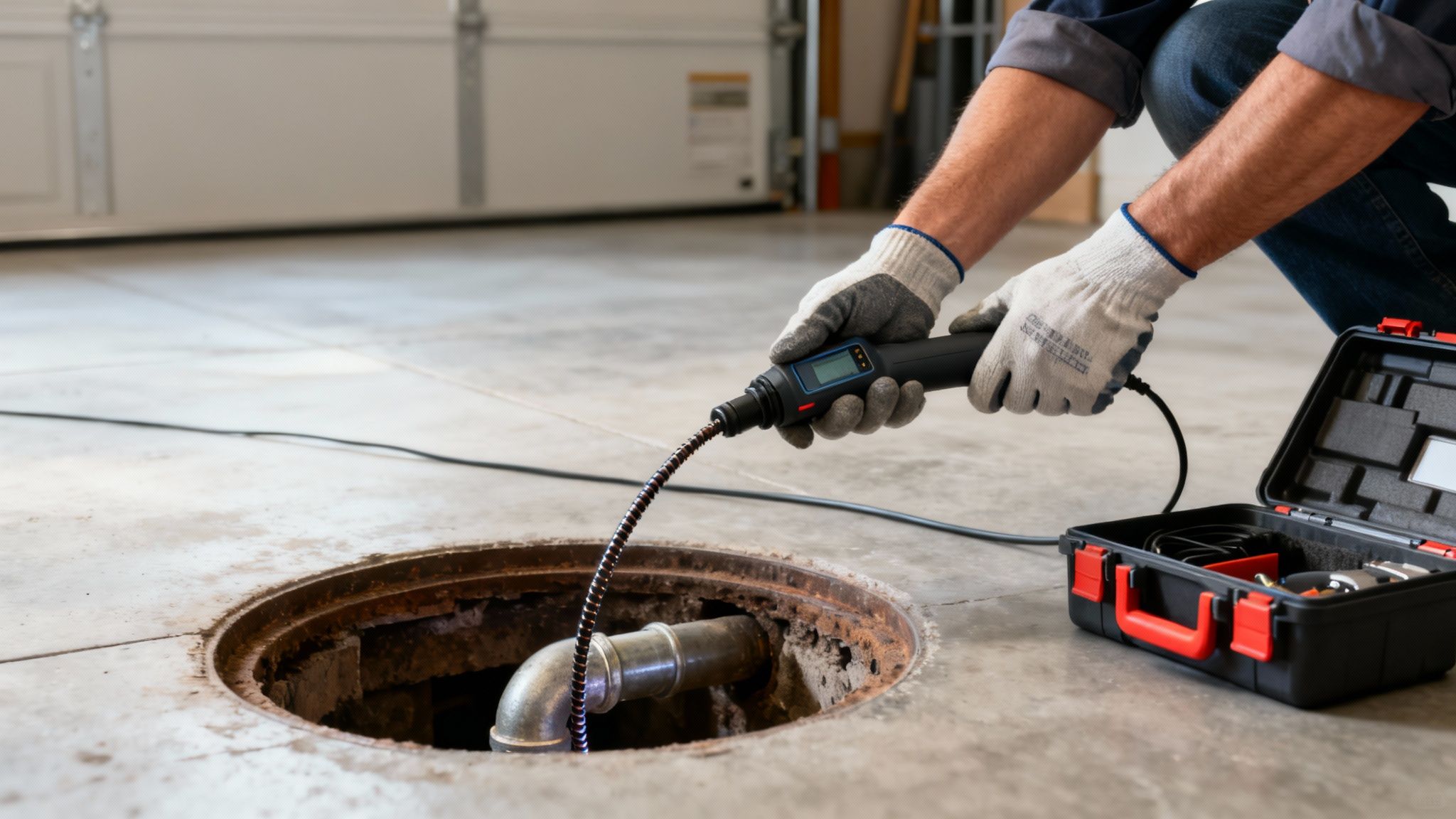
Getting a handle on these variables will give you a much clearer picture of what it takes to get your plumbing back to normal. The cost isn't just about the fix itself—it's about the complexity of the job, the materials we use, and how quickly you need us there.
The Big Factors Driving Repair Costs
A few main pieces make up the cost puzzle. Where the broken pipe is hiding, what it's made of, and just how bad the break is will all heavily influence the estimate your plumber gives you.
Location, Location, Location: This is almost always the biggest driver of cost. A pipe that bursts in an exposed wall of your Glendale garage is a relatively simple job. A pipe that gives way under the concrete slab foundation of your home in the Valley? That’s a whole different ballgame—and a much more involved, expensive repair.
Pipe Materials: What we use for the replacement matters. PEX (a flexible plastic tubing) is modern, versatile, and usually the more affordable route. Copper, on the other hand, is the traditional choice. It costs more upfront but has a proven track record of durability that spans decades.
Labor & Emergency Calls: Let's face it, a call to a licensed 24/7 plumber at 2 AM on a Saturday is going to cost more than a scheduled appointment during business hours. Those emergency rates reflect the immediate response needed to stop a disaster in its tracks.
Common Repair Scenarios and Price Ranges in LA
To give you a better idea, let's walk through a few situations we see all the time across Los Angeles County. Keep in mind, these are ballpark figures. We can only give you a precise quote after we've seen the problem firsthand.
A simple, easy-to-reach leak on a copper or PEX pipe might run you between $250 and $750. This typically covers our plumber's time, the basic parts, and the repair itself, assuming we don't have to tear out any walls.
Now, for the big one: a major break under a concrete slab foundation. This is a common headache in Southern California homes and it's a significant project. To avoid destroying your floors, we often use trenchless repair methods. A job like this can range from $5,000 to $15,000, and sometimes more, depending on the pipe's length and the job's complexity. A full repipe for an older home with failing pipes can also land in this higher range. If you're facing multiple leaks, you can learn more about replacing your home's entire pipe system here.
Dealing With Your Homeowner’s Insurance
Your insurance policy is your financial backstop when disaster strikes, but you need to know what it does—and doesn't—cover.
Typically, most California homeowner's policies will pay for the sudden and accidental water damage caused by the burst pipe. That means they'll help cover the cost of drying everything out, repairing soaked drywall, and replacing ruined floors or furniture.
What they usually won't cover is the cost of repairing the pipe itself. From the insurer's point of view, the plumbing system is part of your home's infrastructure, and maintaining it is your responsibility. They pay for the consequences of the failure, not the root cause.
It's no surprise that homeowners are looking for better, less destructive repair options. The global market for pipe bursting systems jumped from $918.439 million in 2021 and is projected to hit $1,314 million by 2025. With over 240,000 water main breaks happening each year in the U.S. and costing $2.6 billion, it just makes sense to choose modern methods that get the job done faster and more efficiently.
How to Prevent Future Pipe Bursts
The best repair is the one you never have to make. After you’ve dealt with the mess and expense of a burst pipe, the smartest thing you can do as a Los Angeles homeowner is to make sure it never happens again. Our city has a unique cocktail of plumbing risks—aging homes, hard water, and the ever-present threat of seismic activity—so a little prevention goes a long, long way.
It’s all about shifting your mindset from reactive to proactive. That means getting to know the specific risks your property faces and putting smart solutions in place to protect your plumbing from the inside out.
Start with Routine Plumbing Inspections
You wouldn’t dream of skipping an oil change for your car, right? The same logic applies to your home's plumbing. An annual professional inspection is your absolute first line of defense against another burst pipe repair. A licensed plumber can spot the subtle warning signs you’d almost certainly miss.
During an inspection, a pro will hunt for things like:
Early Signs of Corrosion: Identifying rust and mineral buildup on pipes, especially if you have an older home with copper or galvanized steel lines.
Pinhole Leaks: Finding those tiny, slow drips that scream a pipe is getting weak and is on the deck for a major failure.
Water Pressure Problems: Testing your system to make sure the pressure isn't too high, which puts constant, unnecessary strain on your pipes and fixtures.
To get a better handle on what these check-ups cover, you can learn more about the importance of regular plumbing maintenance for residential homeowners and see how it protects your biggest investment.
Embrace Smart Home Technology
Technology has given us some incredibly powerful tools for preventing a water catastrophe. Automatic water shut-off valves are total game-changers for protecting your home, especially here in an area prone to unexpected events like earthquakes.
These smart devices get installed right on your main water line and keep a constant watch on water flow. If they detect an abnormal pattern—like the endless gush from a burst pipe—they instantly slam the main valve shut, stopping a flood in its tracks. This can turn what would be a multi-thousand-dollar disaster into a minor hiccup.
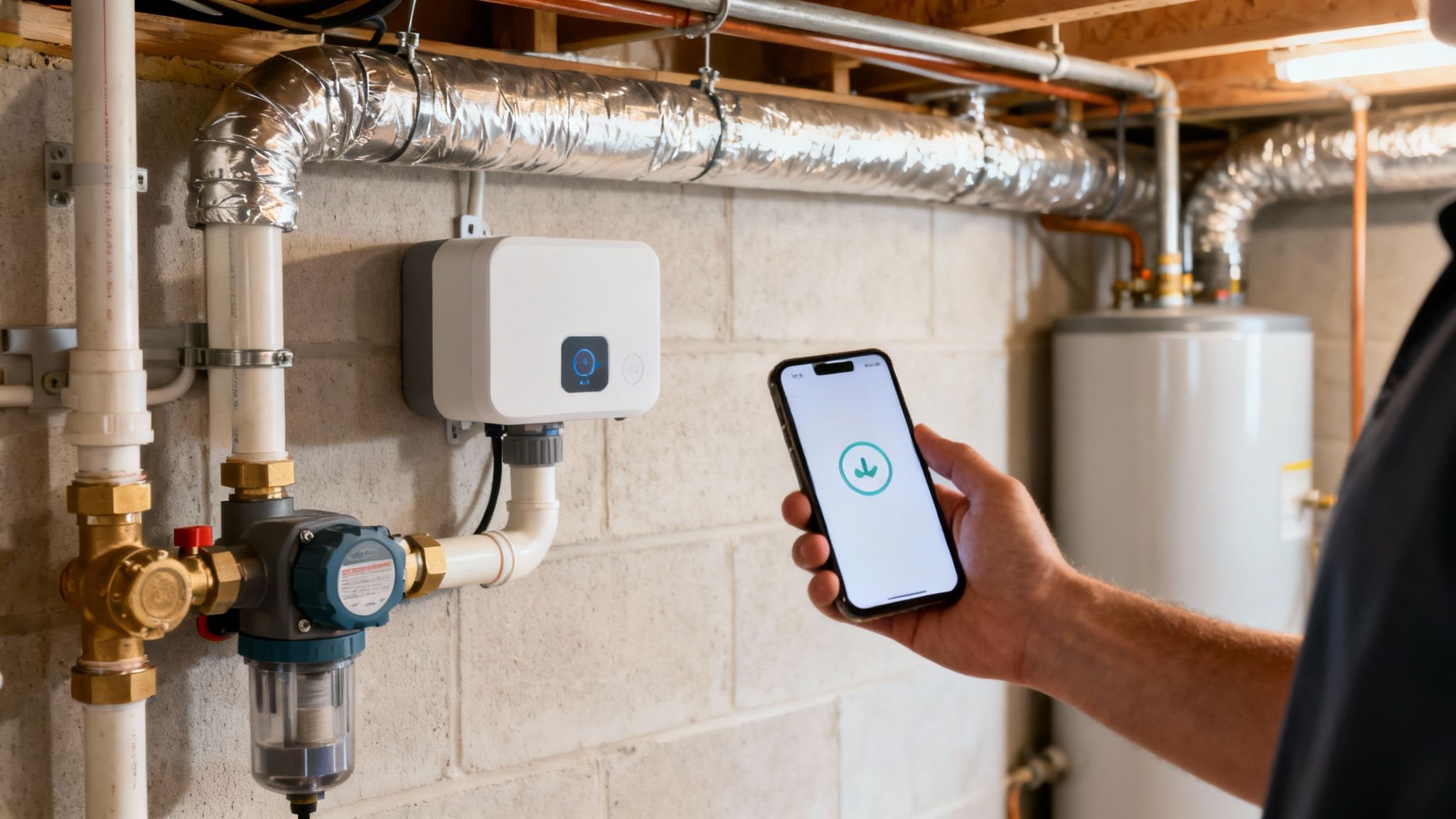
For Los Angeles homeowners, installing an automatic shut-off valve isn’t just about convenience; it’s about peace of mind. Many insurance carriers offer discounts for homes equipped with these devices because they know it’s one of the most effective ways to stop major water damage claims before they start.
Manage Water Pressure and Landscaping
Beyond inspections and cool tech, a few practical adjustments can dramatically lower your risk. These are straightforward fixes that tackle some of the most common plumbing stressors we see in Southern California.
Install a Water Pressure Regulator
Municipal water pressure, especially in hilly parts of Los Angeles County, often blasts past the 80 PSI that’s considered safe for residential plumbing. A water pressure regulator acts as a governor for your system, dialing back the incoming pressure to a safe, manageable level. This one simple device protects every single pipe, fixture, and appliance in your home from getting worn out too soon.
Be Smart About Landscaping
Those gorgeous trees in your yard have powerful root systems that are on a constant hunt for water—and your sewer and water lines are prime targets. Be mindful of what you plant and where you plant it. You’ll want to avoid trees with notoriously invasive roots, like ficus or magnolias, anywhere near your home’s plumbing infrastructure.
Know Where to Insulate
While Los Angeles isn’t known for brutal winters, the pipes in unheated areas like crawl spaces, attics, or garages can still get surprisingly cold during a chilly snap. Wrapping these exposed pipes with insulation is a cheap and easy DIY project. It protects them from the temperature swings that cause pipes to expand and contract, a process that weakens them over time. By taking these steps, you’re actively putting up a shield around your home and drastically cutting the odds you'll ever need an emergency plumber again.
Common Questions About Burst Pipe Repair in LA
When you're standing in a puddle in your own home, your mind starts racing. The questions can feel just as overwhelming as the water damage. Over the years, we've found that Los Angeles homeowners facing a sudden pipe burst often have the same urgent concerns. Getting clear, straightforward answers is the first step toward getting things back under control.
To help you out, we’ve put together answers to the most common questions we hear from clients all over the Greater LA area, from the Valley to the South Bay. This is the practical info you need, right when you need it most.
How Long Does a Typical Burst Pipe Repair Take?
The repair timeline really depends on the pipe's location and the severity of the damage.
A simple, easy-to-reach leak—say, a burst pipe under your kitchen sink or in an exposed garage wall—is usually a quick fix. A licensed plumber can often get that sorted out in just 2 to 4 hours. The process is straightforward: shut off the water, cut out the bad section of pipe, and replace it.
But if you're dealing with something more serious, like a pipe that's burst under your concrete slab foundation, you're looking at a bigger project. These jobs often require modern trenchless repair methods and can take anywhere from 1 to 3 days to resolve completely. A good plumber will always give you an accurate timeline after they've had a chance to diagnose the problem on-site.
Will My Homeowners Insurance Cover This Damage?
This is the big one, and the answer isn't a simple yes or no. Generally, your California homeowners insurance policy will cover the resulting water damage from a sudden and accidental pipe burst.
This means your policy should help pay to replace ruined drywall, tear out soaked flooring, and dry everything out. However, it typically will not cover the cost of repairing the actual burst pipe itself.
Insurance companies see the plumbing system as your responsibility to maintain. They cover the consequence, not the cause. It's absolutely critical to call your insurance agent immediately and document everything with photos and videos. If the leak is slow and looks like a neglected maintenance issue, they might deny the claim.
Is Trenchless Pipe Repair a Good Option for My Property?
For many homes in Los Angeles, trenchless repair is a fantastic solution. It's especially valuable in neighborhoods where digging up yards and driveways is a massive headache. These modern techniques save your property from destructive excavation.
Trenchless methods are a game-changer for repairing pipes that run under:
Concrete driveways or patios
Established gardens and mature trees
Detached garages or accessory dwelling units (ADUs)
Methods like pipe lining or pipe bursting are often faster and more cost-effective when you consider the high price of restoring your landscaping and hardscaping after a traditional dig. A professional can run a sewer camera inspection to see if your situation is a good fit for a trenchless approach.
How Can I Spot a Hidden Leak Before a Pipe Bursts?
The best way to avoid a disaster is to catch a leak early. Your home will often give you subtle clues that something’s wrong with the plumbing long before a pipe gives way completely.
Keep an eye (and an ear) out for these warning signs:
A sudden, unexplained jump in your water bill.
The sound of running water when all your faucets are off.
Persistent musty or damp smells, especially in closets or basements.
Weird warm spots on the floor, which could signal a hot water line leak.
Mold, mildew, or water stains popping up on walls or ceilings.
Here's a simple trick: check your water meter, then don't use any water for two hours. Check it again. If the reading has changed, you almost certainly have a hidden leak. It's time to call for professional leak detection services right away.
Navigating a plumbing emergency is stressful, but you don't have to go it alone. For a fast, reliable, and professional response to any plumbing issue, the team at ZH Plumbing is ready to help 24/7. Whether you need immediate burst pipe repair, a preventive inspection, or want to upgrade your home's safety with an automatic shut-off valve, we have the expertise to protect your property.
Comments