

.png)

Trenchless Pipe Repair Guide For Los Angeles Homeowners
That gurgling drain, an unfamiliar smell in your yard, or a patch of lawn that’s suddenly suspiciously green—these are the warning signs that can make any Los Angeles homeowner’s stomach drop. The immediate fear? A massive trench tearing through your carefully landscaped yard, destroying your driveway, and turning your property into a muddy construction site for weeks.
But what if you could repair the broken pipe from the inside out, without the destructive digging? That’s the promise of trenchless pipe repair, a modern plumbing solution that fixes your sewer lines without the nightmare of excavation.
The Hidden Threat Beneath Your Los Angeles Home
The worry over a broken sewer line is universal, but here in Los Angeles and the surrounding areas, the thought of the "cure" can feel worse than the disease. Just imagining heavy machinery destroying a garden you’ve spent years perfecting in Pasadena, cracking a historic driveway in Glendale, or tearing up the custom hardscaping you invested in can be incredibly stressful.
Traditional pipe repair is messy, invasive, and disruptive. In densely populated LA neighborhoods, from Santa Monica to the San Fernando Valley, that kind of project is a logistical nightmare for you and your neighbors.
A Smarter Approach to Pipe Problems
Trenchless pipe repair is the answer to avoiding all that chaos. Think of it as "keyhole surgery" for your plumbing. Instead of digging up your entire yard to access the pipe, our technicians use one or two small access points to fix the problem from within.
This isn't just about convenience; it’s about protecting the value and beauty of your Los Angeles home. It’s a solution that acknowledges your concerns and provides a clean, effective way forward without the collateral damage.
This modern method is a perfect fit for the challenges we see in Southern California homes. Many properties across the Greater Los Angeles area have mature trees, detailed landscaping, and aging pipes running under driveways, patios, and home additions. If you're noticing slow drains or other issues, learn about the early warning signs of a broken sewer line in our detailed guide.
Trenchless technology gives us a way to solve the most common pipe problems without digging, including:
Root Intrusion: Those beautiful California trees have aggressive roots that can crack and invade old clay or cast iron pipes in search of water.
Age-Related Cracks: Over decades, pipes naturally corrode and develop fractures, leading to persistent leaks and potential water damage.
Ground Shifting: Even minor seismic activity, a fact of life in Southern California, can cause pipes to shift, misalign, or crack over time.
When you choose a no-dig solution, you’re not just patching a leak. You're investing in a long-term fix that strengthens your plumbing system for decades to come.
How Trenchless Pipe Repair Actually Works
The idea of repairing a pipe buried deep underground without digging a massive trench sounds complex, but it's an ingenious and straightforward process. Instead of tearing up your lawn or driveway, our technicians can fix or even replace the entire pipe from the inside out, typically using just one or two small access points.
It's a precise, clean, and incredibly efficient way to solve major plumbing headaches without turning your Los Angeles property into a construction zone.
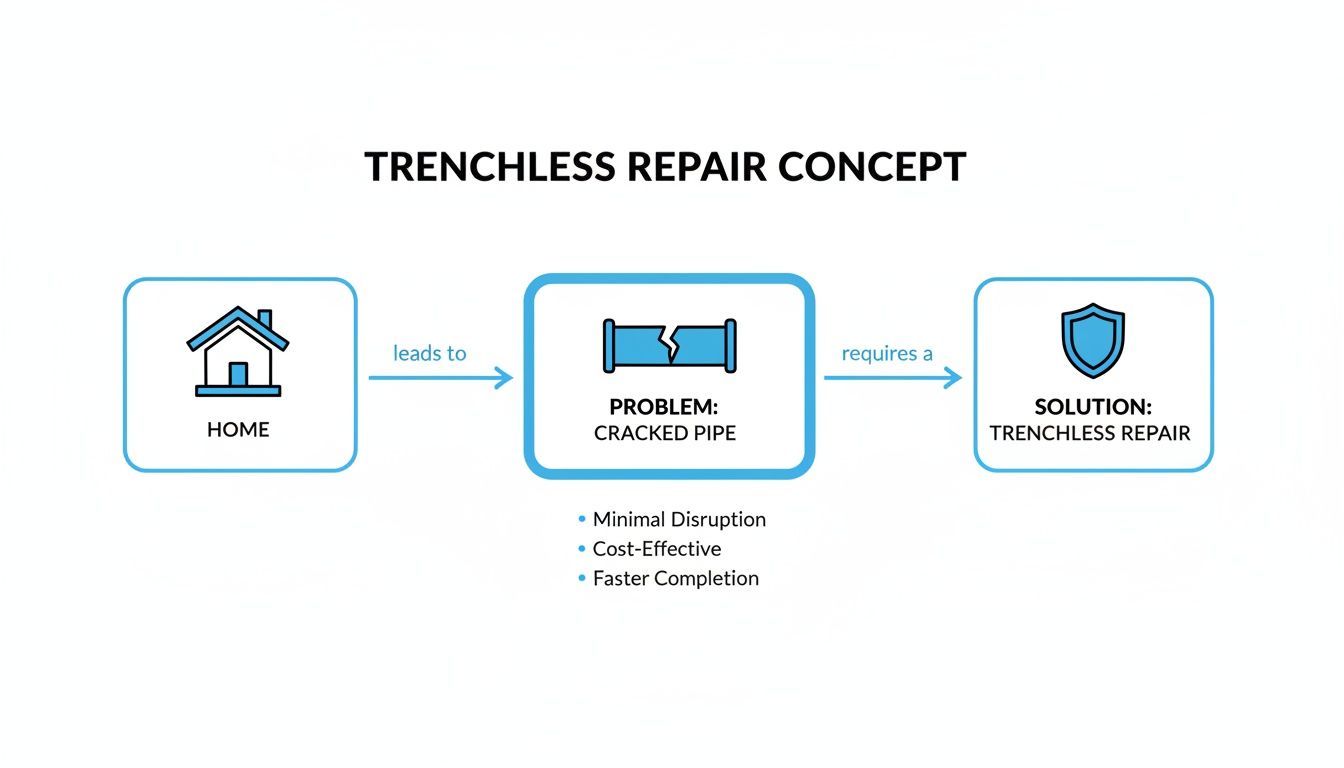
This is a game-changer for homeowners all over Los Angeles County, where beautiful landscaping and historic hardscaping make old-school excavation a nightmare. We rely on two primary methods, and the one we choose depends entirely on the condition of your existing pipe, as revealed by a camera inspection.
CIPP Creates A New Pipe Within The Old One
Cured-In-Place Pipe (CIPP) lining is the most common and versatile trenchless technique. Think of it like this: we're essentially building a brand-new, super-strong pipe directly inside your old, damaged one. It’s a perfect solution for sealing cracks, stopping leaks, and permanently blocking tree roots.
The CIPP Process:
Cleaning: First, we thoroughly clean out the old pipe using hydro jetting to remove any debris or roots.
Liner Insertion: A flexible felt liner saturated with a special epoxy resin is carefully inserted into the pipe.
Inflation: We then inflate an internal bladder, pressing the resin-soaked liner firmly against the inner walls of the host pipe.
Curing: After a few hours, the epoxy cures and hardens into a seamless, joint-free pipe that’s often stronger than the original ever was.
This method is ideal for pipes that have cracks or root damage but are still structurally sound.
Real-World Example: We recently worked with a homeowner in Pasadena whose beautiful, century-old flagstone walkway was directly over a failing clay sewer line. Roots had cracked it in multiple places. Using CIPP lining, we repaired the entire pipe from a single access point, creating a new, rock-solid line without touching a single stone of their historic walkway.
Pipe Bursting Replaces The Old Pipe Entirely
But what if the pipe is too far gone for a liner? If it has collapsed sections, is severely misaligned, or is completely deteriorated, pipe bursting is the solution. This method doesn't just patch the old pipe—it demolishes it and pulls a brand-new one into its place.
The Pipe Bursting Process:
Access Pits: Our team digs two small pits at either end of the damaged pipe section.
Cable & Head: A heavy-duty steel cable is fed through the old line. A cone-shaped "bursting head" is attached to the new, durable HDPE pipe.
Pulling: The bursting head is pulled back through the old pipe. As it travels, it fractures the old pipe outward into the soil, creating a path to simultaneously pull the brand-new pipe right into place.
Of course, we never guess which method is right. A high-definition sewer camera inspection is the first step in any trenchless project. It gives us a crystal-clear look at exactly what’s going on, so we can recommend the right solution for your home.
Pipe bursting is the clear winner in a few key scenarios:
Collapsed Pipes: When a pipe has lost its shape, a liner has nothing to mold to. Pipe bursting installs a completely new line.
Upsizing: If you've added bathrooms or a guest house, your old 4-inch sewer line might not be enough. Pipe bursting allows us to pull in a larger 6-inch pipe to handle the increased flow.
Severe Damage: For pipes with massive fractures or missing sections, bursting gives you a clean slate with a new, seamless pipe designed to last for decades.
Comparing Trenchless Pipe Repair Methods
To make it even clearer, here’s a quick side-by-side look at CIPP lining and pipe bursting.
Feature | CIPP (Pipe Lining) | Pipe Bursting |
|---|---|---|
Best For | Pipes with cracks, leaks, or root intrusion that are still structurally intact. | Collapsed, severely broken, or undersized pipes needing full replacement. |
How It Works | An epoxy-saturated liner is inserted and cured to create a new pipe inside the old one. | A bursting head breaks the old pipe apart while pulling a new pipe into its place. |
Pipe Diameter | Slightly reduces the inner diameter (usually not impacting flow). | Can maintain or increase the pipe's diameter (upsizing). |
Access Points | Often requires only one small access point. | Requires two small access pits at either end of the section. |
Primary Goal | Rehabilitate and reinforce the existing pipe. | Completely replace the old, damaged pipe. |
Ultimately, the right choice depends entirely on what our camera inspection reveals. Both methods provide a long-lasting, reliable solution that keeps your Los Angeles yard intact.
A Look Inside The Trenchless Repair Process
Any major home repair can feel daunting, but knowing what to expect makes the process much smoother. A trenchless pipe repair is a systematic, clean procedure designed for minimal invasion. We solve the problem without turning your Los Angeles property into a massive construction site.
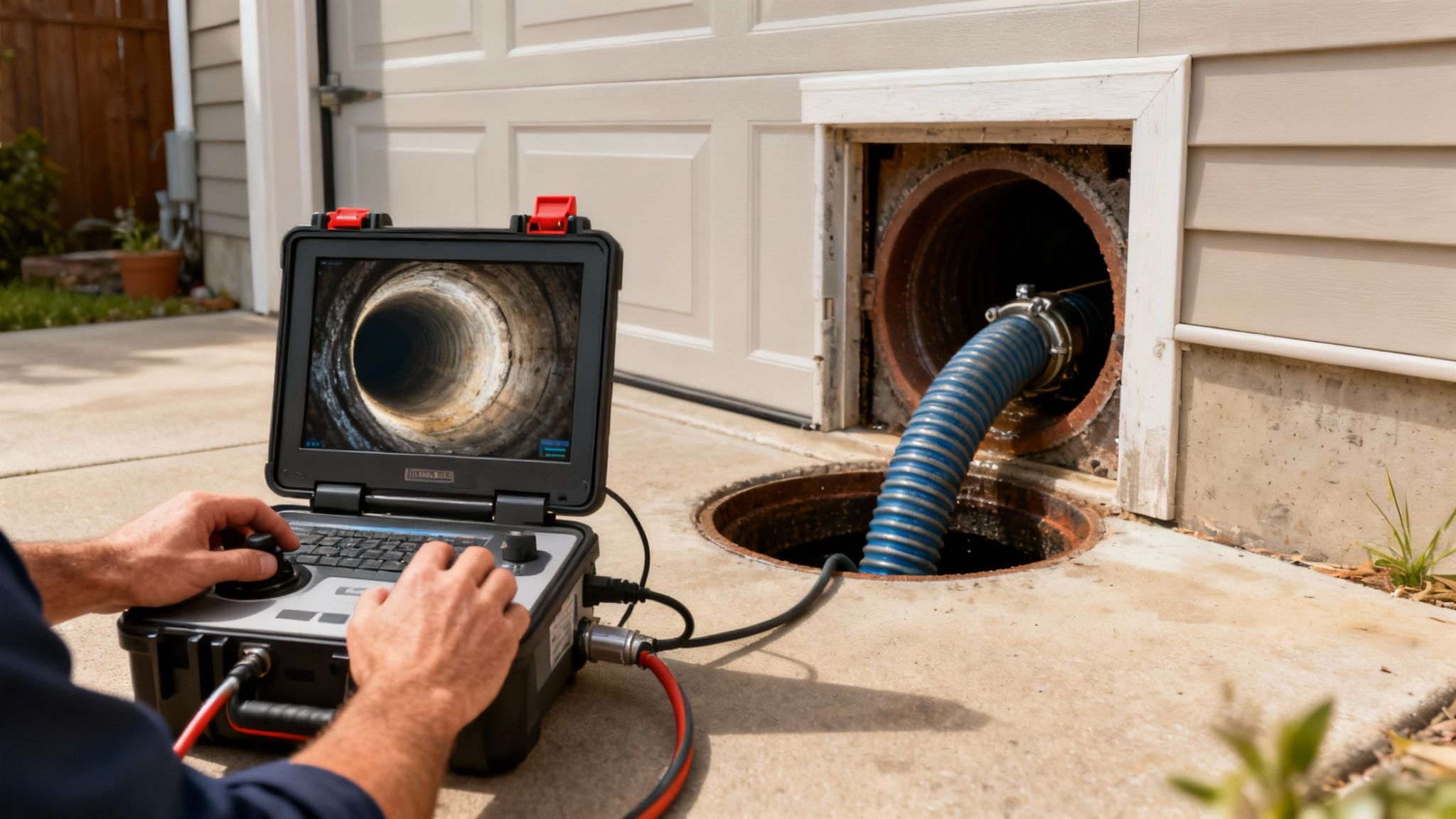
Unlike old-school methods that start with a backhoe, our work begins with precision diagnostics. We break the entire process down into four clear stages so you know exactly what’s happening beneath your home.
Stage 1: High-Definition Camera Inspection
Before we do anything else, we need a crystal-clear picture of what’s happening inside your pipes. The first step is always a high-definition sewer camera inspection. We feed a specialized, waterproof camera through an existing access point—like a cleanout—and guide it through the entire length of your pipe.
This lets our technicians see the exact location and severity of any damage in real-time. There is absolutely no guesswork. This diagnostic step is crucial because it confirms if a trenchless approach is the right fit and helps us decide whether CIPP lining or pipe bursting is the best solution for your specific problem.
Stage 2: Preparing The Host Pipe
With the inspection done, we prepare the existing pipe for repair. The goal is to create a clean, smooth surface. To do this, we use a powerful technique called hydro jetting.
Hydro jetting uses streams of high-pressure water to scour the inside of the pipe, pulverizing years of built-up scale, grease, and debris. Most importantly, it cuts through and blasts away any tree roots that have invaded the line.
Getting the host pipe perfectly clean is non-negotiable for a successful repair. It ensures a CIPP liner can bond perfectly or that a new pipe can be pulled through without a hitch. You can learn more about how hydro jetting clears even the most stubborn drains in our detailed article.
Stage 3: Executing The Repair
This is where the trenchless magic happens. Based on our camera inspection, we’ll move forward with one of two methods:
For CIPP Lining: We insert a flexible, epoxy-saturated liner into the clean pipe. An internal bladder is inflated, pressing the liner firmly against the walls of the old pipe while the epoxy resin cures.
For Pipe Bursting: A powerful hydraulic system pulls a brand-new, seamless HDPE pipe through the path of the old one, fracturing the old pipe outward into the soil as it moves.
Both methods are done efficiently, with almost all of the work happening underground and out of sight.
Stage 4: Curing And Final Inspection
The last stage is all about ensuring the fix is flawless and built to last. For CIPP lining, the epoxy resin needs a few hours to cure and harden into a rock-solid, joint-free pipe.
Once the curing is complete—or after the new pipe is pulled into place—we do one final camera inspection. We run the camera through the newly repaired line to verify the job was a 100% success. This final check confirms the liner is smooth, the connections are solid, and your pipe is ready to provide dependable service for the next 50+ years. After that, we fill in the small access points, leaving your property looking just like it did before we arrived.
Benefits Of No-Dig Repairs For LA Homeowners
For homeowners across Los Angeles, the advantages of a no-dig solution go far beyond just avoiding a muddy yard. Trenchless pipe repair offers real-world benefits that directly address the challenges of owning property in Southern California.
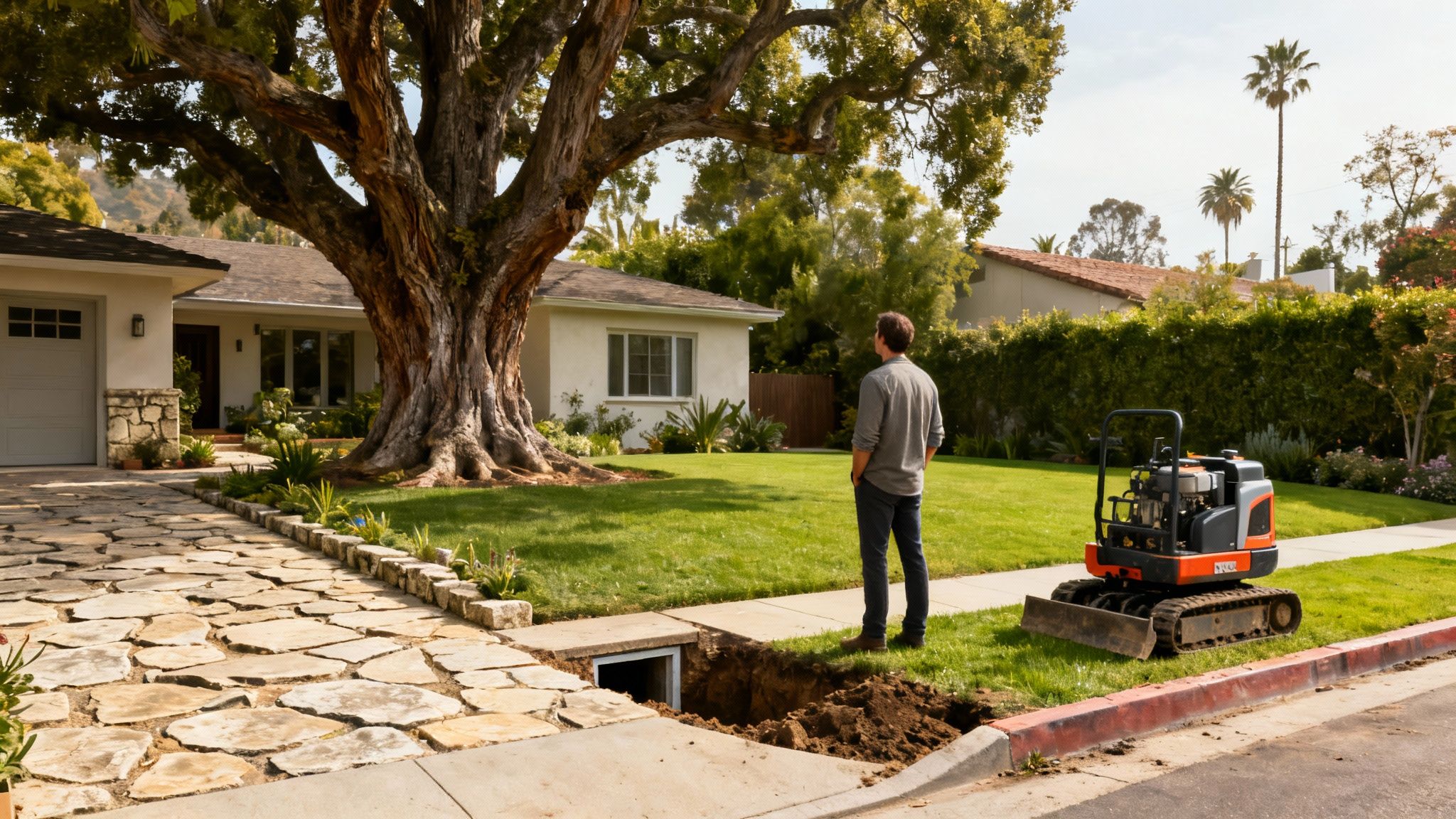
The biggest win is preserving your property. In neighborhoods from Pasadena to Santa Monica, our homes have mature trees, custom patios, and beautiful driveways that are irreplaceable. Traditional excavation puts all of that at risk. A trenchless approach works underneath them, leaving your property's character and value intact.
Significant Cost And Time Savings
While the upfront cost might seem similar to digging, the real savings with trenchless repair come from what you don't have to pay for afterward. The secondary costs of a traditional job—re-sodding the lawn, re-pouring concrete, rebuilding a deck—can easily double the final bill.
By avoiding destructive excavation, you eliminate thousands of dollars in restoration costs. This makes the no-dig method the more cost-effective choice in the long run, protecting both your pipes and your wallet.
Speed is another huge factor. A traditional dig-and-replace project can drag on for days or even weeks. Most trenchless jobs, however, are completed in just one to two days, minimizing the disruption to your family’s life.
A Stronger, More Resilient Pipe System
A newly lined or replaced pipe isn't just a patch; it's a major upgrade. The modern materials we use, like epoxy resin for CIPP or HDPE for pipe bursting, create a seamless, joint-free pipe. This gives Los Angeles homeowners several key advantages:
Root Intrusion Resistance: No joints means no weak spots for tree roots to invade—the #1 cause of sewer line backups in our area.
Corrosion-Proof: These materials are immune to the rust and corrosion that plague old cast iron or clay pipes.
Improved Flow: The smooth interior of a new liner improves flow capacity.
This seamless design is built for the realities of living in Southern California. The flexibility of a trenchless pipe makes it more resilient against ground shifting and minor seismic activity, a crucial feature for long-term durability in our region. When considering upgrades, it’s wise to explore all your options for a complete pipe system replacement that suits your home's needs.
An Eco-Friendly And Community-Conscious Choice
Opting for a trenchless solution is also a more environmentally responsible decision. The method dramatically reduces the project's carbon footprint by eliminating the need for heavy excavation machinery. Less digging means less soil disruption, less landfill waste, and a gentler impact on the local ecosystem.
This non-disruptive quality is also a huge benefit in dense urban areas like Glendale or Santa Monica. It minimizes traffic delays and noise pollution, making it a better choice for the entire community.
Navigating Permits And Insurance Requirements
Tackling a trenchless repair in Los Angeles involves more than just the physical work—it also means navigating local regulations. Any time you work on the sewer lateral (the pipe connecting your house to the city main), you will almost certainly need a permit from the Los Angeles Department of Public Works or a similar office in surrounding cities like Santa Monica or Glendale.
This isn’t just red tape. The permit process protects you by ensuring the repair meets all local codes for safety and materials. A licensed and insured contractor who knows the local landscape will handle the entire permitting process for you, guaranteeing your project is compliant from start to finish.
Protecting Your Home And Your Insurance Policy
Let's be honest: keeping homeowner's insurance in California is tougher than ever. Insurers view water damage as a major risk, and a failing sewer line is a huge liability that could jeopardize your coverage.
When you proactively fix a damaged pipe with a modern trenchless pipe repair, you're not just solving a plumbing problem. You're demonstrating to your insurer that you are a responsible homeowner who is mitigating a major risk.
By installing a brand-new, seamless pipe with a 50-year life expectancy, you are effectively eliminating a major source of potential water damage claims. This smart move can be a deciding factor in keeping your home insurable and protecting its value.
Verifying Contractor Credentials Is Essential
The success of your repair depends on the qualifications of the crew doing the work. A professional must carry the right insurance to shield you from liability. This resource on understanding contractor insurance requirements is a great starting point.
Before you hire anyone, always ask to see proof of:
A Valid C-36 Plumbing License: This is the non-negotiable state license for any plumbing contractor in California.
General Liability Insurance: This protects your property from damage in the rare case of an accident.
Worker's Compensation Insurance: This policy covers the contractor’s team if they are injured on your property, so you aren't held responsible.
A reputable company will gladly provide these credentials. This due diligence is your best defense against shoddy work and ensures your investment is protected.
Finding The Right Trenchless Contractor In LA
Choosing the right professional for your trenchless pipe repair is the most important decision you'll make. It’s not a standard plumbing job. Not every company in Los Angeles has the specialized equipment or the hands-on expertise required to perform this work flawlessly.
Making the wrong choice can lead to a botched repair, costing you far more time, money, and stress. You need it done right the first time.
Before diving into specifics, it helps to know the basics of vetting any home service professional. This guide on [finding the right contractor](https://g1000home.ca/how-to-find-the-right- contractor/) is a great start. Then, you can zero in on what makes a great trenchless specialist.
Key Questions To Ask Any Contractor
To protect your home, you need to ask the right questions. Any reputable trenchless expert will have clear answers.Here’s a simple checklist:
Are you licensed and insured for work in Los Angeles? Ask for their C-36 license number and proof of general liability and worker’s comp insurance.
What specific trenchless systems and materials do you use? A pro can explain why their chosen technology is the best fit for your situation.
Can you provide a detailed, itemized quote? Vague estimates are a red flag. You want a transparent breakdown of all costs, including labor, materials, and city permits.
What warranties do you offer on your work and the materials? A quality repair is an investment that should last for decades and come with a strong warranty.
Doing your homework is crucial. Aging infrastructure is a massive issue across California, with many urban pipes well past their original 50-year lifespan, making these modern repair methods essential.
At ZH Plumbing, we welcome these questions because we believe in transparency. If you're looking for more tips, check out our guide on how to choose the right plumbing professional for your home.
Your Trenchless Repair Questions, Answered
If you’re a homeowner in the Los Angeles area, you likely have questions about trenchless technology. Making a confident decision starts with getting clear, straightforward answers. Here are the most common questions we hear from homeowners from Glendale to Santa Monica.
How Long Does Trenchless Pipe Repair Last?
A professionally installed trenchless pipe liner is a permanent upgrade. The high-strength epoxy resin creates a new, seamless pipe inside the old one that is often stronger than the original. This new pipe is highly resistant to root intrusion and corrosion. You can expect a properly installed trenchless pipe repair to last for 50 years or more, giving you decades of peace of mind.
Can Trenchless Methods Fix Any Pipe Problem?
Trenchless technology can solve most common sewer line issues, including cracks, leaks, misaligned joints, and severe root blockages. It’s the perfect solution for pipes that are damaged but still have their basic shape. However, it’s generally not the right approach for a pipe that has completely collapsed, as the liner needs a host pipe to mold against. This is why our process always begins with a detailed sewer camera inspection to confirm if trenchless repair is the smartest path forward.
Is Trenchless Repair Cheaper Than Digging?
While the upfront cost can seem similar to traditional excavation, the total project cost for trenchless repair is almost always lower. The real savings are in what you don't have to pay for after the pipe is fixed.
With no-dig repairs, you completely avoid the massive secondary expenses of rebuilding a torn-up patio, re-pouring a concrete driveway, or replacing mature landscaping. When you add up those restoration costs, trenchless repair is consistently the more affordable and valuable option.
How Disruptive Is The Trenchless Process?
For busy LA homeowners, this is one of the biggest benefits. The process is designed for minimal impact. Forget having your property turned into a construction zone for weeks. Most of our trenchless repairs are completed in just 1-2 days. All the work is concentrated at one or two small access points, keeping your yard intact and letting you go about your daily routine with little interruption.
If you're dealing with pipe problems, you don't have to deal with a destroyed yard, too. The expert team at ZH Plumbing is here to help you explore a smarter, less invasive solution. Get in touch with us today for a professional sewer camera inspection and a transparent, no-pressure consultation. Schedule your inspection with ZH Plumbing.
Comments