

.png)

A Homeowner's Guide to Water Filtration System Installation
Do you ever fill a glass from your kitchen tap, take a look, and hesitate before drinking? If you're tired of water that tastes like chlorine or you're worried about unseen contaminants, you're not alone. A professional water filtration system installation is the most effective way to improve your home's water quality, giving you confidence in every drop your family uses.
Why Water Quality is a Growing Concern
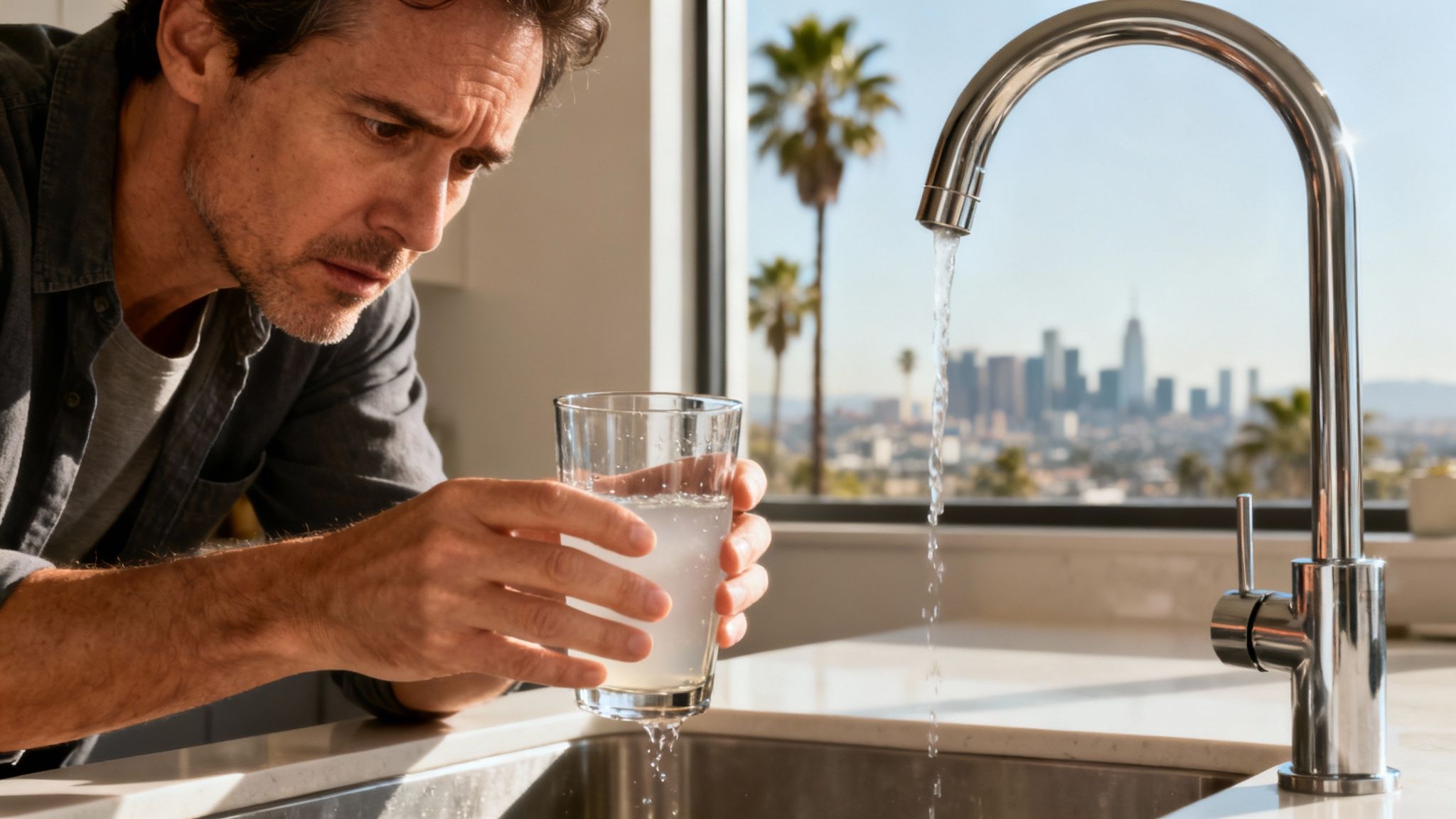
Many homeowners are questioning what’s actually coming out of their faucets. While municipal water is treated to meet safety standards, it often travels through an extensive network of aging pipes to reach your home. This journey can introduce issues that affect its taste, smell, and overall quality.
That distinct "swimming pool" odor is chlorine, a chemical used for disinfection. While necessary for safety, it can make drinking water unpleasant and alter the taste of everything from coffee to cooked pasta.
Common Contaminants and Hard Water Issues
Beyond taste and smell, there are practical reasons homeowners seek better water solutions. These are the problems we hear about most often:
Potential Contaminants: Even at safe levels, trace amounts of lead from old plumbing, pesticides, or industrial chemicals can be a long-term health concern.
Sediment and Cloudiness: Cloudy or discolored water is often caused by tiny particles from pipes or mineral deposits, which can be unappealing.
Hard Water Damage: Los Angeles is known for its hard water. High levels of calcium and magnesium create chalky scale buildup on faucets, showerheads, and inside appliances, reducing their efficiency and lifespan.
This isn't just a local issue. The global market for residential water treatment is projected to grow significantly as more homeowners demand cleaner, safer water.
Taking control of your home’s water is one of the most direct ways to protect your family’s health and your property investment. It eliminates the guesswork and provides a reliable source of clean water from every tap.
Gaining Peace of Mind with Filtration
Ultimately, installing a water filtration system is about restoring confidence in the water you use daily. It’s a targeted solution to remove chlorine taste, prevent scale buildup, or filter out invisible contaminants. By understanding the benefits of clean water at home, you can make an informed decision for your family's health.
Choosing the Right Water Filtration System for Your Home
Before any tools come out, the most critical step is selecting the right filter. A successful water filtration system installation begins with one question: Do you need to treat all the water entering your house or just the water at a specific faucet?
Your answer determines the budget, scope, and daily benefits of the system. The choice comes down to two main types: a whole-house system that treats every drop or a smaller, targeted unit that purifies water right where you use it most.
Whole-House Point-of-Entry Systems
A whole-house water filter, also known as a Point-of-Entry (POE) system, is a comprehensive solution. It's installed on your main water line to purify all the water flowing into your home. This means cleaner water not only for drinking but also for showering, laundry, and running appliances.
This approach offers significant advantages:
Protects Plumbing and Appliances: By removing sediment and hard water minerals, a POE system prevents scale buildup, which can extend the life of your water heater, dishwasher, and washing machine.
Healthier Skin and Hair: Chlorine can leave skin feeling dry and itchy after a shower. A whole-house filter removes it, resulting in softer skin and healthier hair.
Total Convenience: You get filtered water from every faucet in the house without needing individual filters for showerheads or pitchers.
While it is a larger initial investment, the comprehensive protection and convenience are unmatched by point-of-use filters.
Targeted Point-of-Use Filters
Point-of-Use (POU) filters are designed to treat water at a single location, typically the kitchen sink. They are an excellent choice if your primary goal is improving the taste and safety of your drinking and cooking water.
POU filters are smaller, more affordable, and can be highly effective at removing specific contaminants. The most common types are under-sink units and countertop models.
For many homeowners, an under-sink filter is the perfect starting point. It’s hidden from view, provides excellent drinking water, and offers a noticeable taste difference without the cost of a whole-house system.
Reverse osmosis (RO) is a leading POU technology, capable of removing up to 99% of contaminants, including lead, arsenic, and bacteria. This level of filtration provides a crucial layer of safety and peace of mind.
Comparing Water Filtration Systems for Your LA Home
How do you decide? It depends on your priorities. Are you focused on protecting your entire home from LA's hard water, or is your main concern pure, great-tasting water for drinking?
This table compares popular systems we install for local homeowners.
System Type | What It Filters | Average Cost (System + Install) | Best For |
|---|---|---|---|
Whole-House Carbon | Chlorine, sediment, odors, pesticides | $1,200 – $2,500 | Improving taste and smell everywhere |
Whole-House Softener | Hard water minerals (calcium, magnesium) | $1,500 – $4,000 | Protecting appliances and plumbing |
Under-Sink RO | Lead, arsenic, fluoride, viruses, bacteria | $700 – $1,800 | Maximum purity for drinking water |
Under-Sink Carbon | Chlorine, sediment, bad tastes | $400 – $900 | Basic taste and odor improvement |
Making the right choice upfront ensures your investment meets your needs for years to come.
For a more detailed analysis of how these systems perform with local water conditions, check out our definitive water filtration systems comparison for LA homes.
Your Pre-Installation Checklist and Permit Guide
A smooth water filtration system installation depends on thorough preparation. A pre-installation checklist is your best defense against surprises, unexpected costs, and headaches. This planning phase is the foundation of a successful project.
Good planning starts with understanding your home’s water supply and plumbing. This ensures the system you've chosen will function correctly and efficiently.
Assess Your Home's Plumbing System
First, check your home's water pressure. Most filtration systems require a specific pressure range, typically between 40 and 80 PSI. Pressure that is too high can damage the filter, while pressure that is too low will result in weak water flow. A simple pressure gauge can provide an instant reading.
Next, identify the ideal installation location. For a whole-house unit, this is usually near the main water shut-off valve, before the water heater.
Accessibility is Key: Choose a spot with enough space for installation and future filter changes.
Proximity to a Drain: Many systems, especially water softeners, require a nearby drain for regeneration cycles.
Power Source: Some advanced systems need an electrical outlet for digital controls, so ensure one is available.
If you are unsure about your plumbing, scheduling professional plumbing inspection services can prevent costly mistakes.
Navigating Los Angeles Permit Requirements
While a simple under-sink filter typically does not require a permit, installing a whole-house system that alters your main water line does.
In Los Angeles, significant plumbing modifications require a permit from the Los Angeles Department of Building and Safety (LADBS). This is a critical safety measure, not just a bureaucratic step.
A permit ensures that the installation is performed to code by a licensed professional. This protects your family's health, maintains your property's value, and is often a requirement for your homeowner's insurance policy.
A licensed plumber will handle the permit process, including plan submission and final inspection, ensuring the project is fully compliant.
Why Following Local Codes is Non-Negotiable
Adhering to local plumbing codes is essential for safety and insurance purposes. For example, codes often require a bypass valve, which allows you to service the filter without shutting off water to the entire house.
Furthermore, managing water-related risks is increasingly important. Combining your filter with automatic water shut-off valves can significantly reduce the risk of leaks, a leading cause of home insurance claims. You can learn more about trends in gravity water filtration systems and their growing role in home water management.
Breaking Down the Water Filter Installation Process
You've chosen your system and completed the prep work. Now it's time for the water filtration system installation. This stage requires a methodical approach to safely integrate the new filter into your existing plumbing.
The core of any installation is creating a secure, leak-proof connection that will last for years. Small details, like applying Teflon tape correctly, are what separate a successful installation from a persistent drip.
This checklist is a helpful guide to ensure all preparatory steps are covered before you begin.
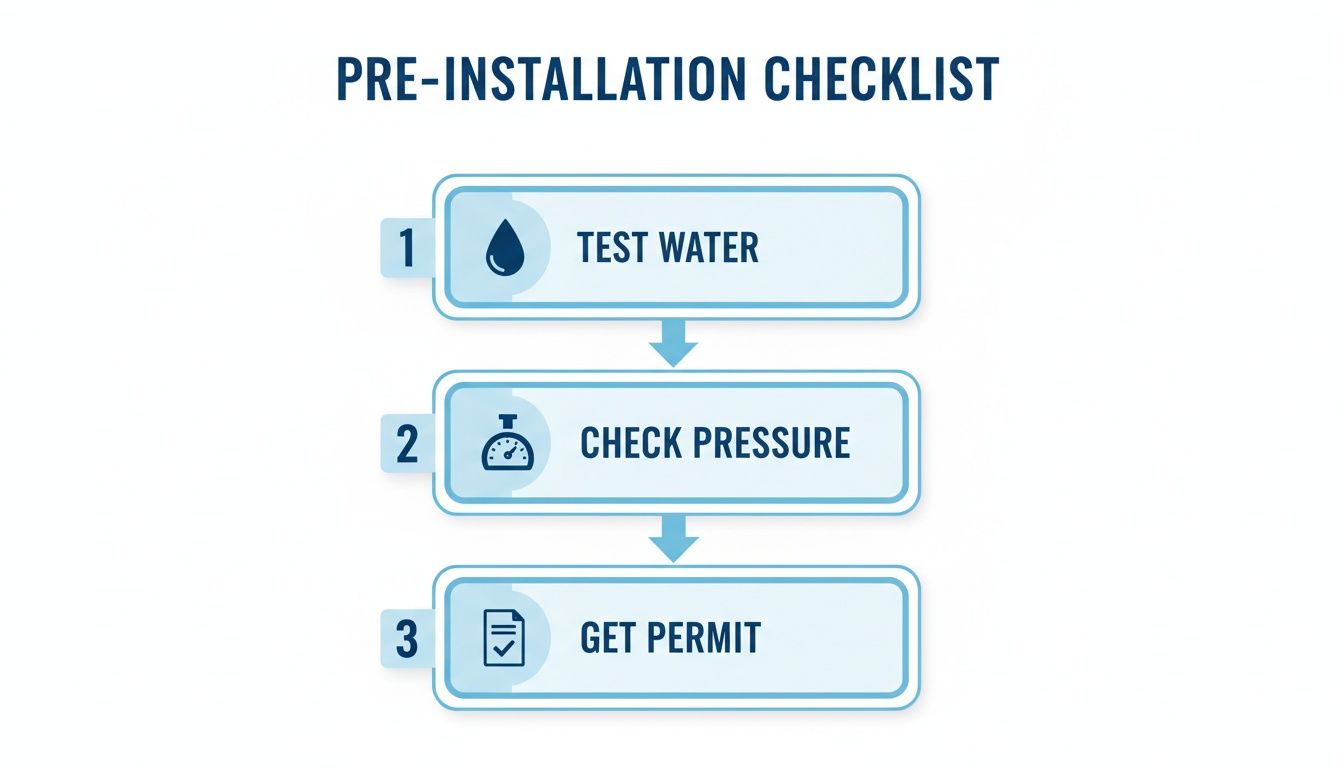
Following these steps ensures your system will perform optimally and comply with local regulations.
The First, Most Critical Steps
Before starting, shut off the main water supply. For a whole-house system, close the main shut-off valve. Then, open faucets on the highest and lowest floors to drain residual water from the pipes—this is essential to prevent a mess.
For an under-sink unit, simply close the hot and cold water valves in the cabinet. This isolates your work area without affecting the rest of the house.
Making the Cut: The Point of No Return for Whole-House Systems
The most critical part of a whole-house installation is cutting into the main water supply line. A section of the pipe is removed to match the filter assembly's width. This is where professional experience is invaluable.
After the cut, the pipe ends must be deburred and cleaned to ensure a watertight seal. Any rough edges or debris can cause a slow leak later.
Pro Tip: We always install a bypass loop with a whole-house filter. This simple three-valve setup allows you to route water around the filter for maintenance without shutting off water to the entire house.
Mounting the System and Making Connections
With the pipe prepared, mount the filter housing securely to a wall or support beam. Leave at least 6-8 inches of clearance below for easy filter changes.
Next, connect the system to the water lines using the appropriate fittings for your home's plumbing (e.g., compression, PEX, or copper).
Use Teflon Tape: Wrap male threads with Teflon tape (clockwise) to create a superior seal.
Don't Overtighten: Overtightening can crack plastic housings or strip threads. Tighten until snug, then give it one additional quarter-turn.
At this point, you may be considering DIY versus hiring a professional. Knowing what to look for in trusted professional plumbing services can help you make the right choice.
The Final Steps: Testing and Flushing
Once all connections are secure, slowly turn the main water supply back on. Carefully inspect every new joint for any signs of moisture.
Next, run water through the system for at least 10-15 minutes. This flushes out trapped air and any loose carbon fines from new filters. The water may appear cloudy at first, but this will clear up quickly.
After confirming there are no leaks and the water runs clear, check the connections again after a few hours and the next day to ensure everything remains secure.
Common Installation Mistakes and How to Fix Them
Even with careful planning, a water filtration system installation can present minor challenges. Fortunately, most post-installation issues are common and have simple solutions. Addressing them promptly will ensure your system runs smoothly and protects your home from water damage.
A drop in water pressure is one of the most frequent complaints after an installation. If the flow from your faucets seems weaker than before, it’s a sign that something is obstructing the water.
What to Do About Low Water pressure
A sudden pressure drop indicates a bottleneck in your plumbing. Before blaming the filter, check these common culprits:
Clogged Pre-Filter: The sediment pre-filter catches sand, rust, and other debris. If your water has a lot of sediment, this filter can clog quickly, restricting flow. Check the cartridge and replace it if it's discolored.
A Valve Isn't Fully Open: It's easy to leave a valve partially closed after installation. Double-check that the main inlet, outlet, and bypass valves are all in the correct, fully open position.
Air Trapped in the Lines: Air pockets are common after an installation. To bleed them out, open faucets throughout your house for 10-15 minutes until the water runs smoothly.
How to Stop Those Annoying Leaks and Drips
A persistent drip indicates a bad seal and can lead to water damage and mold over time. Leaks almost always occur at connection points where a fitting meets the filter housing or water line.
The cause is usually improper tightening—either undertightened fittings that fail to seal or overtightened ones that crack the plastic.
Never underestimate a tiny drip. A single leak dripping just once per second can waste over 3,000 gallons of water a year. Finding and sealing these spots is a top priority for protecting your home and your water bill.
If you find a leak, shut off the water, disconnect the fitting, and re-wrap the threads with three to four layers of Teflon tape. Re-tighten it to "snug plus a quarter-turn" to avoid damage.
What Are Those Strange Noises Coming From My Pipes?
New plumbing noises after an installation can be unsettling, but they are often harmless and temporary.
Banging (Water Hammer): A loud bang occurs when flowing water stops abruptly, sending a shockwave through the pipes. If this persists, a water hammer arrestor may be needed.
Whistling: This can indicate a valve is not fully open.
Gurgling: This is usually just air working its way out of the system.
Most sounds will disappear within a day or two. If a loud hammering noise continues, it's best to consult a professional to protect your pipes from stress.
Your Top Installation Questions, Answered
It’s normal to have questions about the installation process. Here are straightforward answers to some of the most common ones we hear from homeowners.
How Much Should I Budget for Installation in Los Angeles?
Installation cost depends on the system's complexity.
Under-Sink Filter: Professional labor typically costs between $200 and $400. This is a relatively simple job with minimal plumbing modifications.
Whole-House System: Labor for a whole-house installation generally ranges from $800 to over $3,000. The final price depends on factors like the accessibility of your main water line and any necessary pipe rerouting. Always request an itemized quote.
How Long Does Installation Actually Take?
Under-Sink Filter: A professional can typically install one in 1 to 2 hours.
Whole-House System: This is a more involved project that takes a licensed plumber 3 to 6 hours. This includes setup, installation, and thorough testing. If the plumbing is in a difficult-to-access area, it could take longer.
Keep in mind that a professional's efficiency comes from experience. What might take a plumber four hours could easily turn into a multi-day project for someone unfamiliar with the specific fittings and potential challenges.
Can I Just Install It Myself?
Installing an under-sink filter can be a manageable DIY project for a handy homeowner. The instructions are usually straightforward, and the work is contained in a small area.
However, a whole-house system is a different story. It requires cutting into your home's main water supply line, where a mistake can lead to major flooding and costly damage. For these critical jobs, we strongly recommend hiring a licensed and insured plumber. It provides peace of mind that the work is done correctly and to code. Our guide on how to choose the right plumbing professional for your home can help you find a qualified expert.
What Kind of Maintenance Does My New System Need?
Regular maintenance is key to keeping your system performing effectively.
Filter Cartridges: Most main filters need to be replaced every 3 to 12 months, depending on usage and filter type.
Sediment Pre-filters: These may need to be changed more frequently, especially in areas with high sediment levels.
RO Membranes: The reverse osmosis membrane should be replaced every 2 to 3 years to maintain purification performance.
Following the manufacturer's maintenance schedule will ensure you continue to enjoy high-quality water and prevent issues like pressure loss.
Ready to enjoy clean, pure water from every tap in your home? The team at ZH Plumbing offers expert water filtration system installation across the Greater Los Angeles area. We handle everything from system selection to permit acquisition and professional, leak-free installation. Contact us today for a free consultation and take the first step toward better water.
Comments