

.png)

How to Prevent Frozen Pipes in Winter: A Practical Guide
A sudden winter cold snap can do more than just send a chill through the air—it’s a direct threat to your home’s plumbing. The thought of a pipe freezing and bursting is enough to cause any homeowner stress, leading to catastrophic water damage and expensive repairs. Fortunately, preventing this disaster comes down to a few key actions: insulating pipes in unheated areas, sealing air leaks, and keeping water moving during extreme cold.
Following these simple, practical steps can be the difference between a normal winter day and a plumbing emergency.
The Real Cost of a Frozen Pipe
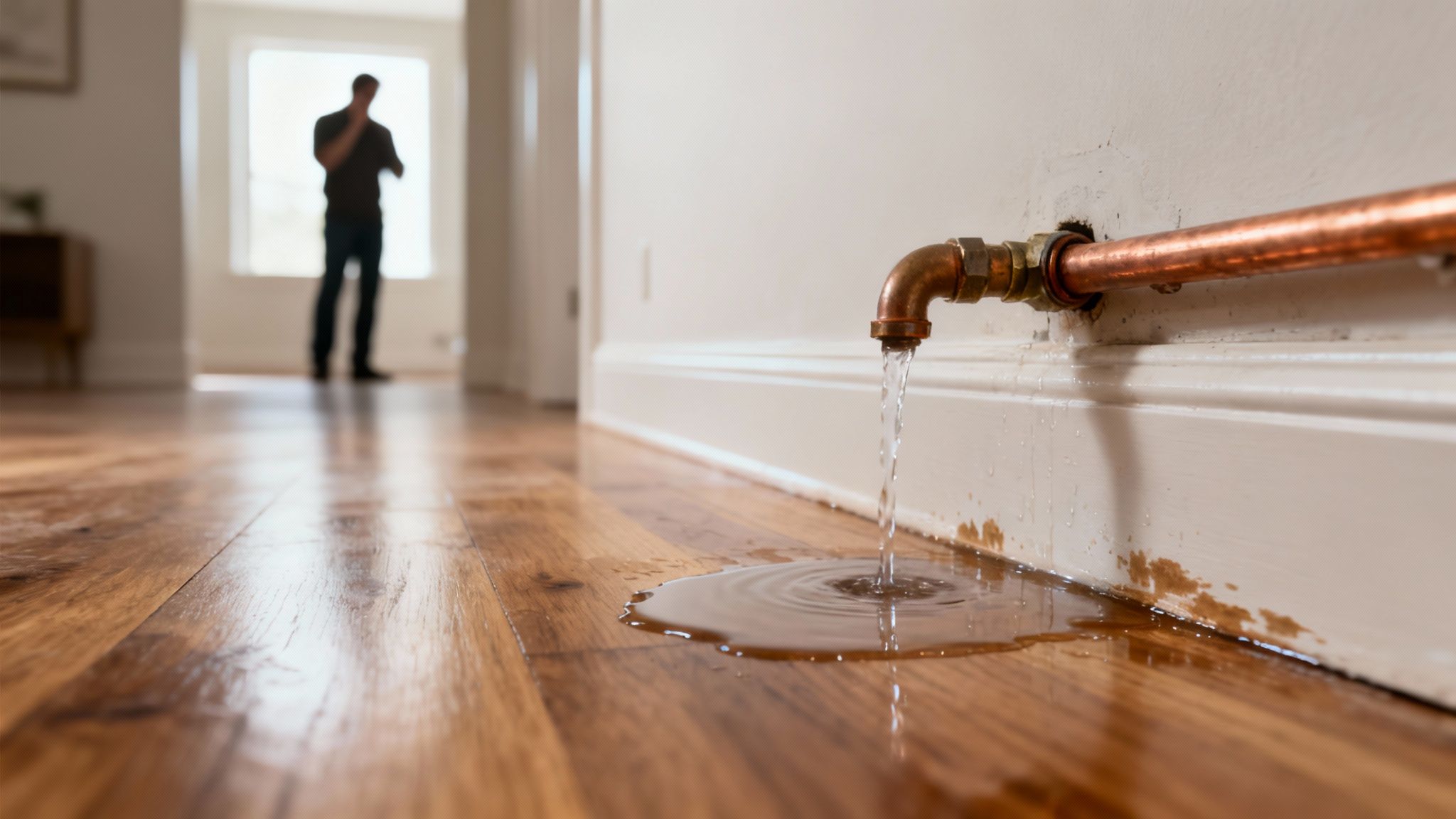
When water freezes, it expands with incredible force. This expansion puts immense pressure on your entire plumbing system, regardless of whether your pipes are copper, steel, or plastic. It only takes one frozen pipe to burst, potentially unleashing hundreds of gallons of water and causing thousands of dollars in damage. Understanding this risk is the first step toward effective prevention.
A tiny crack or a weak joint is all it takes for that pressure to find an escape route, turning a hidden problem into a full-blown flood in a matter of minutes.
The Financial Impact of a Burst Pipe
The cost to repair the damage from a burst pipe can be staggering. The expense isn't just about fixing the broken pipe itself; it's about restoring everything the water touched.
Consider the domino effect of water damage:
Structural Repairs: Water soaks into drywall, warps hardwood floors, and can even compromise the structural integrity of your home. This often requires extensive and costly reconstruction.
Mold Remediation: Lingering moisture creates a perfect breeding ground for mold, which can begin to grow in as little as 24 to 48 hours. Removing it requires a specialized—and expensive—professional service.
Personal Property Loss: Furniture, electronics, rugs, and irreplaceable sentimental items can be ruined in an instant.
Increased Insurance Premiums: Filing a major water damage claim almost guarantees that your homeowners insurance rates will increase.
The numbers speak for themselves. Between August 2022 and August 2023, State Farm paid out over $806 million for more than 32,000 claims related to frozen pipes, with the average claim costing $25,000. Knowing how to shut off your main water valve quickly is crucial to minimizing this damage. You can learn more by reading our guide on the cost to install a water shut-off valve.
This is not a rare occurrence. Frozen pipes are estimated to cause damage in over 250,000 homes in the U.S. each year. A small investment in winterizing your home can save you from becoming another statistic.
Your Essential Insulation and Sealing Checklist
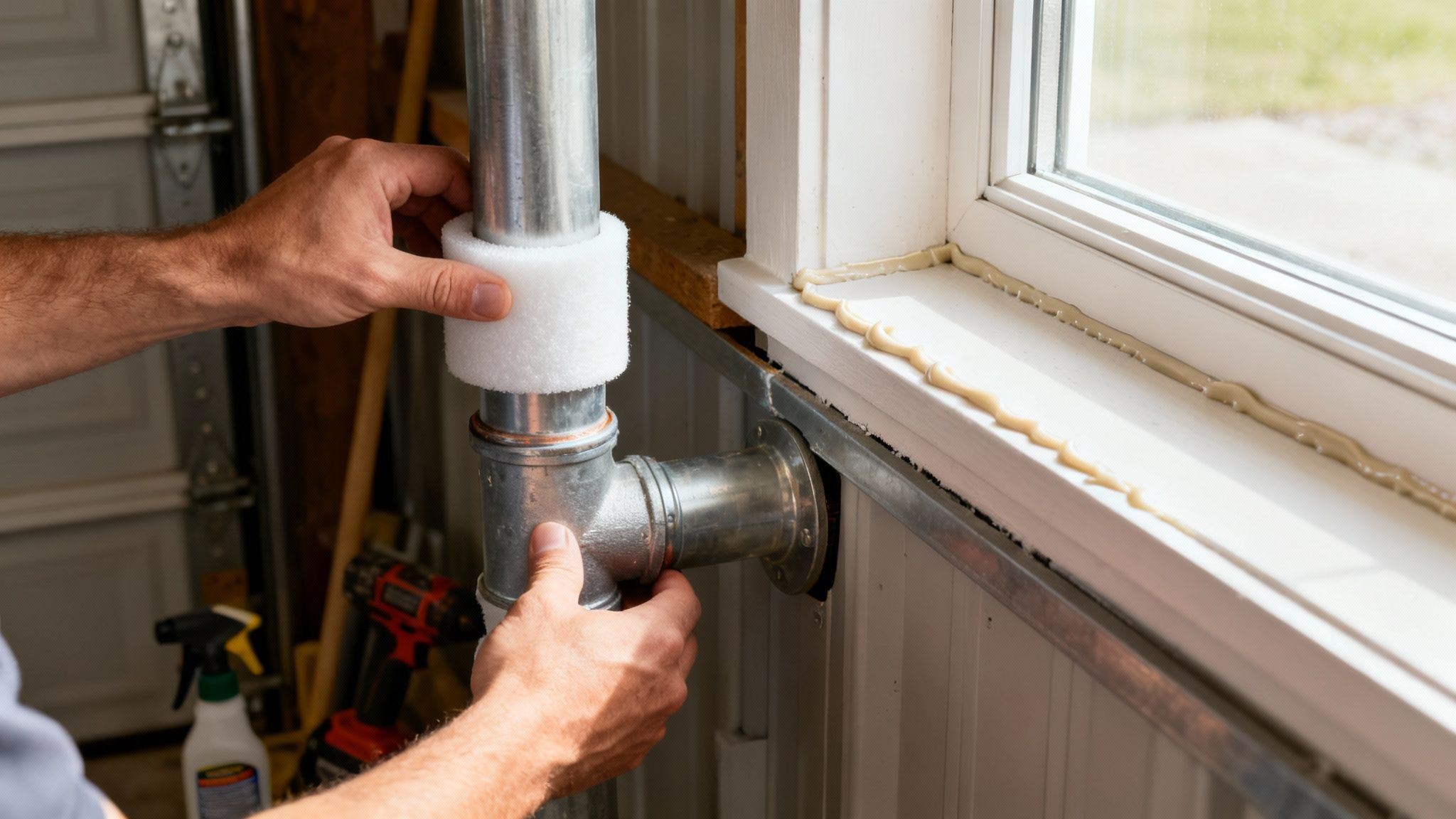
Your first and most effective line of defense against frozen pipes is keeping cold winter air outside. The primary reason pipes freeze is direct exposure to frigid temperatures, which typically occurs in unheated or poorly insulated areas of your home.
Think of pipe insulation as a winter coat for your plumbing. While it doesn't generate heat, it significantly slows down how quickly the water inside loses its warmth. This simple barrier is often all that's needed to get through a cold snap without a disaster.
Start With the Most Vulnerable Pipes
Focus your efforts where they will have the most impact—on pipes running through unheated spaces. These are always the highest-risk areas. Pay close attention to plumbing located in:
Attics and Crawl Spaces: These areas are often poorly heated and can easily drop to the same temperature as the outdoors.
Basements: Even finished basements can have problem spots. Pipes along exterior walls or near drafty vents are particularly susceptible.
Garages: An attached or detached garage offers little protection from a hard freeze.
Exterior Walls: Any kitchen or bathroom pipes routed through an outside wall are prime candidates for freezing.
For most homeowners, simple foam pipe sleeves are an excellent, low-cost solution. They come pre-split, so you can easily cut them to length, wrap them around the pipe, and secure them with tape. For pipes in the coldest locations, thermostatically controlled heat tape provides active warmth when temperatures drop.
Pro Tip: While insulating, take a moment to inspect the condition of your pipes. If you notice heavy corrosion or other damage, it could be a sign of a bigger problem. Addressing weakened plumbing now is a key part of long-term prevention. See what a full pipe system replacement involves to avoid an emergency down the road.
Seal Up Gaps and Air Leaks
Insulating your pipes is only half the battle. Frigid air can find its way inside through small cracks and gaps, undermining your efforts. Sealing these entry points is critical.
Carefully inspect your home’s foundation and exterior walls for any openings where utilities like cables or pipes enter. A small amount of caulk or expanding foam sealant can close these gaps and stop cold air from blowing directly onto your plumbing. Pay extra attention to the area around outdoor hose bibs. Additionally, check for drafts around windows and doors, especially in basements, and apply weatherstripping where needed.
For a comprehensive approach, review some general home winterization advice that covers more than just plumbing. Combining targeted pipe insulation with thorough air sealing creates a formidable defense against winter weather.
Simple Habits to Adopt During a Cold Snap
When temperatures plummet, small actions inside your home become just as important as insulation. Adopting a few simple habits during a cold snap is a powerful way to keep your pipes from freezing with minimal effort.
The goal is to keep water moving and warm air circulating. Still water loses heat quickly and is the primary culprit in frozen pipes. By keeping even a small amount of water flowing, you disrupt the freezing process and relieve the immense pressure that causes pipes to burst.
Let Your Faucets Drip
This classic trick is effective for a reason. A slow, steady drip from a faucet fed by vulnerable pipes can prevent a disaster.
Which faucets? Focus on faucets in high-risk locations, such as those on exterior walls or in unheated basements, crawlspaces, or garages.
How much of a drip? A running stream isn't necessary. A consistent drip of about 5-10 drips per minute is enough to keep water moving and prevent a solid ice block from forming.
Hot or cold? Let the cold water drip. While hot water would also work, there's no need to waste energy by making your water heater work overtime.
This simple action helps equalize pressure in the pipes, dramatically lowering the risk of a burst.
Keep the Heat Consistent
It's tempting to lower the thermostat to save on heating bills, especially at night. However, when it comes to protecting your plumbing, maintaining a steady temperature is non-negotiable.
Never turn your heat completely off in the winter, even if you're away for the weekend. Set your thermostat to at least 55°F (13°C) around the clock. This ensures enough ambient warmth reaches pipes hidden inside walls, keeping them safely above freezing.
Think of consistent heating as basic preventative care for your home. Just as you wouldn't skip an oil change for your car, maintaining steady heat is crucial for your home's health in winter. This fits into the bigger picture of regular plumbing maintenance to safeguard your entire system year-round.
Open Cabinet Doors and Prep Your Outdoor Fixtures
Pipes under kitchen and bathroom sinks are often located against cold exterior walls. The solution is simple: open the cabinet doors. This allows warm air from your home to circulate around the pipes and keep them from freezing.
Finally, don't forget about your outdoor plumbing. Before the first hard freeze, take these steps:
Disconnect and Drain: Unhook all garden hoses from your outdoor spigots.
Store Them Safely: Drain the hoses completely and store them in a shed or garage.
Cover Up: Install an insulated faucet cover, available at any hardware store, over each hose bib to protect it from direct cold.
These small habits combine to create a powerful defense, protecting your home from the inside out.
Smart Tech for Advanced Pipe Protection
For the ultimate protection against frozen pipes, modern technology offers powerful tools. These solutions are ideal for anyone who travels frequently, manages rental properties, or simply wants complete peace of mind when temperatures drop.
While traditional insulation is a passive defense, technology offers an active one. For chronically cold spots, thermostatically controlled heat tape is an excellent upgrade. This smart tape monitors the pipe's temperature and applies heat only when needed, providing targeted warmth efficiently.
It’s a smart solution that uses energy wisely, making it a significant improvement over passive insulation for pipes that have caused problems in the past.
Upgrading to Smart Water Monitors
The most effective technological defense is a smart water monitoring system. These devices are designed to detect a problem the moment it starts and come in several forms.
Leak Sensors: These small devices can be placed under sinks, behind toilets, or near water heaters. If they detect moisture, they send an alert directly to your phone, providing a crucial early warning.
Flow-Based Detectors: These more sophisticated systems learn your home's typical water usage patterns. If they detect an anomaly—like the continuous flow from a burst pipe—they notify you immediately.
Automatic Shut-Off Valves: This is the ultimate failsafe. When this system detects a leak, it doesn't just send an alert; it takes immediate action by automatically closing your home's main water valve, stopping a flood before it can cause significant damage.
These systems provide 24/7 protection, whether you're at home or on vacation. Learn more about the benefits in our guide on automatic water shut-off valves.
When a cold snap is in the forecast, a few simple actions can make all the difference.
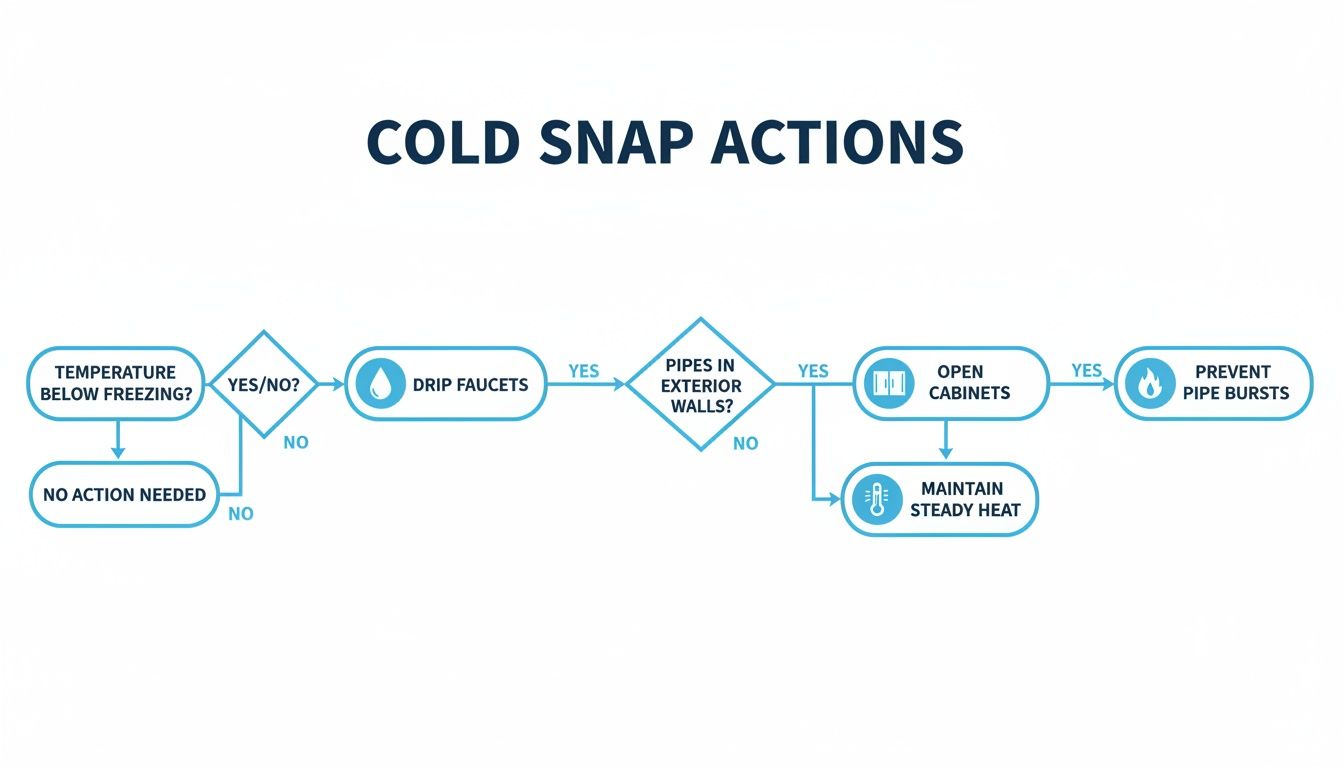
As you can see, basic habits like letting faucets drip and keeping cabinet doors open are the foundation of good winter pipe protection.
Winterization Solutions At a Glance
Feeling overwhelmed by the options? From simple DIY tricks to high-tech installations, this table breaks down the most common solutions to help you decide what’s right for your home and budget.
Solution | Best For | Typical Cost | Installation Effort | Protection Level |
|---|---|---|---|---|
Pipe Insulation | Exposed pipes in semi-heated areas (basements, crawlspaces) | $0.50 - $2.00 per linear foot | Low (DIY) | Basic |
Heat Tape/Cables | Chronically cold pipes in unheated areas (garages, attics) | $50 - $200 per unit | Moderate (DIY or Pro) | Intermediate |
Sealing Gaps | Drafty areas around pipes on exterior walls | $10 - $30 for caulk/foam | Low (DIY) | Basic |
Dripping Faucets | Temporary protection during extreme cold snaps | Essentially free (slight water cost) | Very Low (DIY) | Basic/Temporary |
Smart Leak Sensors | High-risk areas (laundry rooms, under sinks) | $20 - $60 per sensor | Very Low (DIY) | Early Warning |
Automatic Shut-Off Valve | Whole-home protection, frequent travelers, rental properties | $500 - $2,000+ | High (Professional) | Maximum |
A layered approach often works best. Combining simple, low-cost steps with a targeted piece of technology like a leak sensor can provide robust protection without breaking the bank.
The Financial Case for Smart Protection
It’s easy to hesitate at the cost of smart technology, but it pales in comparison to the expense of a water damage disaster. This is especially true for commercial buildings and multifamily properties.
An analysis of 433 burst pipe insurance claims found the average loss was $27,000, with the most severe claim reaching a staggering $1.7 million.
When you consider that a leak sensor can cost as little as $50, and even a top-tier automatic shut-off system is often under $2,000, the investment is clearly worthwhile. It represents a tiny fraction of the potential damage.
Furthermore, this technology can also lower your homeowners insurance premiums. Many providers offer discounts for homes equipped with these protective devices, making it not just a safety feature but also a financially sound decision.
What to Do When a Pipe Is Already Frozen
Even with careful preparation, a sudden deep freeze can catch you off guard. If you turn on a faucet and only a trickle of water comes out—or nothing at all—don't panic. The key is to act quickly and safely. A frozen pipe doesn't have to become a burst one.
First, confirm that the pipe is frozen. Check other faucets in your home. If they work fine, you've likely isolated the problem. Return to the affected faucet and leave it open. Even a small drip will help relieve pressure and indicate when water starts flowing again.
Safe Thawing Techniques for a Frozen Pipe
The goal is to apply gentle, gradual heat to the frozen section of the pipe. Slow and steady wins the race; rushing the process with high heat can cause the pipe to crack.
Here are the safest and most effective methods:
Hairdryer: This is often your best tool. On a medium setting, move the hairdryer back and forth along the pipe, starting from the faucet end and working toward the blockage.
Warm Towels: Soak towels in hot water, wring them out, and wrap them around the frozen pipe. Replace them every few minutes as they cool.
Space Heater: Place a portable electric heater a safe distance from the pipe, ensuring it is on a stable surface and away from flammable materials. Never leave a space heater unattended.
Warning: Never use an open flame—such as a blowtorch or propane heater—to thaw a pipe. This can boil the water inside, causing the pipe to explode, and poses an extreme fire hazard.
When to Immediately Call an Emergency Plumber
While you can often handle a minor freeze yourself, some situations require professional help. A plumber has the tools and expertise to resolve the issue safely.
Call a plumber immediately if:
You cannot locate the frozen section of the pipe.
The pipe is in an inaccessible area, like behind a wall.
Your thawing attempts are not working.
You see a bulge, crack, or any sign of a leak, which indicates the pipe may have already burst.
If you suspect a pipe has burst, your first move should be to shut off your home's main water valve to stop the flow of water. If you see water damage but can't find the source, our guide on how to identify common household water leaks can help you investigate while you wait for a professional to arrive.
If you’re in the Los Angeles area and facing a frozen pipe emergency, contact our 24/7 team for a fast, professional response to protect your home.
Your Top Questions About Frozen Pipes, Answered
Every home is different, so it's normal to have specific questions. Here are answers to some of the most common queries we receive from homeowners.
At What Temperature Should I Worry About Pipes Freezing?
The general rule of thumb is that pipes are at risk when the outdoor temperature drops to 20°F (-6.7°C) or below. This is the danger zone for unprotected pipes, especially those in attics, crawl spaces, or along exterior walls.
However, since many homes are not built for extreme cold, problems can arise even in the high 20s. If the forecast calls for temperatures to approach the freezing point—32°F (0°C)—it's wise to take preventative measures.
Should I Let Hot or Cold Water Drip to Prevent Freezing?
Always let the cold water drip. The purpose is simply to keep water moving to prevent ice from forming and, more importantly, to relieve the intense pressure that builds up inside a freezing pipe and causes it to burst.
Using hot water is unnecessary and wastes energy by forcing your water heater to run constantly. A slow, steady drip from a cold tap is all you need.
Can PEX Pipes Still Freeze and Burst?
Yes, they can. While PEX piping is more flexible than copper or PVC and can expand slightly as ice forms, making it less likely to burst, it is not freeze-proof.
In a severe or prolonged freeze, the water inside a PEX line will freeze solid, creating a blockage. The pipe and its fittings can still fail under extreme pressure. Treat PEX pipes with the same care as any other plumbing material and ensure they are properly insulated.
A common mistake is assuming that newer building materials are indestructible. All plumbing, regardless of its age or material, is vulnerable to freezing temperatures without proper protection. Winterization is essential for any home.
What Should I Do If I Go on Vacation in the Winter?
Leaving your home unattended during a cold snap requires a solid plan. The most important rule is to never turn your heat completely off.
Set your thermostat to a consistent temperature, no lower than 55°F (13°C). This ambient warmth is crucial for protecting pipes inside walls, floors, and cabinets.
For maximum peace of mind, follow this pre-trip checklist:
Open Cabinet Doors: Prop open the doors under your kitchen and bathroom sinks to allow warm air to circulate.
Shut Off the Main Water Supply: If you will be gone for more than a couple of days, this is your safest option. No water in the system means no water to freeze.
Drain the System: After turning off the main valve, open all faucets (both hot and cold) and flush the toilets to drain any remaining water from the pipes.
Taking a few minutes to prepare can ensure you don't return to a flooded house. For more tips, this detailed guide on preventing frozen pipes offers additional insights.
If you're in the Greater Los Angeles area and need help winterizing your home or are facing a plumbing emergency, don't hesitate. The expert team at ZH Plumbing is available 24/7 to provide fast, reliable service. Protect your property by visiting us at https://zhplumbing.com to schedule an inspection or request immediate assistance.
Comments