

.png)

How to Unclog My Kitchen Sink: A Practical LA Homeowner's Guide
Dealing with a stubbornly clogged kitchen sink is a frustrating reality for any Los Angeles homeowner. You finish the dishes, pull the plug, and watch as the murky water refuses to go down. That slow drain or complete standstill is more than an inconvenience—it's a sign of a blockage that's disrupting your daily life, whether you're in a Hollywood bungalow or a modern downtown loft.
Before reaching for harsh chemicals, take a moment to assess the situation. Is the water draining slowly or not at all? Are both sides of a double sink affected? Answering these simple questions can help you pinpoint the cause and choose the right DIY solution to get your kitchen back in working order.
Your First Steps for a Clogged Kitchen Sink
A backed-up kitchen sink throws a wrench into your routine. In our experience across Los Angeles, the culprit is almost always the same: a stubborn buildup of grease, tiny food scraps, and soap scum that has accumulated over time.
Before you grab any tools, run through this quick mental checklist:
Is the water draining slowly or is it completely stopped? A slow drain points to a partial clog, often caused by grease or small particles. These are typically easier to resolve.
If you have a double sink, are both sides blocked? If only one side is clogged, the problem is likely in that specific drain's P-trap. If both are backed up, the blockage is probably further down where the pipes merge.
Does your garbage disposal just hum? A humming sound without any grinding action usually means it's jammed. A quick reset might be all it needs. For more details, see our guide on what to do when your garbage disposal is leaking.
Diagnosing the Clog
Kitchen drain clogs are incredibly common in Los Angeles. Grease is a massive issue, contributing to countless plumbing calls. When grease solidifies in pipes, it creates a sticky trap for food particles, leading to major blockages.
This simple decision tree can help you determine what you're up against.
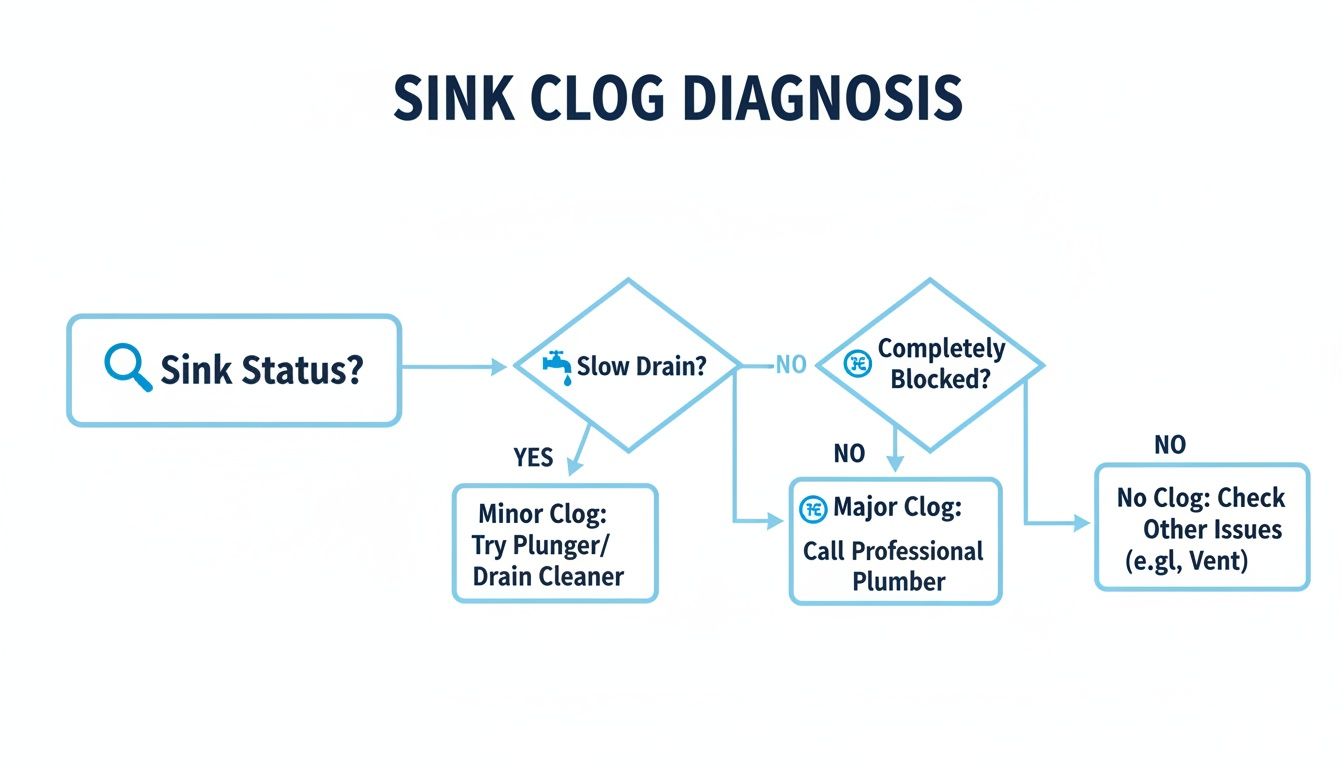
Use this to quickly see if you have a simple slow drain that a plunger can handle or a complete blockage that’s going to need a bit more muscle.
Here's a quick rundown of the most common DIY methods to give you a sense of what to expect.
Quick Guide to DIY Sink Unclogging Methods
Method | Best For | Difficulty | Estimated Time |
|---|---|---|---|
Plunger | Minor clogs, food particles | Easy | 5-10 minutes |
Natural Cleaner | Grease, soap scum, odors | Easy | 30-60 minutes |
Drain Snake | Stubborn clogs, hair, deep blockages | Moderate | 20-30 minutes |
P-Trap Cleaning | Recovering lost items, tough local clogs | Moderate | 30-45 minutes |
Each of these methods has its place, and we'll walk through them one by one. But remember, the goal is to solve the problem without creating a bigger one.
Gathering Your Tools and Safety Essentials
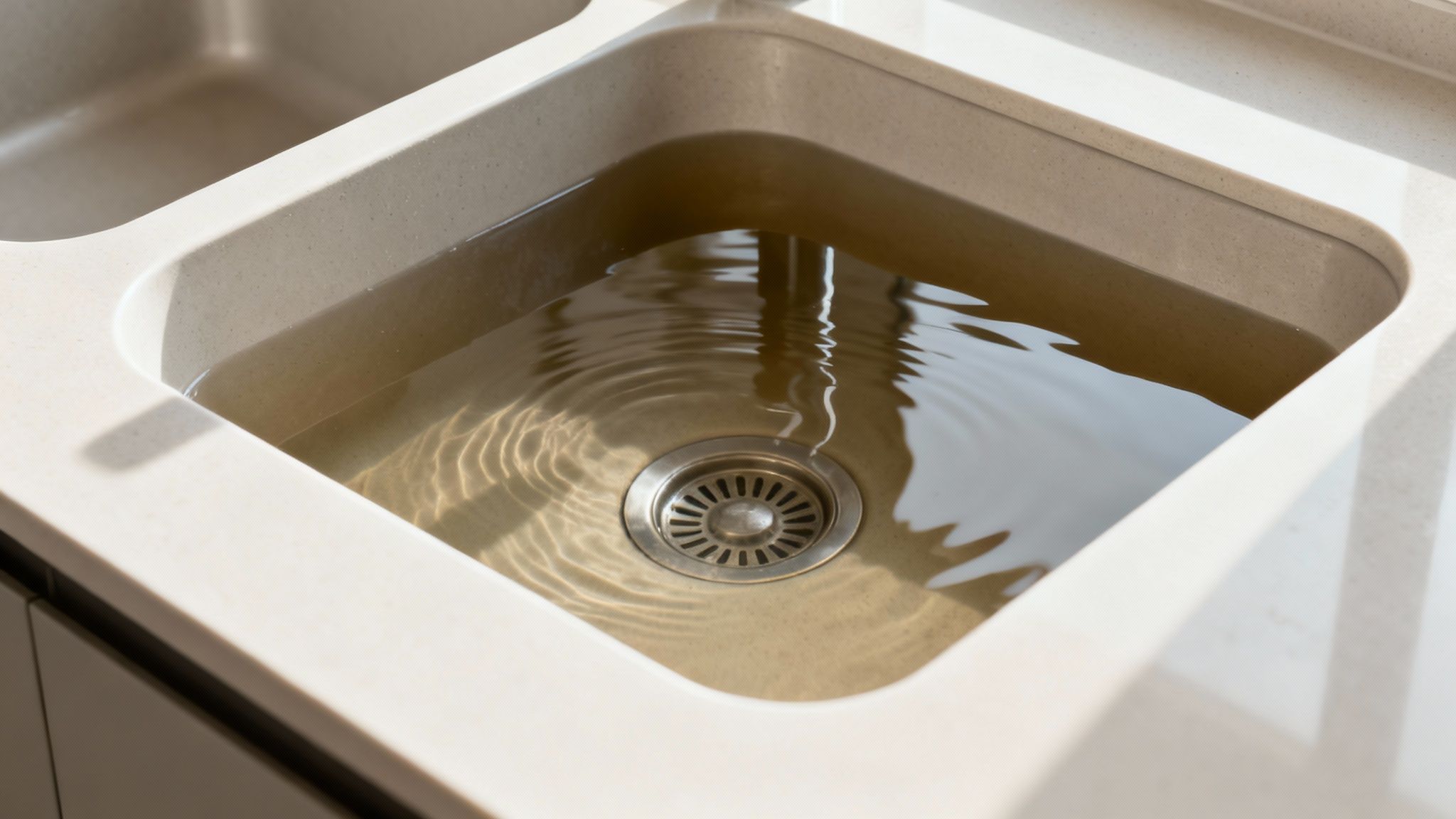
Before you roll up your sleeves, let's talk about gear. Having the right tools on hand is the difference between a quick fix and a plumbing headache. A little prep work now can save you a lot of frustration, especially if you're in an older Pasadena or Hollywood home where pipes might be more temperamental.
A successful DIY job solves the problem without creating a new one, like a scratched pipe or a leak under the cabinet.
Your Basic Unclogging Toolkit
Most minor kitchen sink clogs can be cleared with a handful of common tools. Get these ready before you start to avoid frantic mid-job runs to the hardware store.
A Cup Plunger: This is your first move. Make sure it’s a cup-style plunger with a flat rim, which creates the perfect seal over a sink drain. The plungers with an extra flange are for toilets.
A Bucket and Old Towels: Things can get messy, especially when working on the pipes below. Placing a bucket directly under the P-trap will catch any water and grime.
Channel-Lock Pliers: If you need to remove the P-trap, a solid pair of adjustable pliers is a must-have for loosening the slip nuts without damaging them.
Protective Gloves and Eyewear: This is non-negotiable. You’re dealing with unseen gunk. Protect your hands and keep any unexpected splashes out of your eyes.
Critical Safety Warning: Never mix chemical drain cleaners. The reaction can create toxic fumes that are dangerous to breathe. If you've already used one chemical product that failed, do not add another or try a baking soda and vinegar mix on top of it.
When to Use a Drain Snake
For more stubborn blockages that laugh at your plunger, a hand-crank drain snake (or auger) is the next tool to grab. This flexible cable can navigate the curves in your pipes to physically break up or pull out whatever is causing the backup.
For more tips on keeping your home's plumbing in top shape, check out these essential plumbing tips for Los Angeles homeowners. When using a snake, always feed it into the drain slowly and gently to avoid damaging your pipes.
Effective DIY Methods to Clear Your Drain
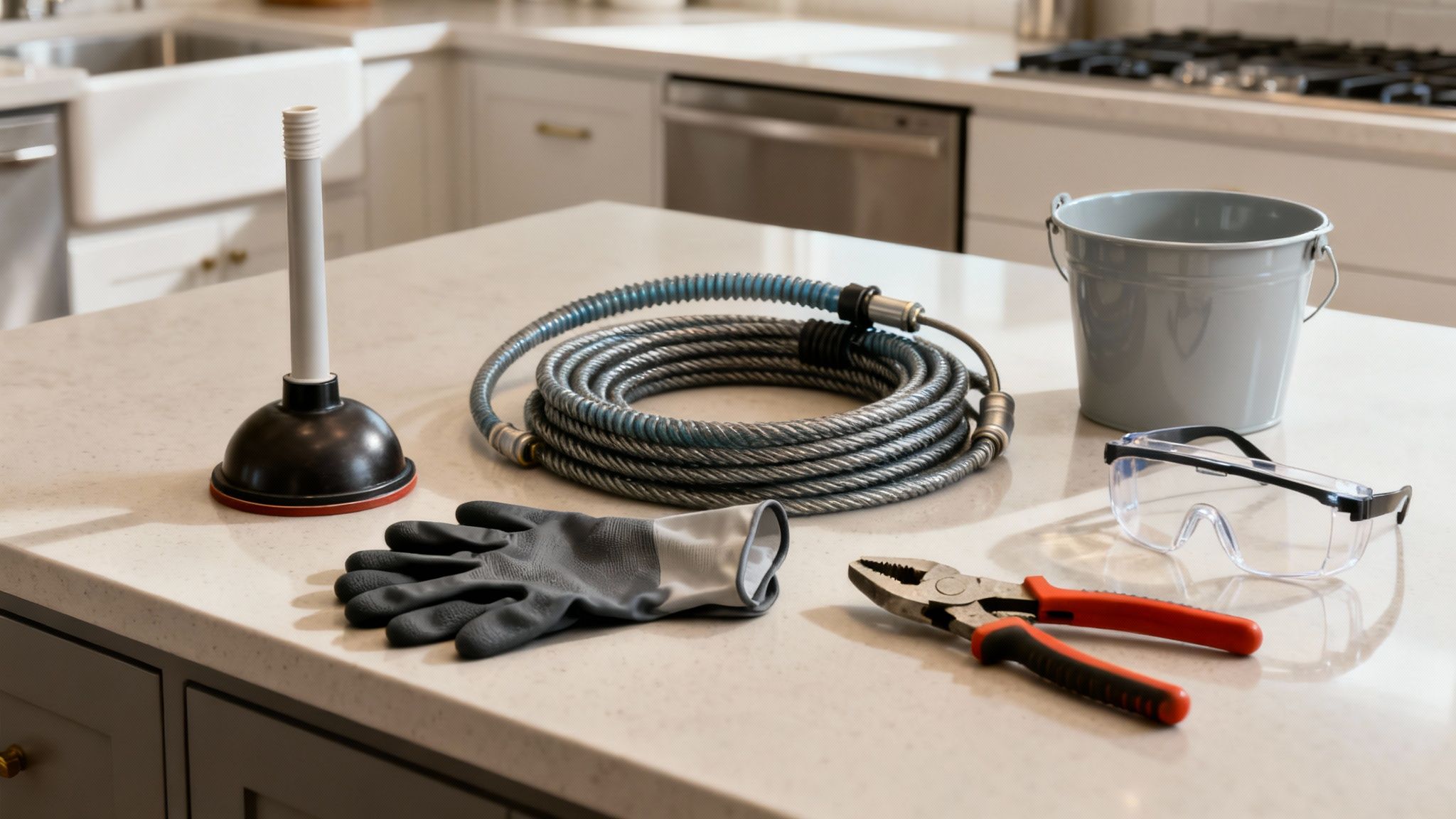
Alright, you’ve got your tools, so let’s get that sink draining again. We'll start with the easiest, least aggressive methods first. The good news is that most minor kitchen sink clogs we see in Los Angeles homes are fixable without calling a pro. You just need to match the right technique to the right type of clog.
The Boiling Water Flush for Grease Clogs
If you suspect grease is the culprit, try this first. Cooking grease solidifies as it cools, creating a sticky trap for other debris. A blast of hot water can often melt the gunk enough to get things moving.
Bring about half a gallon of water to a rolling boil. Then, very carefully, pour it slowly and directly down the drain. If the water starts to go down, follow it up with hot water from the tap to help flush everything clear.
A Crucial Note on Pipe Safety: This method is only safe for metal pipes. If you have PVC pipes under your sink, which are common in many LA homes, boiling water can soften or damage the plastic. If your pipes are plastic, skip this and move to the next method.
Master the Plunger Technique
For clogs caused by food chunks, a plunger is your best friend. It creates a powerful back-and-forth pressure that can break up the blockage. But you have to use it correctly.
First, fill the sink with a few inches of hot water—just enough to completely cover the rubber cup of the plunger to create a powerful seal.
For single sinks: Place the plunger cup firmly over the drain opening.
For double sinks: You must block the other drain. Stuff a wet rag in it or use a stopper. If you don't, all the pressure will just shoot out the other side, doing nothing for the clog.
With a good seal, pump the plunger up and down forcefully for about 20-30 seconds. On the final push, pull it straight up to break the seal with a pop. This sudden whoosh of water often does the trick. You may need to repeat this a few times.
The Natural Power of Baking Soda and Vinegar
If the plunger didn't work, this is a great next step. It’s a pipe-safe, chemical-free alternative that uses a fizzing reaction to break down buildup.
Get as much standing water out of the sink as you can. Dump one cup of baking soda down the drain, followed by one cup of white vinegar. Immediately cover the drain with a stopper to trap the fizzing action in the pipes.
Let it work for 15-30 minutes. Then, remove the stopper and flush the drain thoroughly with hot tap water. If you find yourself doing this often, it's worth understanding the common causes of recurring drain clogs to prevent future issues.
Tackling the P-Trap for Stubborn Clogs
Still no luck? The clog is probably stuck in the P-trap—the U-shaped bend in the pipe right under your sink. Its shape is a magnet for hair, food, and other debris. Cleaning it is a little messy but surprisingly simple.
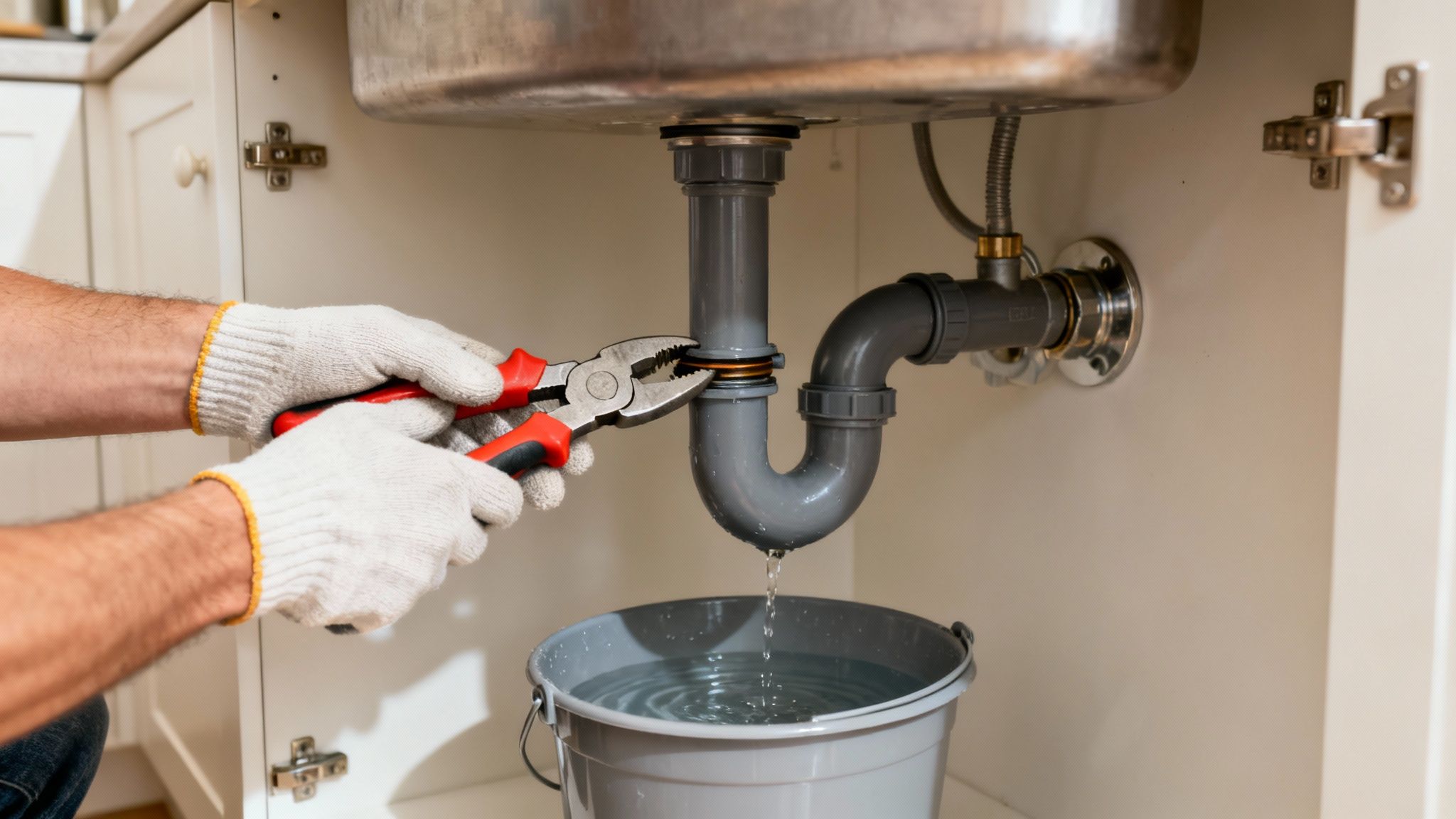
Prep for Spills: Place a bucket directly under the P-trap. Lay down some old towels to catch water and gunk.
Loosen the Nuts: You'll see two large slip nuts holding the curved pipe in place. Use your channel-lock pliers to loosen them by turning them counter-clockwise.
Remove and Clean: With the nuts loose, the P-trap should pull right off. Dump the contents into your bucket. Use a brush and hot, soapy water to clean the inside thoroughly.
Reassemble with Care: Put the clean pipe back and hand-tighten the nuts first. Then, give them a final gentle quarter-turn with the pliers. Be careful not to over-tighten, as this can crack the plastic.
Once it's reassembled, run hot water for a minute and check the connections for leaks. The same principles often apply to other drains, as this guide on unclogging RV shower drains safely and quickly explains.
Signs It’s Time to Call a Professional Plumber in Los Angeles
Sometimes, a stubborn clog is a red flag for a bigger issue lurking out of sight. It's smart to know when to stop the DIY methods and pick up the phone. Calling a pro can be the difference between a quick fix and a costly disaster, especially here in Los Angeles where plumbing systems can be complex.
If you've tried the same tricks over and over with no success, it's a huge sign the problem is beyond the reach of a plunger. It usually means the clog is too dense or too far down the pipe for basic tools to touch.
When the Clog Just Keeps Coming Back
A clog that returns again and again is the number one reason homeowners from the Valley to the Westside finally call us. You clear the sink, it drains perfectly for a day, and then—like clockwork—the water is standing again.
This frustrating cycle is a classic sign that your DIY efforts are just poking a small hole in a much larger blockage. You're getting temporary relief, but you haven't solved the real problem, which is likely a severe buildup of grease and sludge that needs to be professionally scoured away.
Calling a plumber isn't admitting defeat. It’s a smart move to protect your home from water damage. A persistent clog puts immense pressure on your pipes, which can lead to leaks or even a burst pipe if left unresolved.
More Than Just One Drain Is Clogged
This is the big one. If you notice backups in multiple places at the same time, pay close attention. For instance, does running the dishwasher make water gurgle up from your kitchen sink? Does flushing the toilet cause bubbles in your shower? If so, you are almost certainly dealing with a main sewer line clog.
At this point, it’s a whole-house issue, not just a kitchen sink problem. A sewer line blockage is serious and can lead to widespread water damage and unsanitary backups. This requires specialized equipment that you won't find at a hardware store. A professional will typically use a sewer camera inspection to find the exact location and cause of the blockage deep within the line.
If you’ve tried all the DIY methods in this guide and the water is still standing, it's time to call in the experts. At ZH Plumbing, we’re equipped to solve the problem for good, serving communities across the Greater Los Angeles area.
Proactive Tips to Keep Your Drains Flowing Freely
The easiest clog to deal with is the one that never happens in the first place. Knowing how to handle a clogged sink is a great skill for any Los Angeles homeowner, but building a few simple habits can save you a ton of frustration.
Think of it as a long-term strategy for your plumbing's health. It's about being mindful of what’s going down your drain every day. Consistent, small actions are what protect your pipes from the slow, nasty buildup that leads to a major backup.
Build Good Daily Habits
Your first line of defense against clogs starts right at the sink.
Never Pour Grease Down the Drain: This is the golden rule. Cooking grease, fats, and oils solidify in your pipes as they cool, creating a sticky mess that traps other debris. Pour used grease into an old can, let it harden, and toss it in the trash.
Use a Sink Strainer: This simple, cheap tool is one of the best investments for your kitchen. It catches food particles that would otherwise wash down the drain and contribute to a future blockage.
Be Smart with Your Garbage Disposal: Your disposal isn't invincible. Avoid putting stringy or starchy foods like celery stalks, potato peels, coffee grounds, and pasta down it. Always run cold water when you use the disposal. Cold water keeps grease solid, allowing the blades to chop it up and flush it away more easily.
Perform Simple Monthly Maintenance
A little monthly TLC can flush out minor buildup before it becomes a real headache.
Once a month, bring a large pot of water to a boil and pour it slowly down the drain. This helps dissolve any grease that's starting to accumulate.
Bad smells are often the first warning sign of a clog forming. When you notice an odor, it's a clear signal that it's time to take action. For great advice on fixing bad smells coming from your kitchen drain, this is a helpful resource.
A proactive approach is key. For residents across Los Angeles and surrounding areas, preventing clogs is less of a rare emergency and more of an ongoing maintenance challenge.
Got Questions About That Stubborn Sink Clog?
Even after trying a few DIY fixes, it's normal to have questions. Homeowners all over Los Angeles run into the same tricky spots, so we’ve pulled together answers to the questions we hear most often.
Are Chemical Drain Cleaners a Good Idea for My Pipes?
Honestly, we almost always recommend steering clear of them. The promise of a quick fix is tempting, but the harsh chemicals in those bottles can cause serious problems, especially for the pipes in many older LA homes.
These cleaners rarely solve the root problem. Instead, they often just burn a small tunnel through the gunk, leaving most of the clog behind. Plus, the risk of chemical splashes and toxic fumes isn't worth it. The natural methods we discussed are a much safer bet for you and your plumbing.
My Garbage Disposal Is Humming, but Nothing Is Draining. What's Wrong?
That humming sound is the classic sign of a jam, often caused by fibrous stuff like celery stalks or coffee grounds tangled around the blades.
First, the most important step is to kill the power at your circuit breaker. Safety first.
Once the power is off, try these two things:
Look for a small red reset button on the bottom of the disposal unit and press it firmly.
If that doesn't work, find the hexagonal opening on the bottom. Use the small Allen key (a jam-buster wrench) that came with the unit to manually crank the blades back and forth to break the jam free.
If you free the jam but the sink still won't drain, the clog is probably in the P-trap. For a deeper dive, you can learn why ZH Plumbing is the best choice for drain cleaning in North Hollywood and see how our professional approach tackles the core issue.
How Much Should I Expect to Pay to Unclog a Sink in Los Angeles?
The cost can vary depending on how severe the clog is and where it’s located. A simple blockage that a professional can clear quickly will be on the more affordable end of the spectrum.
On the other hand, if the problem is a serious blockage deep in your main sewer line that requires heavy-duty equipment like a hydro-jetter, the price will be higher.
Any trustworthy plumber serving the LA area will give you clear, upfront pricing before they start working, so you know exactly what the job will cost with no hidden fees.
If you've tried everything and that standing water isn't going anywhere, it's time to call in the experts. For fast, reliable service across the Greater Los Angeles area, contact ZH Plumbing. Our team is on call 24/7 to tackle your toughest clogs and get your kitchen back to normal. Visit us at https://zhplumbing.com to book your service.
Comments