

.png)

A Los Angeles Guide: What to Do When Your Garbage Disposal is Leaking
Finding a puddle of murky water under your kitchen sink is a sight that makes any Los Angeles homeowner's stomach drop. A garbage disposal leaking isn't just a minor annoyance; it's a clear warning that something is wrong, and ignoring it can lead to warped cabinets, hidden mold, and expensive water damage. If you've discovered a leak, you're in the right place to figure out what's causing it and how to stop it.
Why Your Leaking Garbage Disposal Needs Immediate Attention
That sinking feeling you get when you spot a leak is completely justified. Your garbage disposal is a tough appliance, but the constant exposure to moisture, food acids, and mechanical vibrations eventually takes its toll. Here in Los Angeles and the surrounding areas, our notoriously hard water can accelerate mineral buildup and corrosion, often shortening the unit's lifespan.
When you find a leak, you need to act fast. Even a slow, steady drip can cause major headaches for homeowners from the San Fernando Valley to Orange County:
Structural Damage: Persistent moisture will destroy the particleboard or wood of your kitchen cabinets, causing them to swell, warp, and rot.
Mold and Mildew: The dark, damp space under your sink is the perfect breeding ground for mold, which can compromise your home's air quality.
Pest Infestations: Nothing attracts pests like cockroaches and ants faster than standing water mixed with tiny food particles.
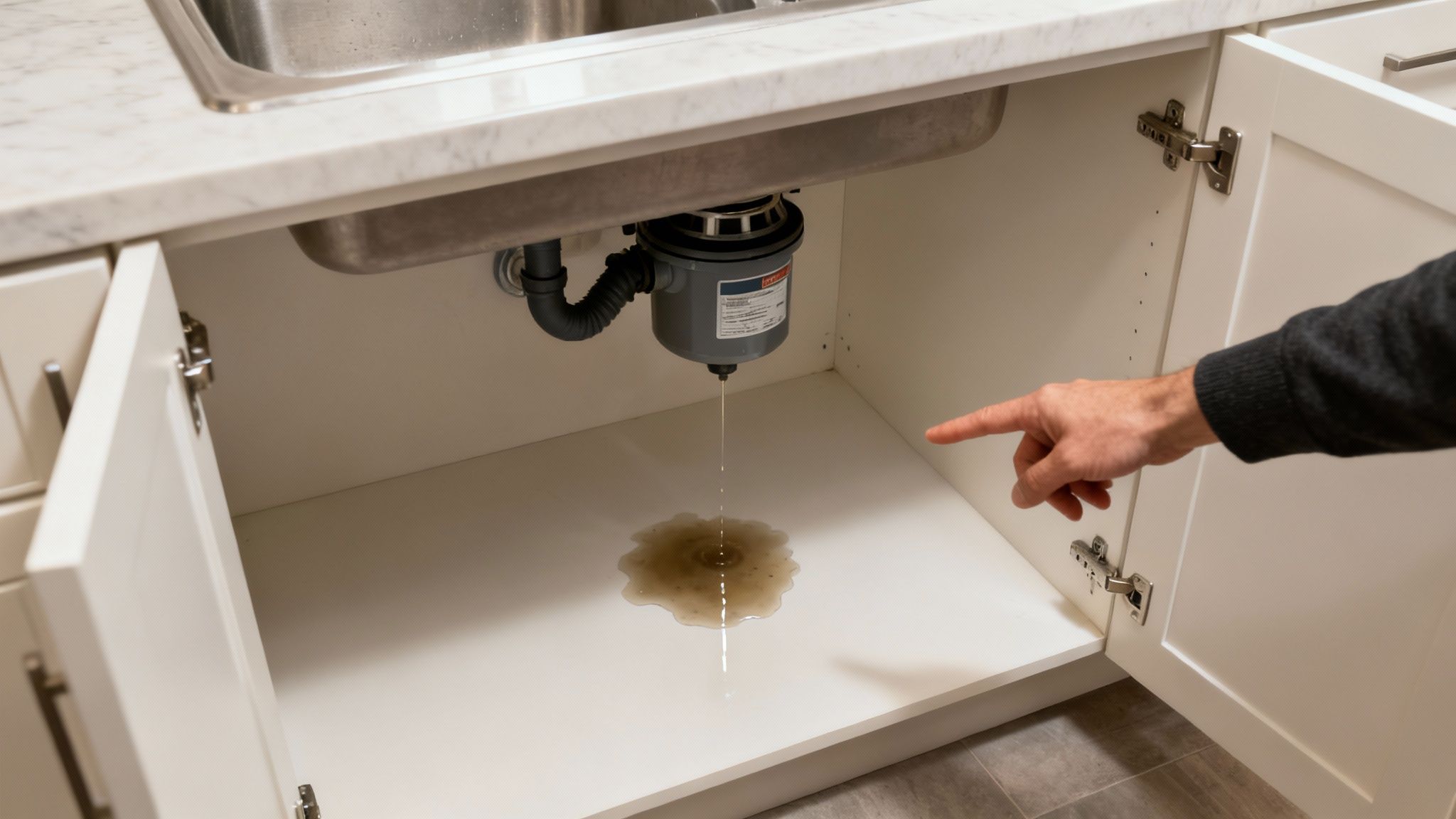
This isn't just a hypothetical problem; it's incredibly common. Kitchen appliance failures are a huge factor in home water damage, contributing to over 10% of claims that total an astounding $13 billion every year in the U.S. Some well-known disposal brands have even been hit with lawsuits over alleged defects that cause them to corrode and leak prematurely.
Diagnosing the Problem
Figuring out where the leak is coming from is the first crucial step. The location of the drip tells you almost everything you need to know.
A leak coming from the top, near the sink drain, might just be a simple fix with some new plumber's putty. But a drip coming from the very bottom of the unit's body? That almost always means a fatal internal crack, and it's time for a new disposal.
For a wider view on tracking down water issues around your home, check out our guide on how to identify common household water leaks. This guide will walk you through the diagnostic process, helping you decide whether you can tackle this as a DIY project or if it's time to call in the pros.
Pinpointing the Source of the Leak
Before you can think about grabbing a wrench, you need to play detective. The single most important clue to fixing a leaking garbage disposal is figuring out exactly where the water is coming from. Get this right, and you'll save yourself a ton of frustration—and a few trips to the hardware store.
First things first: safety. Go to your circuit breaker and turn off the power to the garbage disposal. This isn't optional. Once you're sure there's no power, clear everything out from under the sink. Grab a towel and completely dry the outside of the disposal unit and all the pipes connected to it. You can't find a new leak if everything is already wet.
The Leak Detective Test
Here’s a simple trick we use in the field across Los Angeles to find the source fast. Put the stopper in your sink drain and fill the basin with a few inches of water. A few drops of food coloring in the water can make a tiny drip much easier to spot against the black disposal unit.
Now for the moment of truth. Pull the stopper and get your flashlight ready. Watch the disposal and every single connection point like a hawk as the water drains through. The very first place you see a drop of water form is your culprit.
Common Leak Locations and What They Mean
A garbage disposal leak almost always springs from one of five places. Each one points to a completely different problem and, more importantly, a different solution.
Top of the Unit (Sink Flange): Water seeping out from where the disposal meets the sink? That's a classic sink flange leak. It means the plumber's putty or the gasket that seals it to the sink has worn out or failed.
Side of the Unit (Hose Connections): If you see drips coming from the side, it’s usually one of two spots. It's either the large main drain pipe or the smaller hose coming over from your dishwasher.
Bottom of the Unit (Housing): This is the one you hope you don't see. Water dripping from the main body of the disposal itself, often near the little red reset button, points to a failed internal seal. This can also mean the unit's casing has a crack.
Identifying the leak's source is the most critical part of the process. A misdiagnosis can lead to wasted time and money on a repair that doesn’t solve the underlying problem, which is a common frustration we see with homeowners in Los Angeles County.
Sometimes, water can be sneaky, running along a pipe before it actually drips. If you're having trouble, you can learn more about general leak finding in our guide on how to detect water leaks.
To make it even easier, here’s a quick-glance table to help you decode what your disposal is trying to tell you.
Decoding Your Garbage Disposal Leak
Use this table as a quick reference to identify where your leak is coming from, what it means, and your best course of action.
Leak Location | What It Means | DIY Fix or Call a Pro? |
|---|---|---|
Top of Disposal (Sink Flange) | The seal between the disposal and sink is compromised. Usually old plumber's putty. | DIY-friendly. Resealing the flange is a common and manageable project. |
Dishwasher Hose Connection | The clamp is loose, or the hose itself is cracked and needs replacing. | Easy DIY. Tightening a clamp or replacing the hose is a quick fix. |
Main Discharge Pipe | The gasket has failed, or the connecting bolts have loosened over time. | DIY-friendly. A straightforward parts replacement and tightening job. |
Bottom of the Disposal | A fatal flaw. The internal seals have failed, or the housing is cracked. | Call a Pro. The unit is beyond repair and needs to be replaced entirely. |
Knowing these differences is key. Tightening a loose clamp on a dishwasher hose might take you five minutes. But if you see water coming from the bottom of the unit, don’t waste your Saturday trying to patch it up. That's a clear sign the disposal is done for and needs to be replaced.
How to Fix Common Garbage Disposal Leaks
Alright, you’ve played detective and figured out where that pesky drip is coming from. Now it’s time to roll up your sleeves and move from diagnosis to action. The good news is that many of the garbage disposal leaks we see in Los Angeles homes are surprisingly simple to fix yourself with just a few basic tools and a bit of patience.
Before you even think about grabbing a wrench, let's talk about the single most important step: safety. Head over to your home's circuit breaker and shut off the power to the garbage disposal. I can't stress this enough. Just flipping the wall switch isn't good enough—you need to kill the power at the source so there's zero chance of that motor kicking on while your hands are in there.
This flowchart is a great way to visualize the game plan based on the leak's location.
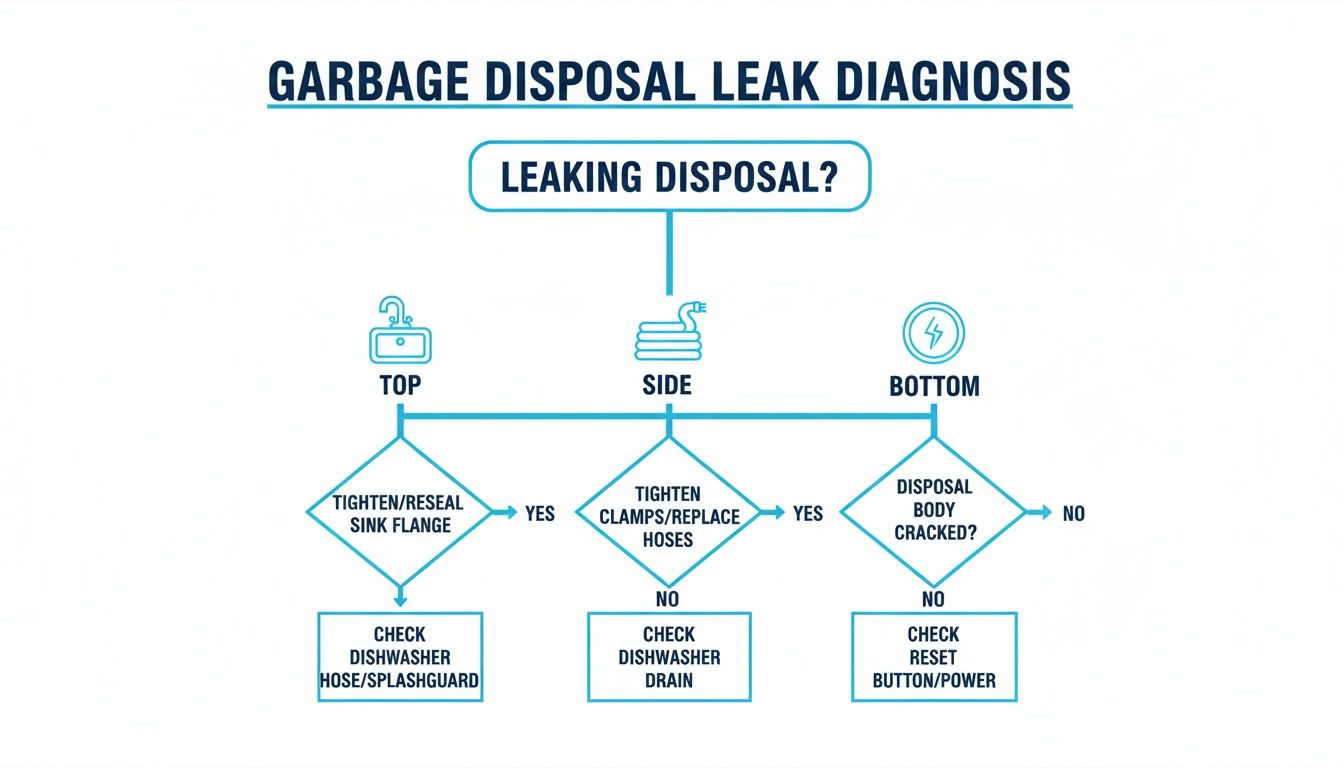
As you can see, drips from the top or sides usually mean a repair is in your future. But if the leak is coming straight from the bottom of the unit's body, it's almost always a sign that the whole thing needs to be replaced.
Fixing a Leak from the Top Sink Flange
If you see water seeping out from where the disposal meets the sink, you're dealing with a bad seal. Over time, the plumber's putty that creates that seal dries out, gets brittle, and cracks, letting water sneak through.
To fix this, you'll have to detach the disposal from the sink. Once you loosen the mounting ring, carefully lower the unit and set it aside. Now, get in there and scrape off all the old, crumbly putty from both the sink drain opening and the metal flange. Apply a fresh, even rope of new plumber's putty around the flange, press it down firmly into the sink opening, and then reattach the disposal.
Pro Tip: When you're tightening the mounting bolts, work your way around them evenly, kind of like you would with lug nuts on a car wheel. If you crank down on one side too hard, you can create an uneven seal and end up right back where you started—with a leak. Go for snug, not strained.
Securing Leaks from Side Connections
Leaks popping up on the side of the disposal almost always come from one of two spots: the big drain pipe or the smaller dishwasher hose.
Dishwasher Hose: This one's usually the easy fix. Find the metal clamp holding the rubber hose onto the disposal's inlet port. Grab a screwdriver or a nut driver and give it a little tighten. If the hose itself looks old, cracked, or stiff, don't mess around—just replace it.
Main Drain Pipe: The large PVC pipe is typically held on by two or three bolts. The vibrations from the disposal can work these loose over the years. Try tightening them gently. If that doesn't solve it, the rubber gasket inside that connection is probably shot and needs to be replaced.
Keep in mind that a lot of garbage disposal leaks are really just symptoms of a clog somewhere further down the drain. When water can't go down, it backs up and finds the weakest seal to escape from. That’s why it’s always helpful to know how to unblock a drain yourself, because clearing the clog might fix the "leak" entirely.
A proper repair does more than just protect your cabinets; it's a small part of a much bigger picture. Globally, a staggering 41% of households engage in uncontrolled waste dumping, and a faulty disposal leaking food waste is a mini version of that problem right under your sink. Getting these leaks fixed is also smart financially. Appliance failures contribute to $5 billion in water damage claims every year in the U.S. alone.
The principles of checking seals, gaskets, and connections apply to pretty much any plumbing fixture. If you're on a roll and tackling other drips around the house, our guide on how to fix a leaking faucet in Los Angeles homes has some great detailed instructions you'll find useful.
Knowing When a Leak Signals a Replacement
While many garbage disposal leaks are fixable frustrations, some are the unit's final cry for help. It's crucial to know the difference. Continuing to use a fatally damaged disposal isn't just a gamble; it's a serious risk that can lead to major water damage and even electrical hazards under your sink.
Learning to recognize the tell-tale signs of a terminal failure will save you from wasting time and money on repairs that are doomed from the start.
If you spot your garbage disposal leaking from the very bottom of the main housing or, even worse, from the red reset button, the verdict is in: it’s time for a new unit. This isn’t something a fresh gasket or a tube of plumber’s putty can fix. These symptoms are a dead giveaway that the internal seals—the ones protecting the motor from the wet grinding chamber—have completely failed.
Terminal Signs You Cannot Ignore
Water and electricity are a dangerous combination, and a leak from the bottom of your disposal means they’re getting way too close for comfort. There are two definitive signs that your unit is beyond repair.
Drips from the Main Housing: Any water seeping directly through the metal or plastic casing of the unit itself means the internal body has a crack or the seals are completely shot.
A Leak from the Reset Button: This one is especially critical. The reset button is an electrical component. If you see water dripping from it, you have a catastrophic internal failure on your hands.
When a garbage disposal leaks from its core, it's not just a plumbing issue—it’s a safety hazard. Attempting to repair an internally compromised unit is futile and puts you at risk. Turn off the power at the breaker immediately.
Understanding Your Disposal's Lifespan in Los Angeles
Most garbage disposals are built to last somewhere between 8 to 12 years. But in a place like Los Angeles, from Glendale to Santa Monica, the daily grind can shorten that lifespan considerably. Hard water minerals accelerate corrosion, and the sheer volume of use in a busy household wears down internal components much faster.
Thinking about a replacement proactively is just smart. While the global demand for disposals is on the rise, industry reports show that a surprising 15-20% of installations fail prematurely, often leading to significant water loss. Planning to replace your unit every 10-12 years can slash the risk of a catastrophic leak by up to 70%—a vital statistic for any homeowner looking to protect their property. You can explore more about global waste management trends and their impact on home appliances.
So, if your disposal is getting up there in age and starts showing these terminal signs, investing in a new one is the safest and most cost-effective decision you can make.
Proactive Maintenance to Prevent Future Leaks
The best fix for a leaking garbage disposal is the one you never have to make. A few simple habits can dramatically extend the life of your unit, boost its performance, and help you avoid the messy water damage that so many Los Angeles homeowners face. Think of it as preventative care for one of your kitchen’s hardest-working appliances.
Taking a proactive approach isn’t just about saving money on repairs—it's about protecting your home. These small steps are your best defense against a future breakdown.
Smart Habits for a Healthy Disposal
Working these practices into your daily kitchen routine can make a world of difference. They’re simple, effective, and exactly what our plumbers tell our clients across LA County.
Always Use Cold Water: Before, during, and for about 30 seconds after grinding, run a strong flow of cold water. Why cold? It keeps fats and grease solid, allowing the disposal to chop them up and wash them away. Hot water just melts them, letting them cling to your pipes and build up.
Avoid Problematic Foods: Your disposal is tough, but it’s not invincible. Keep fibrous and starchy foods like celery stalks, corn husks, onion skins, and potato peels out of there. The same goes for hard items—bones, fruit pits, and coffee grounds are a definite no-go.
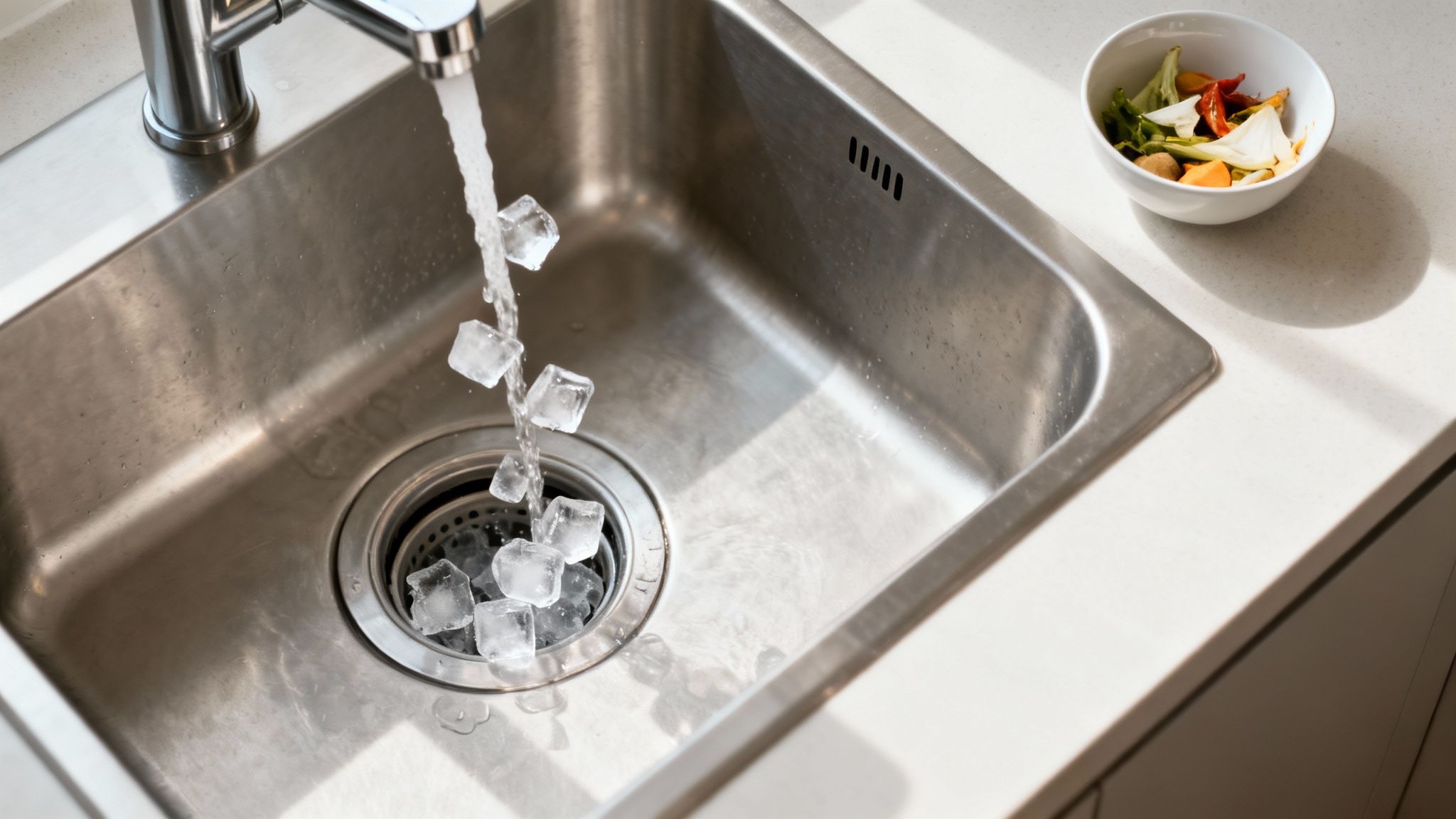
Clean It Naturally: Once a month, toss a tray of ice cubes down the disposal and run it. This simple trick helps sharpen the blades and breaks up any lingering grease. For a fresh scent, follow up with a few lemon or orange peels. Just be sure to avoid harsh chemical drain cleaners, as they can corrode the unit's internal parts.
Mastering a few simple habits to prevent clogged drains is also a game-changer, since blockages are a primary cause of strain and leaks. These small actions support the entire plumbing system under your sink.
Regular maintenance is about more than just avoiding leaks; it’s about ensuring the long-term health of your entire plumbing system. A well-cared-for disposal is less likely to cause the clogs and backups that lead to bigger, more expensive problems down the line.
When to Put the Tools Down and Call a Pro
While DIY maintenance is powerful, knowing your limits is just as important. If you’ve run through the troubleshooting steps and you're still dealing with a garbage disposal leaking, it’s time to call in a professional. Continuing to experiment can easily turn a minor fix into a major repair bill.
Our team at ZH Plumbing is ready to help homeowners all across Los Angeles, from Pasadena to the Westside. We provide fast, expert repairs and replacements, taking the guesswork out of the equation so your kitchen can get back to normal. These tips are part of a bigger picture, and you can learn more about the importance of regular plumbing maintenance for residential homeowners in our detailed guide.
Don't hesitate to reach out if you need a professional touch. We're here to provide peace of mind and a reliable, leak-free solution.
Common Questions About Leaking Garbage Disposals
Even after you've done some digging, a few questions always pop up. It's totally normal. Over the years, we've heard just about everything from homeowners across Los Angeles, so we’ve put together answers to the questions we get asked the most out in the field.
Why Is My Brand New Garbage Disposal Leaking From The Bottom?
This one is incredibly frustrating. You just got a new disposal, and there's already a puddle under it. In almost every case, this points to a manufacturing defect—faulty internal seals that were bad right out of the box.
First thing's first: stop using it and kill the power at the circuit breaker. Do not attempt a DIY repair on a new unit. Taking it apart yourself is a surefire way to void the warranty. Your best bet is to contact the manufacturer or the installer to get a warranty replacement sorted out.
Can I Still Use My Disposal If It Has A Very Slow Drip?
We get this question a lot, and our answer is always a hard "no." We strongly advise against it. Even a tiny, slow drip is a clear signal that a seal or connection has failed somewhere. Every time you turn on that disposal, the vibration and water pressure are just making that weak spot worse.
That little drip is the start of much bigger problems like rotted-out cabinets, mold growth, and even pest infestations. It's so much easier (and cheaper) to shut off the power and fix the small leak now before it turns into a major headache.
What Does It Cost To Fix Or Replace A Disposal In Los Angeles?
The final bill can swing a bit depending on what's wrong and what kind of model you're looking at. For homeowners here in the Los Angeles area, here’s a general idea of what to expect:
Simple Repairs: If it's a straightforward fix like tightening the sink flange or swapping out a worn gasket, you're likely looking at a cost between $150 and $300.
Full Replacement: For a complete swap—including a new mid-range unit plus the professional labor to install it—the cost typically lands somewhere between $400 and $800.
Always make sure you get clear, upfront pricing before any work starts. This avoids any surprises on the final invoice and makes sure everyone is on the same page. For trickier jobs, it's always smart to check out our guide on how to find reliable help for your plumbing needs so you know you're hiring a pro you can trust.
Is A Leak From The Reset Button A Serious Problem?
Yes, absolutely. This is one of the most serious signs of a failing garbage disposal. Water dripping out of the reset button means the internal motor housing has been completely compromised.
This creates a dangerous mix of water and electrical components, which is a major risk for an electrical short or even a shock. The unit is toast—it's not repairable and needs to be replaced immediately. Cut the power at your breaker panel and call a licensed plumber to handle the replacement safely.
If you're dealing with a leak that just won't quit or you'd rather have an expert handle it from the start, the ZH Plumbing team is here to help. We offer fast, dependable repairs and replacements across the Greater Los Angeles area to get your kitchen back to normal. https://zhplumbing.com
Comments