

.png)

Your Guide to Earthquake Gas Shut Off Valve Installation
When an earthquake hits, the shaking ground is just the beginning of the problem. A ruptured gas line can turn a crisis into a catastrophe moments later, creating a severe risk of fire or explosion. An earthquake gas shut off valve installation is one of the most critical safety upgrades for your home, automatically stopping a potential disaster in its tracks.
This simple device protects your home and family by cutting off the gas flow during a significant seismic event, even when you're not there. It's a "set it and forget it" solution that provides constant peace of mind in earthquake-prone areas.
Why This Valve Is Your First Line of Defense
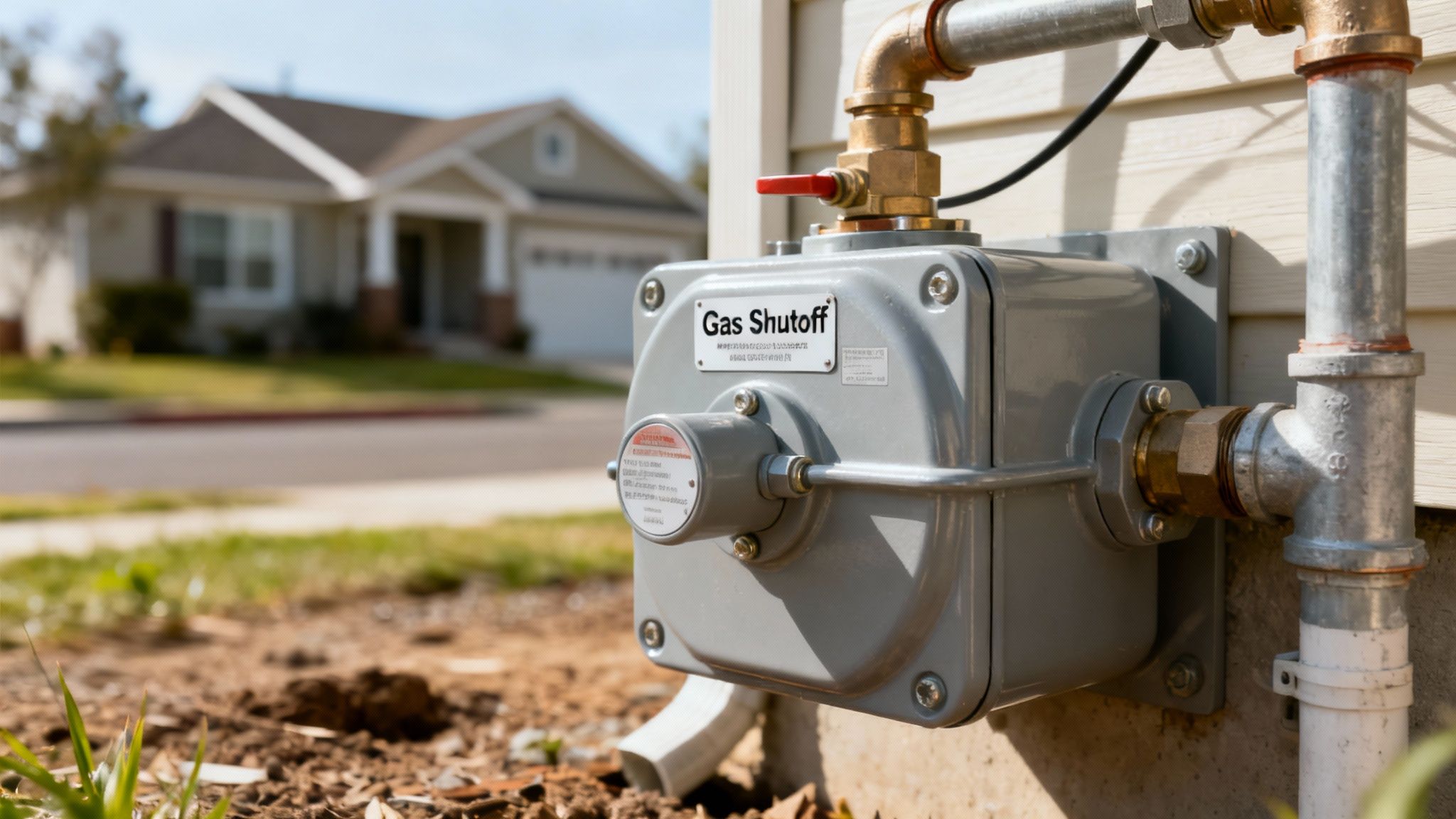
During a quake, intense ground movement can easily bend, strain, or break the rigid gas pipes connected to your house. A broken line immediately starts releasing highly flammable natural gas. All it takes is a single spark—from a downed power line, a damaged appliance, or even the pilot light on your water heater—to cause a devastating fire.
This is exactly what an earthquake gas shut-off valve is designed to prevent. Unlike a standard manual valve that requires you to find a wrench and shut it off yourself in a chaotic emergency, an automatic seismic valve reacts instantly.
How Does It Know an Earthquake Is Happening?
The technology is brilliantly simple and effective. Inside the valve, a carefully calibrated mechanism—usually a small steel ball balanced on a ring—is engineered to detect the specific P-waves and S-waves generated by a significant earthquake.
When the shaking reaches a certain intensity, typically around a magnitude 5.4 earthquake or stronger, the motion knocks the ball off its perch. This triggers a spring-loaded piston that snaps the valve shut, instantly cutting off the flow of gas into your home. Best of all, it's a completely mechanical process that requires no electricity, so it works even during a power outage.
Key Takeaway: An automatic valve is smart. It’s designed to tell the difference between a dangerous earthquake and everyday vibrations like a heavy truck driving by, which helps prevent false alarms.
Proven to Work When It Matters Most
This isn't just a theoretical safety feature; these valves have a proven track record in real disasters. A perfect example is the 1994 Northridge earthquake. A post-quake survey found that in 841 buildings where the valves had tripped, gas company crews later discovered 162 actual gas leaks.
That means nearly one in five of those homes were saved from a potential fire or explosion. The data speaks for itself, confirming the valve's effectiveness.
The Critical Difference: Manual vs. Automatic
It’s easy to get confused, but understanding the difference between your standard manual valve and an automatic one makes the need for an upgrade crystal clear, especially for homeowners in places like Los Angeles.
Feature | Manual Shut-Off Valve | Automatic Earthquake Valve |
|---|---|---|
Activation | Requires a person with a wrench. | Triggers automatically from seismic shaking. |
Response Time | Delayed; dependent on human action. | Instantaneous. |
24/7 Protection | No. Only works if someone is present. | Yes. Protects your home even if you're away. |
Reliability | Depends on human ability in a crisis. | Highly reliable mechanical action. |
Peace of Mind | Low. You have to remember what to do. | High. It's a "set it and forget it" safety device. |
As you can see, an automatic valve removes the human element—and the potential for panic or delay—from a critical safety decision. This proactive step doesn't just prevent fires; it provides invaluable peace of mind. Of course, knowing how to spot a problem yourself is still important. Learning more about professional gas leak detection can help you stay prepared for any situation.
Navigating Codes, Permits, and Insurance Before You Install
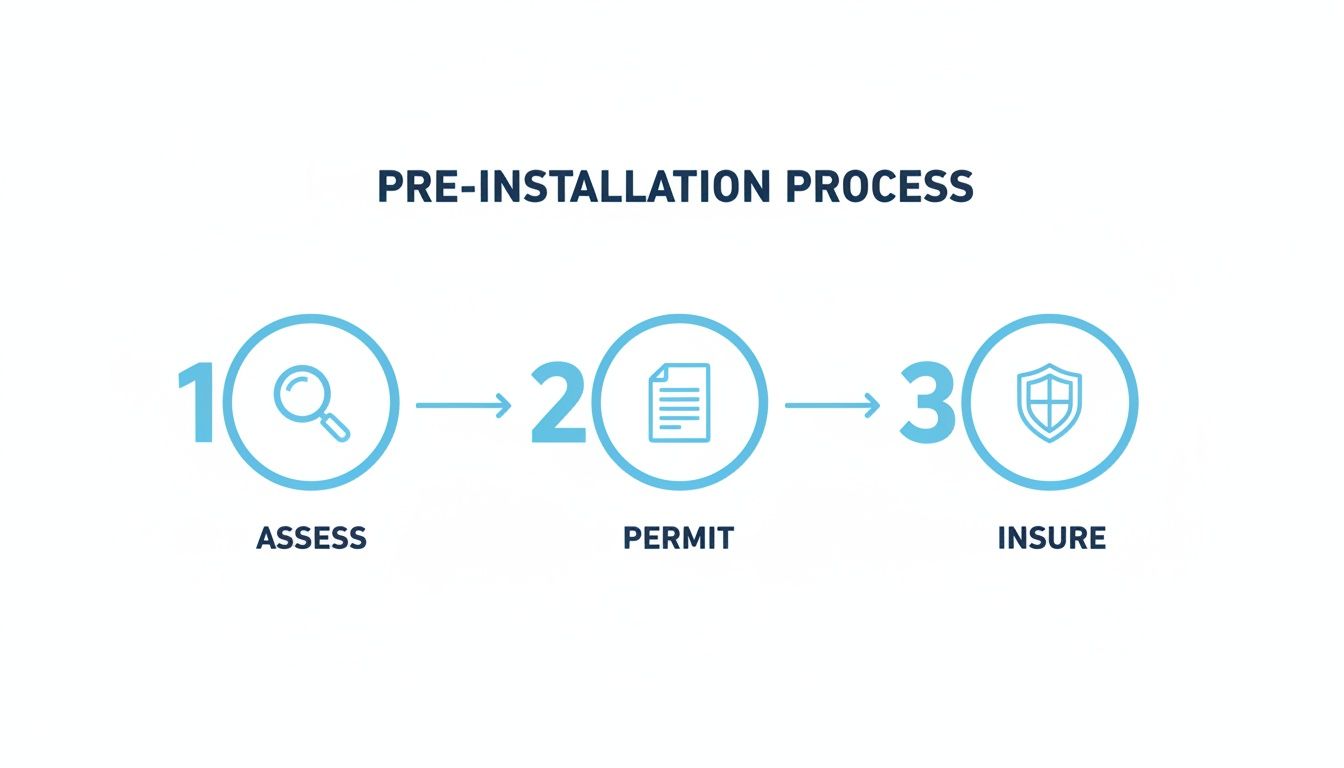
Before a wrench ever touches a pipe, a successful earthquake gas shut off valve installation begins with proper planning. Getting these preliminary steps right separates a smooth, safe project from a future headache. It’s about more than just checking boxes; it's about ensuring the valve will protect your home when the shaking starts.
The process kicks off with a professional site assessment. A licensed plumber needs to evaluate your gas meter setup, the condition of your existing pipes, and the surrounding area to determine the right type of valve and the best location for installation.
Understanding Local Permitting Requirements
In the Greater Los Angeles area, any work that touches a gas line requires a permit. This isn't just bureaucratic red tape—it's a critical safety measure. Pulling a permit automatically triggers an inspection from a city official who verifies that the installation meets all current building and safety codes.
This inspection is your guarantee that the work was done right and your gas system is secure. Attempting this work without a permit can lead to hefty fines and may even require you to remove the installation. More importantly, it puts your family and property at serious risk. A professional plumber will handle the entire permitting process for you, from application to final inspection.
Why Your Insurance Provider Cares
Once the technical and legal requirements are clear, your next call should be to your insurance agent. Installing a seismic shut-off valve is a significant step in mitigating risk, and many insurance companies reward homeowners for it with discounts on their premiums.
Before scheduling the installation, research how a valve might affect your home insurance considerations in Los Angeles. You could uncover valuable discounts or learn about specific coverage requirements. These potential savings can help offset the installation cost over time, making it an even wiser financial decision on top of being a crucial safety upgrade.
Pro Tip: When you call your insurance company, use the exact term "automatic seismic gas shut-off valve" and ask if they offer a "mitigation discount" or "protective device credit." Having the model number of the valve you plan to install can also be helpful.
The Site Assessment: What to Expect
A thorough site assessment is the foundation of a safe and effective installation. During this visit, a professional plumber evaluates several key factors and provides an opportunity for you to ask questions.
Your plumber will focus on:
Gas Meter Accessibility: Checking for enough clearance around the meter to install and service the valve.
Pipe Condition: Inspecting existing gas piping for corrosion, damage, or wear. Older pipes might need repair or replacement before a new valve can be safely installed.
Valve Orientation: Seismic valves must be installed perfectly level and in the orientation specified by the manufacturer (horizontal or vertical) to function correctly during an earthquake.
Upstream and Downstream Connections: Confirming that connections on both sides of the new valve will be secure and leak-proof, following strict plumbing codes.
This initial review is essential. For example, a home with an older, corroded gas line might need more than just a simple valve installation. A professional can spot these issues right away, preventing a dangerous situation from developing. To get a better sense of what this involves, you can learn more about professional gas inspection and repair services.
What to Expect on Installation Day
Knowing what happens during an earthquake gas shut-off valve installation can help you feel confident that the job is being done safely and correctly. For professional plumbers, this is a meticulous procedure with zero room for error.
Here’s a step-by-step look at what the day will involve.
1. Initial Site Preparation and Gas Shutdown
Safety is the top priority. The first step is to shut off the gas supply to your entire home at the main valve near the gas meter. To confirm the gas is completely off, the installer will test an appliance inside, like a stovetop, to ensure there's no flow. This is a non-negotiable protocol that guarantees the area is secure before any work begins.
2. Modifying the Gas Line for the New Valve
With the gas safely off, the plumber will measure and cut a small section of the existing gas pipe on the "downstream" side of the meter (the pipe that carries gas to your home). They use specialized tools to ensure clean, precise cuts. Next, the plumber threads the ends of the pipes to allow the new valve to create an airtight seal. Professional-grade pipe sealant is applied to the threads—a critical step where experience prevents future gas leaks.
3. Mounting and Securing the Valve
Now, the earthquake gas shut-off valve is carefully fitted into the gap. The orientation is absolutely critical; the valve must be installed perfectly level and in the specific direction required by the manufacturer.
Professional Insight: If the valve is even slightly tilted, the internal seismic sensor may not trigger when it's supposed to or could cause false alarms. We always use a level to guarantee exact placement, ensuring it’s ready to do its job flawlessly.
Once positioned, the valve is securely tightened onto the threaded pipes, making it a permanent part of your gas line.
4. The Non-Negotiable Leak Test
The most important step comes after the valve is installed: the pressure test. A special pressure gauge is attached to the gas line, and the pipes are filled with air. The gauge is then monitored for 15 to 30 minutes to see if the pressure drops. Even the slightest drop signals a leak that must be found and fixed immediately. System checks like this are vital for home safety, which is why regular plumbing inspection services are also recommended.
Only after the system passes this pressure test will the gas be turned back on. Finally, the plumber will relight the pilot lights on your appliances, like your furnace and water heater, and ensure everything is running correctly.
How to Find a Qualified Installer in Los Angeles
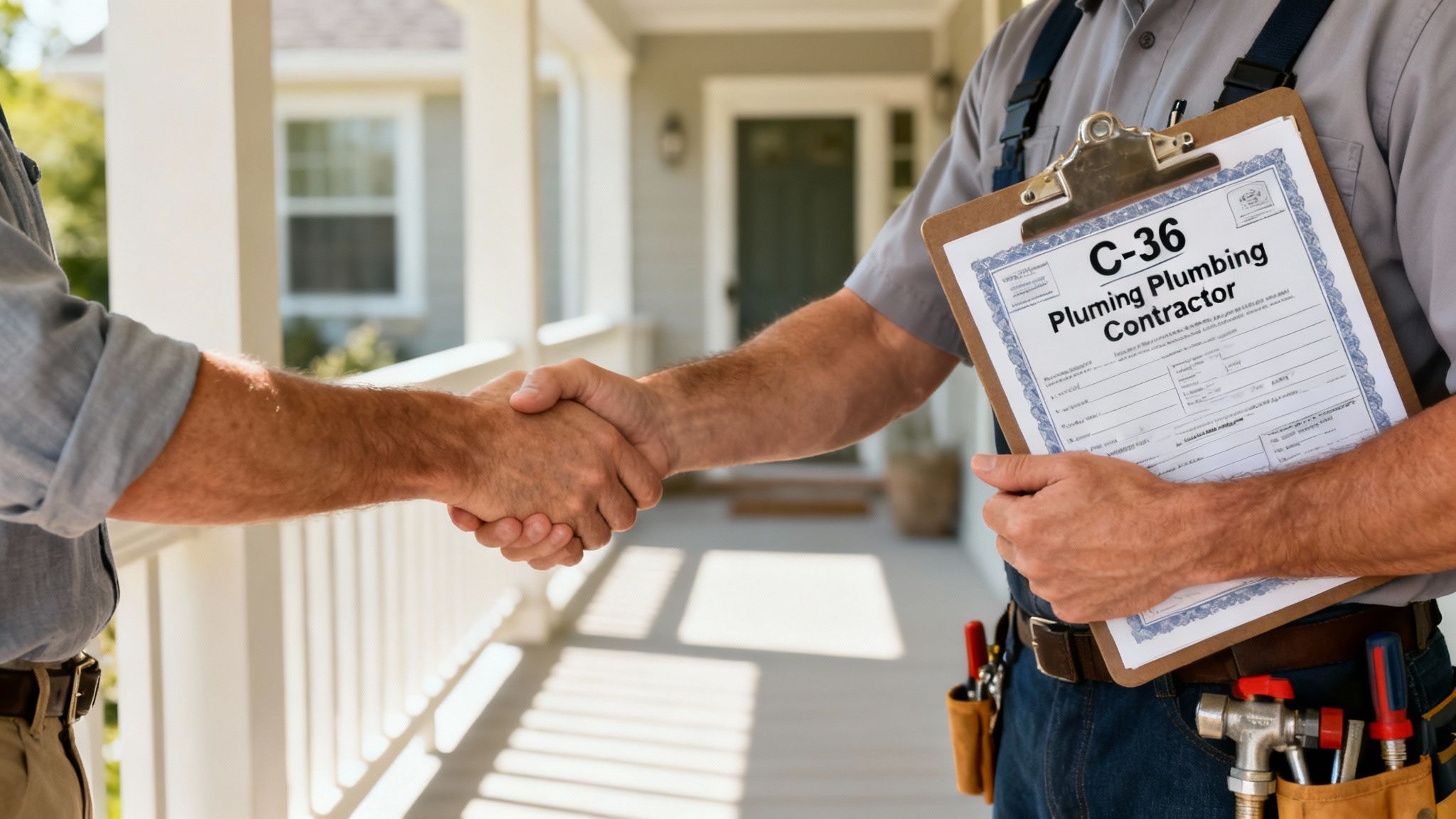
An earthquake gas shut-off valve is only as good as its installation. In a market like Los Angeles, finding the right professional is crucial. This is not a job for a general handyman—working with gas lines requires specific expertise and licensing to ensure it's done safely and to code.
An improper installation could lead to a valve that fails to trip during a quake or, worse, creates a dangerous gas leak. Your search should focus on verified professionals who know the technology and local regulations inside and out.
The Non-Negotiables for Any Installer
When vetting plumbers for your earthquake gas shut off valve installation, there are several non-negotiable credentials to verify:
C-36 Plumbing Contractor License: Any plumber working on gas lines in California must hold a valid C-36 license from the Contractors State License Board (CSLB). This proves they have met the state’s requirements for gas piping systems.
General Liability Insurance: This protects your home and property from accidental damage during the installation.
Workers' Compensation Insurance: This covers the installer if they are injured on your property, so you are not held liable.
Crucial Tip: Always ask for proof of their license and insurance before agreeing to any work. A true professional will readily provide this information. You can verify their license number on the CSLB website.
Sharp Questions to Ask Potential Plumbers
Once you've confirmed their credentials, ask targeted questions to gauge their experience with seismic valves. Federal research shows that modern valves are set to activate at shaking levels similar to a magnitude 5.4 earthquake, the point where gas line breaks become more likely. You can learn more about the official guidelines for automatic gas shutoff valves to understand the industry standards.
Here are a few questions to ask:
"How many seismic valves have you installed in the Los Angeles area?" You want someone with extensive experience in various types of homes.
"What valve brands do you recommend, and why?" An expert will have a preference based on proven reliability and performance.
"Do you handle the entire city permit process?" The only acceptable answer is "yes." This is a standard part of a professional job.
"What is your warranty on the valve and your installation work?" A reputable installer will stand behind their work with a solid warranty.
Choosing the right person for this job is a critical safety decision. For a deeper look, check out our guide on how to choose the right plumbing professional for your home.
Breaking Down the Cost of Installation and Long-Term Value
For most homeowners, the biggest question is: what does an earthquake gas shut off valve installation cost? Understanding the investment is key to making this essential safety upgrade. The good news is that protecting your home from a gas-fueled fire is more affordable than many people think.
The final price can vary based on a few key factors.
Key Factors That Influence Installation Costs
The complexity of your home's existing gas line is the biggest variable. A straightforward setup near an accessible gas meter will be on the lower end of the cost spectrum.
However, certain situations can increase the price:
Difficult Access: If your gas meter is in a cramped crawl space or hard-to-reach area, the additional labor will be factored in.
Pipe Modifications: Older homes may have non-standard piping that needs to be reconfigured or replaced to accommodate the new valve.
Valve Model: Different brands and types of seismic valves come with different price tags.
Permit Fees: Your local city charges a fee for the permit and inspection, which is typically included in the plumber's final quote.
Typical Cost Ranges in Los Angeles
On average, a standard residential seismic gas shut-off valve installation costs around $450, including the valve and professional labor. Depending on job complexity, homeowners might pay as little as $300 for a simple job or up to $1,200 if significant extra work is needed. The valve hardware itself typically accounts for $150–$500 of the total. You can discover more insights about gas valve costs on angi.com for a broader market view.
For a different perspective on home safety upgrades, see our guide on the cost to install a water shut-off valve.
Investment Insight: Think of this not as an expense, but as a one-time insurance premium. The initial cost is minimal compared to the potential cost of repairing fire damage, which can easily reach hundreds of thousands of dollars.
The Long-Term Value Beyond the Price Tag
The true value of this installation extends far beyond the initial cost. It's an investment that pays dividends in safety, savings, and peace of mind.
The primary benefit is the prevention of catastrophic fire damage. By automatically cutting the fuel source during an earthquake, the valve protects your single largest asset—your home. Additionally, many insurance companies offer discounts on homeowner's insurance premiums for properties with a seismic valve. These annual savings can help the valve pay for itself over just a few years, making it a financially savvy decision.
We understand that even a planned expense can strain a budget. That’s why we offer flexible financing options to make this critical upgrade accessible to everyone. You can protect your home and family now without having to wait.
Common Questions About Seismic Gas Shut Off Valves
It’s normal to have questions about your earthquake gas shut off valve. Understanding how it works and what to do if it activates is key to feeling genuinely prepared. Here are answers to some of the most common questions we hear from homeowners.
Will a passing truck accidentally set off my valve?
No, this is a common misconception. These valves are engineered to differentiate between the unique ground-shaking motion of an earthquake (P-waves and S-waves) and everyday vibrations from traffic or construction. The triggering mechanism is calibrated to activate only during a significant seismic event, typically a magnitude 5.4 earthquake or greater, preventing "nuisance trips."
What do I do if the valve shuts off my gas?
If your valve has tripped, the most important rule is do not try to reset it yourself. An activated valve signals that a major earthquake has occurred, and there is a real possibility of a gas leak.
Follow these steps:
Check for the Smell of Gas: Walk around your property, inside and out. If you smell the distinct "rotten egg" odor of natural gas, evacuate everyone from the house immediately.
Call for Help from a Safe Distance: Once you are safely away, call 911 and your local gas company to report a potential leak.
Schedule a Professional Inspection: Even if you don't smell gas, you must have a licensed plumber or a gas company technician inspect all your gas lines and appliances before service can be safely restored.
Safety First: Attempting to reset the valve without a professional inspection could be catastrophic if there’s an unseen leak. Only a qualified technician can safely assess the system and restore your gas.
Does my earthquake valve need regular maintenance?
These purely mechanical valves are built to be incredibly reliable and are virtually maintenance-free. They have no batteries to change or electronic parts that can fail. As part of your regular home maintenance, give the valve a quick visual check to ensure it's clear of corrosion or debris. Many manufacturers also recommend a professional check-up every few years, which can be done during a routine plumbing visit.
Is this valve required by law in Los Angeles?
Yes, in many California cities, including the City of Los Angeles, an automatic gas shut-off valve is legally required under certain circumstances, such as:
New construction projects
Major remodels or additions
When a home is sold
Even if not legally required for your property right now, local fire departments and emergency preparedness experts strongly recommend installing one. It is a fundamental safety upgrade that brings your home up to modern safety standards and provides essential protection.
A seismic shut-off valve is a smart, powerful tool for protecting what matters most. If you have more questions or are ready to schedule your installation, the licensed experts at ZH Plumbing are here to help. We provide free inspections and expert installations to ensure your home is safe, compliant, and ready for whatever comes next.
Comments