

.png)

How to Unblock a Toilet: A Practical Guide for LA Homeowners
It’s a scenario every Los Angeles homeowner knows and dreads: you flush, and the water starts creeping up instead of going down. A clogged toilet is a disruptive plumbing emergency that brings your day to a screeching halt. When you need to unblock a toilet, the quickest and often best solution is a flange plunger. It's designed to create the powerful suction needed to push through most common blockages.
If that doesn't work, don't reach for harsh chemicals just yet. A toilet auger, or even a simple mix of hot water and dish soap, can often get things moving again.
The All-Too-Common LA Plumbing Problem: A Clogged Toilet
That sinking feeling when a toilet won't flush is a universal frustration, but it just seems to hit differently here in Los Angeles. It’s more than a simple hassle; it's a full-blown plumbing nightmare that throws a wrench into the day for busy households from Santa Monica all the way to Pasadena.
The causes are as diverse as our neighborhoods. In historic areas like Hollywood or Glendale, we often find that aging pipes and outdated plumbing systems are the real culprits behind those stubborn, recurring clogs. Homes with fixtures from before the 1990s are especially prone to issues.
Why Toilets Clog More Often Than You Think
Picture this: you're in the middle of a hectic day in your Los Angeles home, and bam—your toilet backs up. You're definitely not alone in this. A comprehensive study revealed that over 13 million aging, inefficient toilets in states like California are not just prone to clogs but also waste a shocking amount of water.
For homeowners in the Greater Los Angeles area, this often translates to frequent blockages caused by overuse and inefficiency. This is especially true in older homes where toilets can use a hefty 3.5 gallons per flush.
Sometimes, the problem is simple. A kid might have flushed a small toy, or someone just used a bit too much toilet paper. We also see a ton of issues caused by so-called "flushable" wipes. These are a major offender because they don't break down like toilet paper, creating nasty blockages in your home's pipes and the city sewer lines. If this sounds familiar, you can learn more about what causes these persistent issues in our guide on the common causes of recurring drain clogs.
A blocked toilet isn't just a household problem. In commercial settings, it's the number one facility complaint that can instantly sour a customer's experience, highlighting just how critical clear plumbing is for everyone.
This guide is designed to give you the practical, straightforward methods you need to tackle the problem yourself. We'll walk you through the right tools and techniques so you can confidently figure out what’s wrong and fix it, whether it's a minor clog or something that needs a bit more muscle. For a wider view on handling these blockages, particularly in commercial spaces, check out this resource on fixing a clogged toilet in hotel rooms.
Mastering Your First Tool: The Plunger
When you're staring down a stubbornly clogged toilet, that humble plunger in the corner is your best friend. Before you even think about reaching for harsh chemicals or calling for backup, a little know-how can solve most minor clogs in minutes. It’s not about brute force; it’s about using water pressure to your advantage.
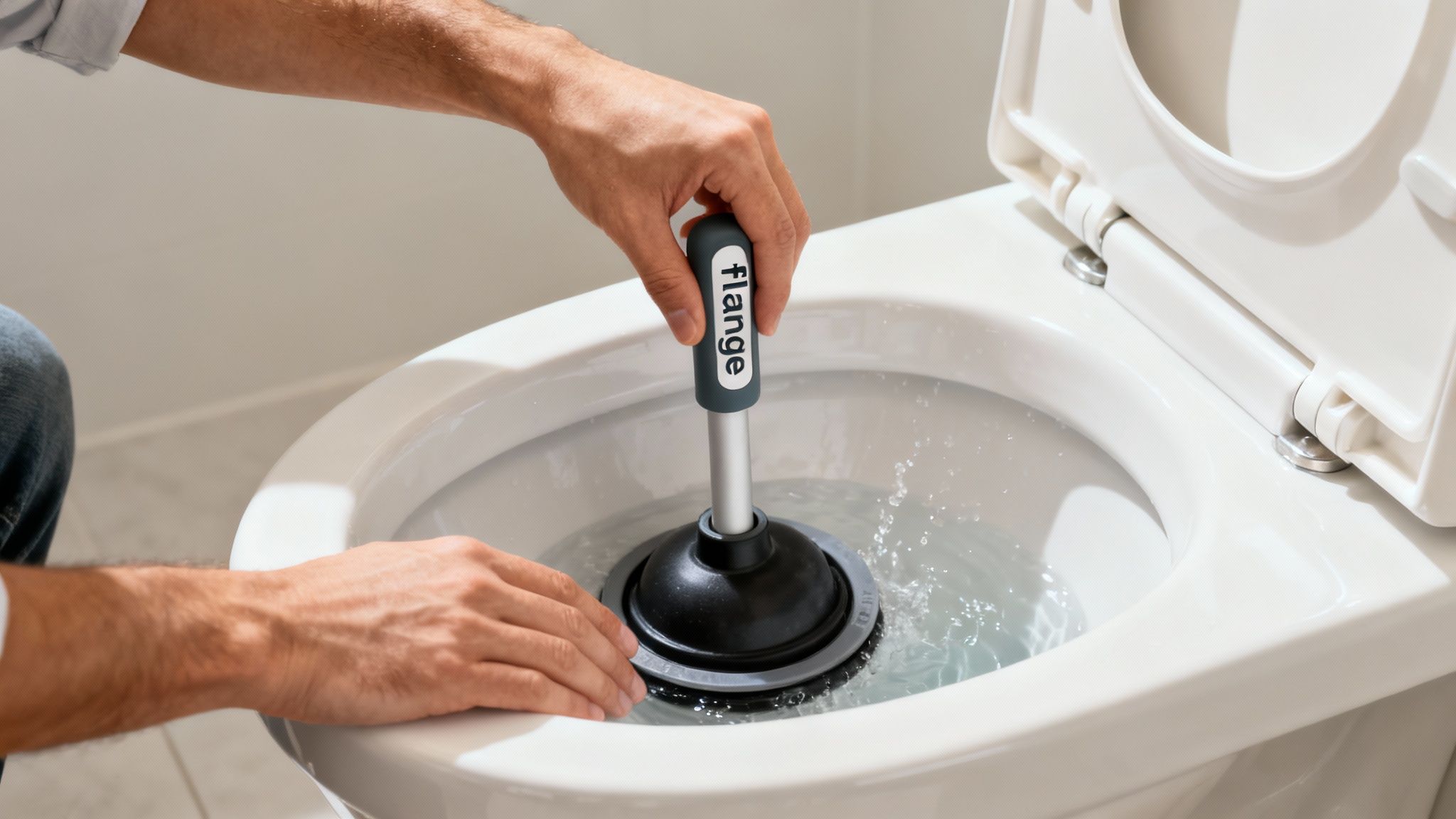
Here's a common mistake we see all the time in Los Angeles homes: grabbing the wrong tool for the job. That classic red cup plunger from cartoons? It’s meant for flat surfaces like a sink or shower drain.
For a toilet, you absolutely need a flange plunger. This one has an extra flap of rubber that folds out from the cup. That flange is the secret weapon—it’s designed to fit snugly into the toilet's drain opening, creating the powerful, airtight seal you need. Without it, you’re just splashing water around and making a mess.
Choosing the Right Plunger for LA Homes
In neighborhoods like Valley Village and Sherman Oaks, many homes have modern, low-flow toilets. These water-saving designs often have uniquely shaped drain openings where a standard cup plunger just won't seal properly, making the right tool even more essential.
When you're picking out a plunger, here’s what to look for:
Flexible rubber: Stiff, cheap plastic won’t create the seal you need. Don’t skimp here.
A flange: This is non-negotiable for toilets. It's the difference between success and a frustrating failure.
A sturdy handle: You'll be applying some real pressure, and a flimsy handle will just make the job harder.
A quality flange plunger is a small investment that pays for itself the very first time it saves you from a plumbing headache.
The Correct Plunging Technique
Okay, you've got the right tool. Now, let's get to work. First, check the water level in the bowl. You need enough water to completely cover the plunger's rubber cup. If it's low, just add a bit from the sink. Remember, the plunger needs to push water, not air, to build pressure.
Your first push should be a gentle one. This is just to ease out any air trapped under the cup without splashing dirty water everywhere. Once that air is gone, you have your seal.
Now, it’s time for the real work. Start plunging with firm, vertical strokes in a strong push-pull motion for about 15-20 seconds. You're trying to create alternating pressure to jostle the clog loose. It's often the pulling motion, creating suction, that really does the trick.
Pro Tip: Try running the plunger under hot water for a minute before you start. This softens the rubber, helping it form a much tighter and more effective seal against the porcelain bowl.
After a solid round of plunging, break the seal and watch. If the water starts to drain, victory is yours. Still blocked? Don't give up. Repeat the process two or three more times. Most everyday clogs will surrender to persistent, proper technique. To really get the hang of it, you might want to check out some outside resources on effective plunging techniques.
The basic physics of using pressure and suction apply to other drains, too. In fact, the principles are quite similar to what we describe in our guide on how to unclog a kitchen sink. But if you’ve given the plunger your best shot and that water is still going nowhere, the clog might be too stubborn or too far down the line. It's time to move on to a different tool.
Using a Toilet Auger for Deeper Clogs
So, you’ve plunged with all your might, and that stubborn clog is still laughing at you. This is a classic sign that the blockage isn’t in the bowl but lurking deeper inside the toilet’s winding trap. When the plunger fails, it's time to bring in the next level of tool: the toilet auger.
You might know it as a closet auger, but whatever you call it, this is what the pros grab for those tough clogs lodged just out of reach.
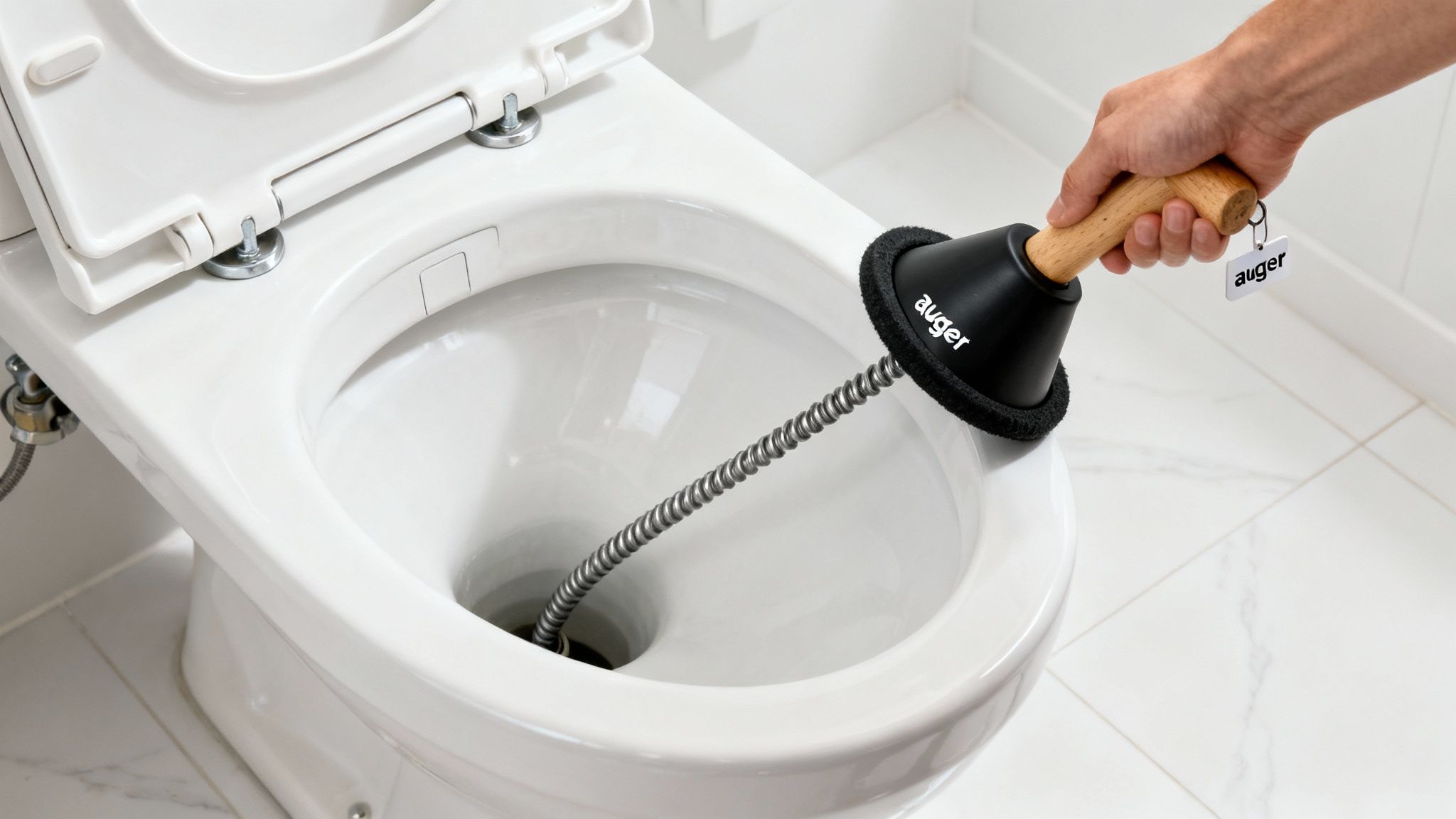
I know what many Los Angeles homeowners are thinking: "Won't that metal thing scratch my porcelain bowl?" It’s a totally valid concern. But a toilet auger is built specifically for this job. It has a protective rubber or vinyl sleeve covering the metal curve, so it can slide into the drain without causing any damage. This tool lets you physically attack the blockage—breaking it up or pulling it out—in a way that a plunger’s water pressure just can’t.
How to Safely Use a Toilet Auger
Using an auger is more about technique than pure muscle. Your goal is to gently guide the cable through the toilet’s internal trap until you hit the obstruction.
First things first, pull the auger’s handle all the way up. This retracts the flexible cable into the protective sleeve, which is key to preventing scratches as you place it in the bowl. Now, carefully lower the curved end into the drain opening.
With the auger in position, you can start feeding the cable into the drain. Hold the main part of the auger steady with one hand while you slowly crank the handle with the other. You should feel the cable working its way through the curves of the trap.
Making Contact with the Clog
The moment you feel resistance, stop. You've found the blockage. Don't just try to ram it through with brute force. Instead, keep turning the handle while applying just a bit of gentle, forward pressure. The corkscrew tip of the auger is designed to either drill into the clog and break it apart or hook onto it so you can retrieve it.
You may need to work it back and forth a little—cranking forward, then pulling back slightly. This motion helps the auger’s tip dig into whatever is causing the problem. For instance, if a kid’s toy is the culprit, you want to snag it to pull it out. If it’s a dense wad of paper, you’re looking to shred it into pieces that can finally be flushed.
A common mistake is cranking way too hard or too fast. This can cause the cable to kink and double back on itself inside the pipe, turning a simple clog into a much bigger headache. Slow and steady rotation is what gets the job done.
Once you feel the clog break free or you’re confident you’ve hooked onto it, it's time to pull back. Slowly crank the handle in the opposite direction to retract the cable into its housing. If you've snagged an object, you can now carefully pull the entire auger out.
What to Do After Using the Auger
With the cable all the way back in, remove the auger from the toilet. It’s smart to have a bucket and some old towels on hand for this part, as the end of the auger is going to be messy.
Now for the moment of truth: give the toilet a flush. If the water swirls and drains quickly, congratulations! You've successfully managed to unblock a toilet.
But if the clog is still there, or if the water starts to back up again, the problem is likely further down the drain than the auger can reach. This could point to a more serious blockage in your main sewer line. At this point, you’re just guessing without seeing what’s really going on. A professional sewer camera inspection can send a camera right into the pipe to find the exact location and cause of the problem, taking all the guesswork out of the equation.
A Chemical-Free Trick: Dish Soap and Hot Water
Before reaching for the heavy-duty tools, sometimes the simplest trick in the book is all you need. This is especially true for clogs caused by too much toilet paper or other organic materials. A little dish soap and hot water can work wonders, saving you a lot of hassle.
This approach is a great first move if the plunger didn't quite do the job, and it’s much safer than dumping harsh chemicals down your drain.
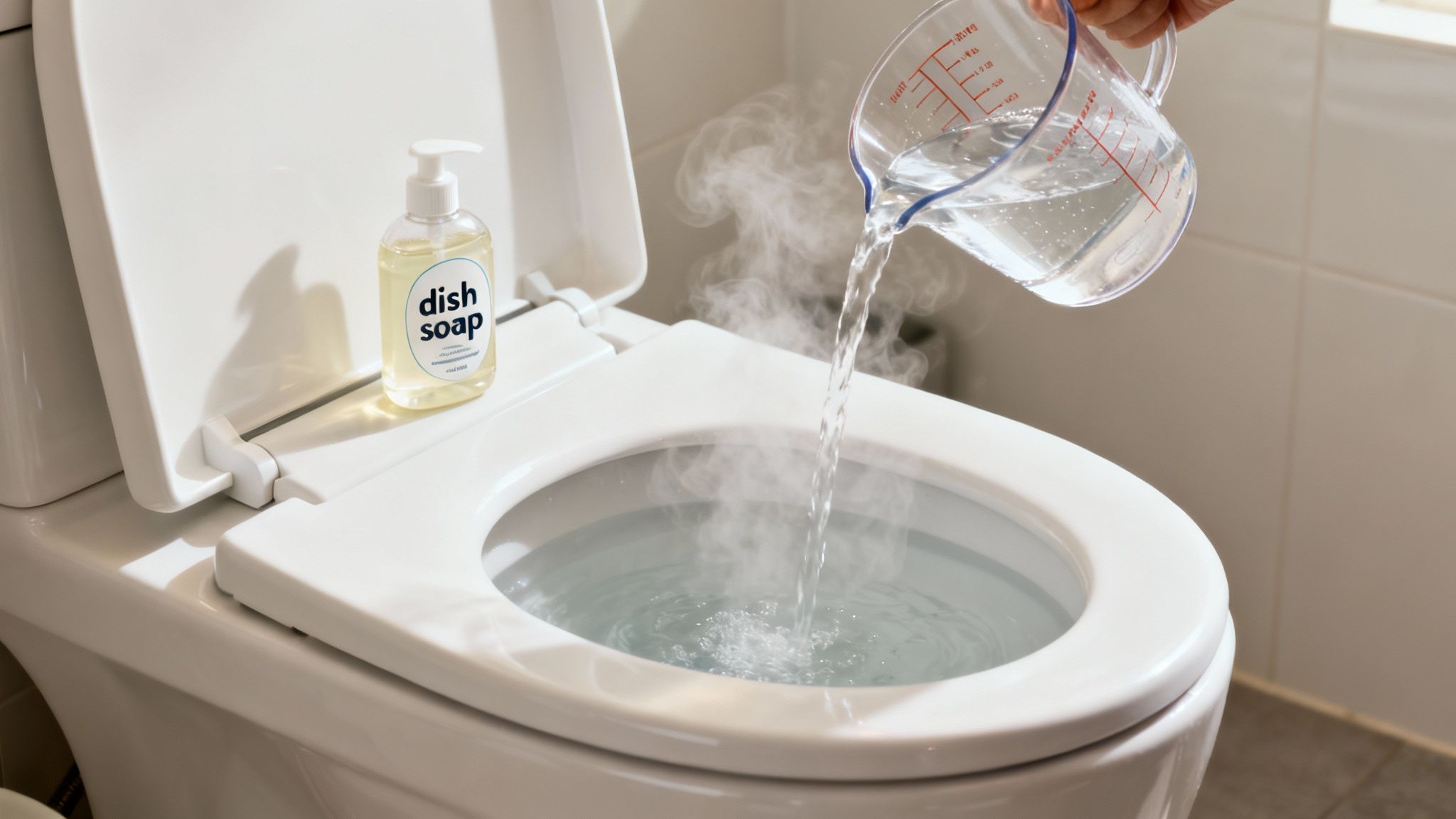
There’s some simple science at play here. The dish soap acts as a lubricant, coating the blockage and the pipes. This helps the hot water penetrate and break down the waste, allowing everything to slide down the drain much more easily.
The Hot Water and Dish Soap Technique
First, grab about a half-cup of your regular liquid dish soap. Pour it straight into the toilet bowl, letting it sink down toward the drain opening. Give it about 15-20 minutes to settle in and start working its magic on the clog.
Now for the hot water—and getting this part right is crucial. Never, ever use boiling water. Pouring boiling water into a porcelain toilet can cause thermal shock, which can crack the bowl. That's a much bigger and more expensive problem than a simple clog.
Instead, heat about a gallon of water on the stove until it’s very hot but not boiling. Think of the temperature you’d use for a hot cup of tea. Then, carefully pour the water into the bowl from about waist height. The force of the pour helps drive the soap and water deep into the blockage.
Let the hot water and soap mixture sit in the bowl for at least 30 minutes without touching it. If you’re lucky, you might even see the water level start to drop on its own as the clog begins to dissolve.
After you've waited, try flushing the toilet. If it worked, the water will drain away with a satisfying whoosh. If it’s still slow or backed up, that clog is probably too stubborn for this gentle method.
What DIY Toilet Hacks to Avoid
A quick search online will give you dozens of "quick fixes" for clogged toilets. From our experience, many of these do more harm than good, especially with the older plumbing common in many Los Angeles homes.
Here are a few you should definitely avoid:
Chemical Drain Cleaners: These products work by creating a powerful chemical reaction that generates intense heat. This heat can easily crack a porcelain toilet bowl and the corrosive chemicals can eat through PVC pipes and older cast-iron lines, causing serious leaks.
Wire Hangers: We’ve seen the damage this can cause. Trying to snake a drain with a straightened metal coat hanger is a terrible idea. The sharp end will almost certainly scratch and permanently damage the porcelain inside your toilet's trap.
Baking Soda & Vinegar: While it’s a fun science experiment for the kids, this fizzy combination is rarely strong enough to clear a real toilet clog. The reaction is mostly surface-level and just doesn't have the power to dislodge a dense blockage.
To help you decide which methods are worth a try, we've put together a quick comparison table.
Comparing DIY Toilet Clog Solutions
Method | When to Use It | Safety Risk | Recommendation |
|---|---|---|---|
Dish Soap & Hot Water | Minor organic clogs (toilet paper) | Low | Safe to try |
Plunger | Most common clogs | Low | Safe to try |
Toilet Auger | Stubborn or deeper clogs | Low | Safe to try |
Chemical Drain Cleaners | Never | High (can crack porcelain, damage pipes) | Avoid |
Wire Hanger | Never | High (can scratch and damage the toilet) | Avoid |
Baking Soda & Vinegar | Not recommended for toilet clogs | Low | Avoid (ineffective) |
Ultimately, choosing the right tool for the job prevents you from making a small problem much worse.
Clogs from organic materials like toilet paper and hair are common throughout a home's plumbing system. For more tips on tackling these, take a look at our guide to removing hair clogs from drains in Los Angeles.
When to Call an Emergency Plumber
Sure, DIY methods are fantastic for simple clogs, but some situations are just beyond the scope of a plunger or a home-use auger. A really stubborn blockage is often just a symptom of a much deeper, more serious issue hiding within your plumbing system.
As a homeowner in Los Angeles, learning to spot the warning signs is one of the most important things you can do. It can be the difference between a minor inconvenience and a full-blown, costly disaster. Knowing when to put the tools down and pick up the phone is just as critical as knowing how to use them in the first place.
Signs of a Deeper Plumbing Problem
Think of your plumbing like a tree. A clog in a single toilet or sink is like a problem on a small branch. But when multiple fixtures start acting up at the same time, it’s a clear sign the issue is in the main trunk—your sewer line.
Here are the critical signs that tell you it’s time to call a professional right away:
Multiple Clogged Fixtures: Is your toilet, shower, and bathroom sink all draining like molasses? If they're backing up at the same time, the problem isn't just in the toilet's P-trap. This is the classic calling card of a main sewer line clog.
Water Backing Up in Weird Places: Ever flush the toilet and watch in horror as water gurgles up into your shower drain? That's a huge red flag. It means the wastewater has nowhere to go down the main line, so it’s forced back up through the lowest point it can find.
Gurgling Sounds from Drains: When you run the faucet or flush a toilet, do you hear strange bubbling noises coming from other drains? That sound is trapped air being pushed around by wastewater that can't flow freely.
We see these symptoms all the time, especially in L.A. neighborhoods with beautiful, mature trees like Sherman Oaks or Pasadena. Tree roots are a primary culprit for main line clogs. They instinctively seek out the moisture inside your pipes and can quickly grow thick enough to cause a complete blockage.
Why Professional Diagnosis Is Essential
When you’re facing a potential sewer line clog, guessing is the worst thing you can do. A professional plumber comes equipped with specialized diagnostic tools that can find the exact location and cause of the problem without any destructive guesswork. The most valuable tool for this is a sewer camera.
We feed a high-resolution camera on a flexible cable directly into your pipes, giving us a live video feed of what's happening inside. This lets us see exactly what we're up against—whether it’s invasive tree roots, a collapsed pipe, or a massive buildup of grease. For Los Angeles residents, knowing if plumbers offer 24/7 emergency services can bring huge peace of mind when these major issues strike without warning.
If you even suspect a main sewer line clog, stop using all water immediately. Don't flush toilets, don't run the dishwasher, don't even think about taking a shower. Every single drop of water you send down the drain just adds to the backup, increasing the risk of a sewage overflow right into your home.
The Impact on Commercial Properties
Clogged toilets are more than just a headache for businesses; they can seriously damage your reputation. For any commercial property, from a cafe in Santa Monica to an office in Downtown LA, a non-functional restroom can mean lost customers and lost revenue.
A recent survey found that 76% of people have encountered a clogged toilet in a public restroom, making it the top complaint that sours a customer's perception of a business. The stakes are high; facilities with recurring plumbing problems can see a 15-20% drop in repeat customers. You can read more about how plumbing affects business reputation.
If you’ve tried the basic fixes and that clog just won’t budge, or if you’re seeing any of the red flags of a main line issue, it’s time to call in the experts. An emergency plumber has the right tools, training, and experience to safely unblock a toilet and fix the real problem, protecting your property from further damage.
Proactive Tips to Prevent Future Toilet Clogs
Knowing how to wrestle a clog into submission is a great life skill, but let's be honest—the best-case scenario is never having to deal with one in the first place. A little proactive thinking can save you a ton of future headaches and keep your plumbing humming along smoothly. This is especially true here in Los Angeles, where older homes and aging infrastructure can make clogs a frustratingly common occurrence.
If you remember nothing else, remember this golden rule: the only things that should ever be flushed are human waste and toilet paper. Everything else goes straight into the rubbish bin.
The Myth of Flushable Wipes
Let's talk about one of the biggest culprits we see causing serious, pipe-destroying blockages: the so-called "flushable" wipe. I can't stress this enough—despite what the marketing on the package says, these wipes absolutely do not break down like toilet paper.
Instead, they bind together with other debris, forming dense, concrete-like clogs that can choke not just your home's pipes but the entire sewer system for your neighborhood. We've seen these wipes cause some of the worst plumbing emergencies across Greater Los Angeles. Make it a house rule that everyone, from your kids to your guests, knows that wipes, paper towels, cotton swabs, and dental floss never, ever get flushed.
Smart Habits for a Healthy Plumbing System
Keeping your drains clear goes beyond just watching what you flush. A few simple, routine habits can make a world of difference in preventing future disasters.
Do a Monthly Tank Check: Once a month, just lift the lid off your toilet tank and take a peek inside. Is the flapper creating a proper seal? Is the water level where it should be? A weak or incomplete flush often leaves waste behind in the pipes, creating the perfect foundation for a future clog.
Think About a Toilet Upgrade: If you're living in an older LA home, there's a good chance you have a first-generation low-flow toilet from the 90s. Frankly, they just don't have the flushing power we expect today. Upgrading to a modern, water-efficient toilet with a more forceful flush can dramatically cut down on clogs.
Invest in Preventative Cleaning: For older properties, particularly in leafy neighborhoods like Pasadena where tree roots are always on the hunt for water, consider a professional drain cleaning every couple of years. It's a great way to clear out early-stage root intrusion and gunk buildup before it turns into a major backup.
This flowchart is a handy little guide to help you figure out if you're dealing with a simple clog or a symptom of a much bigger issue.
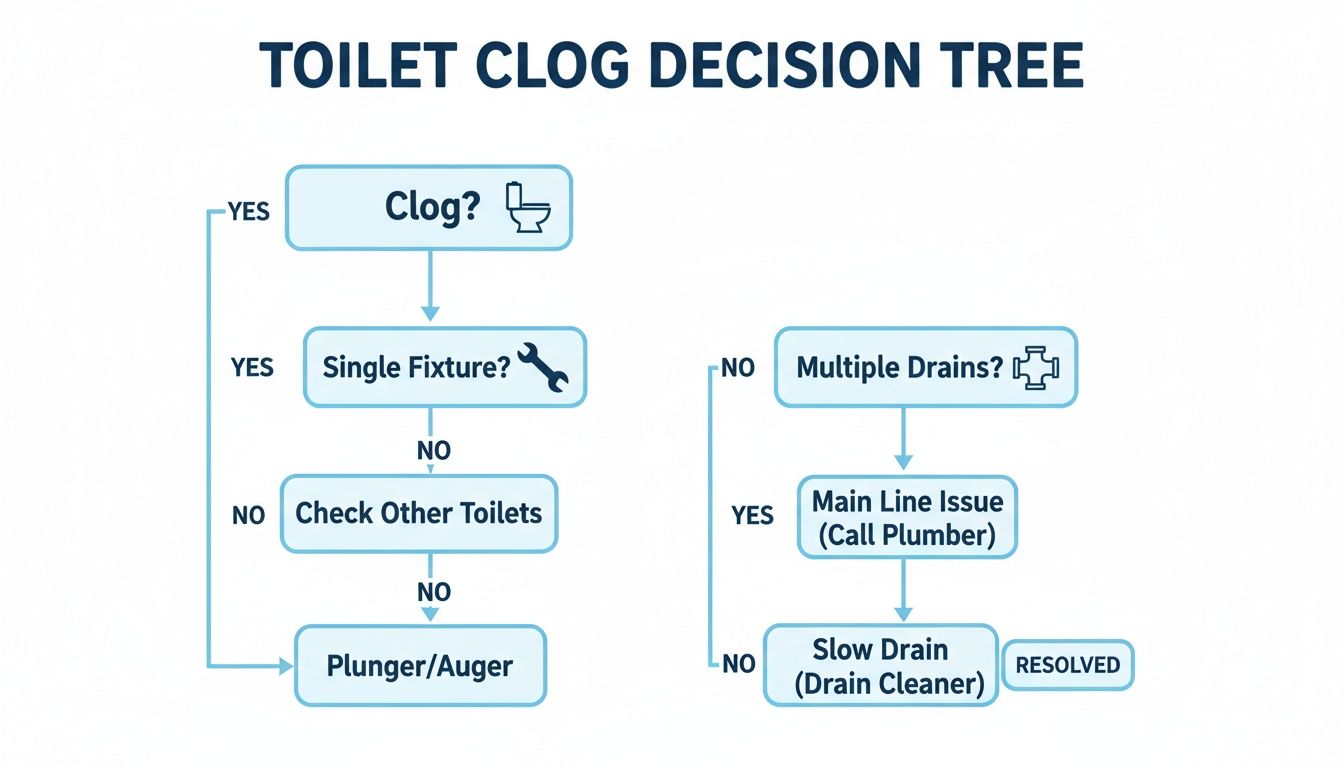
It walks you through the diagnostic process, helping you quickly see if the problem is just with one toilet or if it points to a more serious blockage in your main sewer line.
The global impact of poor toilet maintenance is staggering, mirroring the challenges LA homeowners face. A 2023 study found that neglect led to $1.9 billion in infrastructure damage and $10 billion in related costs across several countries. This highlights how quickly a neglected toilet can become a costly problem, a reality for many living in older Los Angeles properties. Discover more insights about the true cost of poor sanitation.
Your Top Toilet Troubles, Answered
When your toilet won't flush, your mind starts racing with questions. We get calls every day from homeowners across Los Angeles asking about everything from why their toilet clogs every other week to whether those chemical drain cleaners are really a good idea. We've pulled together the questions we hear most often to give you the straight answers you need, right now.
Are Chemical Drain Cleaners Safe for Toilets?
Here's our professional take: please, do not pour chemical drain cleaners into your toilet. We strongly advise against it for a few critical reasons.
First, they rarely work on the kinds of blockages toilets typically get—think too much toilet paper or a curious toddler's flushed toy. More importantly, the chemical reaction these products create can generate intense heat, which we've seen crack porcelain bowls. That's a toilet replacement you didn't plan for.
Worse yet, these harsh chemicals can eat away at older pipes, a common reality in many beautiful LA homes. This corrosion can lead to leaks and much bigger, more expensive problems. If you use a plunger after pouring in chemicals, you also risk splashing those caustic substances onto your skin and into your eyes. It’s just not worth the risk when a plunger or an auger is far safer and more effective.
Why Is My Toilet Always Clogging?
If you feel like you're constantly battling the same clog, it's a clear sign of a deeper issue that a plunger simply can't reach. A toilet that clogs repeatedly is practically screaming for help.
From our experience, this usually points to one of a few culprits:
There's a partial, stubborn blockage hiding further down the drain line.
Tree roots have invaded the main sewer pipe—a very common issue in our area.
The toilet itself is an old, low-flow model that just doesn't have the flushing power needed.
This isn’t a guessing game. A professional plumber can perform a sewer camera inspection to pinpoint the exact cause and give you a permanent solution. It's the only way to stop the frustrating cycle of plunge, flush, and hope.
A single clog is an inconvenience. Repeated clogs are a warning sign. Ignoring them often leads to a much larger, messier, and more expensive emergency down the line.
How Do I Know If It's a Main Sewer Line Clog?
This is a big one. Knowing the difference can save you from a sewage backup disaster.
A simple toilet clog is isolated; it only affects that one fixture. But if the main sewer line is clogged, you'll see system-wide symptoms throughout your house. Be on the lookout for gurgling sounds from your drains, water backing up into your shower or tub when you flush the toilet, or multiple fixtures draining slowly at the same time.
If you spot any of these signs, stop using all water immediately. This is a plumbing emergency. The next step is to call a professional before the situation escalates into a full-blown sewage backup in your home.
If you’ve tried everything and that clog won't budge, or if you suspect a main line issue, don't wait for things to get worse. The expert team at ZH Plumbing is on standby 24/7 to deliver fast, reliable solutions for any plumbing emergency in the Greater Los Angeles area. Head over to https://zhplumbing.com to schedule a service call today.
Comments