

.png)

New Construction Plumbing Cost in Los Angeles: A 2024 Guide
Building a new home in Los Angeles is a dream, but figuring out the budget can feel like a nightmare. If you're staring at blueprints and wondering what to budget for plumbing, you're not alone. For a new build in the Greater Los Angeles area, a complete plumbing installation will typically land somewhere between $15,000 and $25,000. But that’s just a starting point—the final cost can swing significantly based on your home's size, complexity, and the fixtures you choose.
Let's break down the real costs of new construction plumbing in Los Angeles so you can create a realistic budget for your project.
Planning Your New Construction Plumbing Budget
Getting a quote for plumbing a new house isn't just one big number. It's a combination of distinct stages and parts. Think of it like building a car; you can't install the seats first. You need the engine, chassis, and wiring—the entire hidden framework—to be perfectly in place.
Plumbing a new home from the ground up works the same way and is split into two main phases:
Rough-In Plumbing: This is the skeleton of your system. It’s all the foundational work of laying water supply lines, drains, and vent pipes inside the walls, under the floors, and through the foundation before the drywall goes up. This complex network is the most critical part of the job, and you can learn more in our plumbing rough-in guide for Los Angeles.
Finish Plumbing: This is the fun part, where you see everything come to life. Once the interior is nearly finished, we install all the fixtures you’ll use every day—sinks, faucets, toilets, showers, and your water heater.
Quick Look at Estimated New Build Plumbing Costs in Los Angeles
To give you a clearer picture, here’s a snapshot of what you might expect to invest based on the size of your new home, specifically for projects in Los Angeles and surrounding areas like the San Fernando Valley, Pasadena, and Santa Monica.
Home Size (Square Feet) | Number of Bathrooms | Estimated Total Plumbing Cost Range |
|---|---|---|
1,500 sq. ft. | 1-2 | $12,000 – $18,000 |
2,500 sq. ft. | 2-3 | $18,000 – $28,000 |
3,500 sq. ft. | 3-4 | $25,000 – $40,000+ |
Custom Luxury Home | 4+ | $40,000 – $75,000+ |
Disclaimer: These are general estimates for the Los Angeles area. Your final cost will depend on fixture choices, site conditions, and project complexity.
These figures help set a baseline for your budget, but let's talk about what's driving those numbers.
Why Material and Labor Costs Are Rising in L.A.
The cost of materials is a huge piece of the puzzle. Globally, the demand for plumbing pipes—a core expense in any new build—is skyrocketing, growing at a massive 14.69% CAGR. This is driven by a push for more durable, corrosion-resistant materials that last longer.
For builders and homeowners in Los Angeles, this means higher upfront costs, but it also means long-term savings from more reliable systems. A good rule of thumb is to set aside 3-5% of your total construction budget just for plumbing. It’s a non-negotiable starting point for a quality build that meets local codes.
Now that you understand the different phases, you have the foundation to plan your budget with confidence. Next, we’ll dive into the specific factors that influence that final price tag.
Deconstructing Your Plumbing Bill: Materials, Labor, and Permits
When you get a quote for a new construction plumbing job, the total cost isn't just one big number. It's really a mix of three key things: the materials used, the labor to install everything, and the required permits. Breaking it down helps you understand exactly where your money is going and make smarter choices for your Los Angeles property.
It's a busy time for residential plumbing. The market is projected to grow by a staggering USD 28.99 billion between 2025 and 2030. At the same time, the industry is facing a serious labor shortage, which could bump up project costs by 10-15%. For anyone building in LA, this means budgeting an extra 4-6% for plumbing essentials to cover fluctuating material prices. Copper pipes, for instance, have already jumped by 20%. You can read the full analysis on construction cost trends to get a better handle on these market shifts.
A Closer Look at Plumbing Materials
The pipes and fittings that run behind your walls are like the arteries of your home. The material you pick plays a huge role in both the initial price tag and how long everything will last.
PEX (Cross-linked Polyethylene): This flexible plastic tubing is the go-to for many modern LA homes. It’s affordable, doesn't corrode, and is much quicker to install than old-school rigid pipes, which saves you money on labor.
Copper: For years, copper was the undisputed king of water supply lines. It lasts forever and is naturally resistant to bacteria. While it costs more than PEX, many homeowners in areas like Beverly Hills and Malibu still choose it for its proven durability. If you're on the fence, we have a guide that can help you decide when to consider upgrading to copper pipes.
PVC (Polyvinyl Chloride): You’ll see this rigid white or gray plastic pipe used for drain, waste, and vent (DWV) systems. It's inexpensive and stands up well to chemicals, making it perfect for hauling wastewater away from your house.
This chart gives you a ballpark idea of plumbing costs for different home sizes here in the Los Angeles area, combining both material and labor expenses.
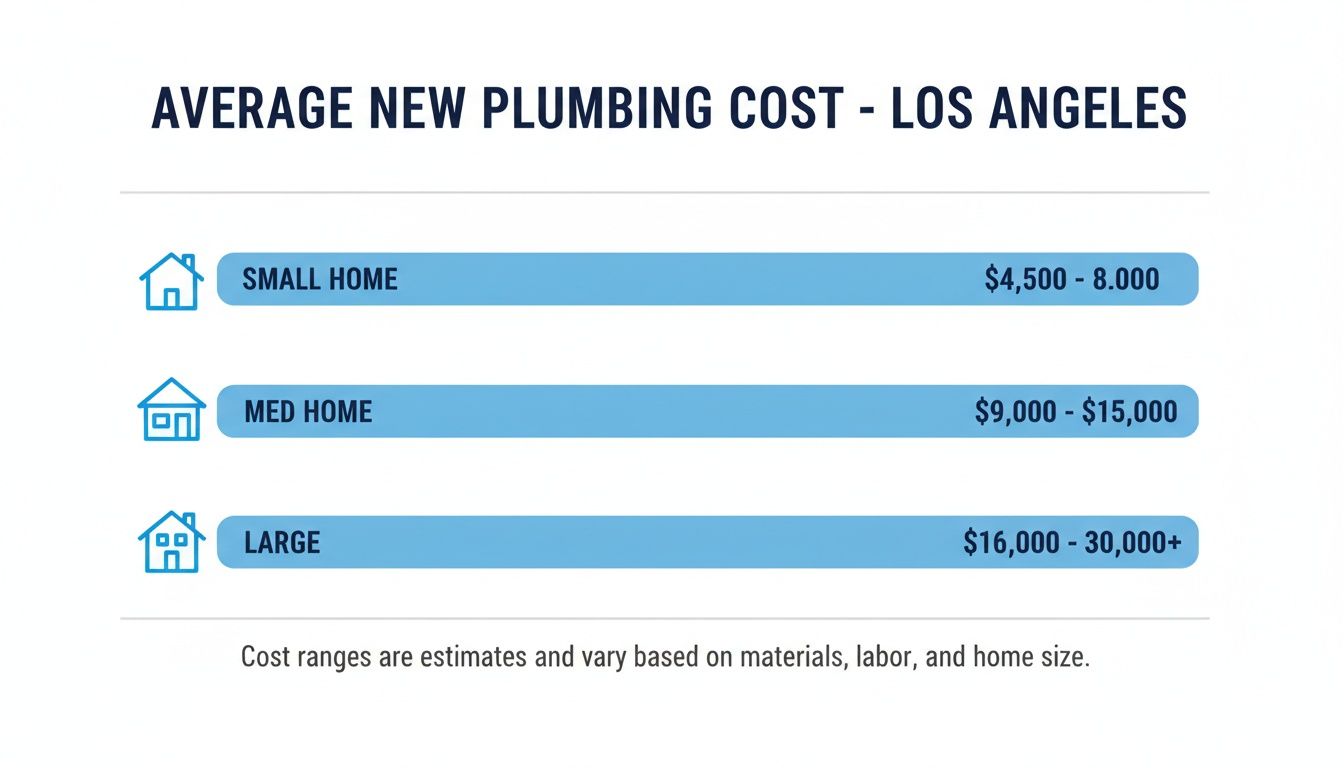
As you can see, the final cost really depends on the size of the home and how complex the plumbing layout is.
Understanding Labor Rates in Los Angeles
Labor is almost always the biggest chunk of your plumbing bill. You're paying for the skill, experience, and licensing needed to install a system that’s both safe and up to code. Here in Greater Los Angeles, plumbers might price their work a few different ways.
Key Takeaway: For new construction, a flat-rate project price is usually the most straightforward option. You get a clear, all-inclusive cost upfront, which protects you from surprise hourly charges if the job takes longer than planned.
Here’s how you might see labor costs broken down:
By the Hour: A licensed plumber in LA can charge anywhere from $95 to $200 per hour. The rate depends on their experience and how tricky the work is.
Per Fixture: Some contractors will quote based on how many fixtures (like sinks, toilets, and showers) you're installing. This can average between $600 to $1,800 per fixture.
Flat-Rate Project Fee: This is the most common method for new builds. A reputable plumber will review your architectural plans and give you one single price for the entire job.
The Role of Permits and Inspections
Let’s be clear: you can’t legally install a new plumbing system in Los Angeles without getting the right permits. These are fees you pay to the city or county, and they’re what allow a municipal inspector to come out and verify the work is done correctly and safely.
Permits aren't optional—they protect you and your investment. The cost can be anywhere from a few hundred to several thousand dollars, depending on the size of your project. This fee covers the plan review and the on-site inspections for both the rough-in and final stages. Trying to skip this step is a recipe for disaster, leading to huge fines and major headaches when you try to sell your home down the road.
The Key Factors That Influence Your Final Plumbing Costs
Ever wonder why two new homes in Los Angeles, even if they're similar in size, can end up with wildly different plumbing bills? It's because the final new construction plumbing cost isn't just one number. It's a blend of several crucial factors that all play a role. Getting a handle on these variables is the secret to building a smart budget and avoiding nasty surprises.
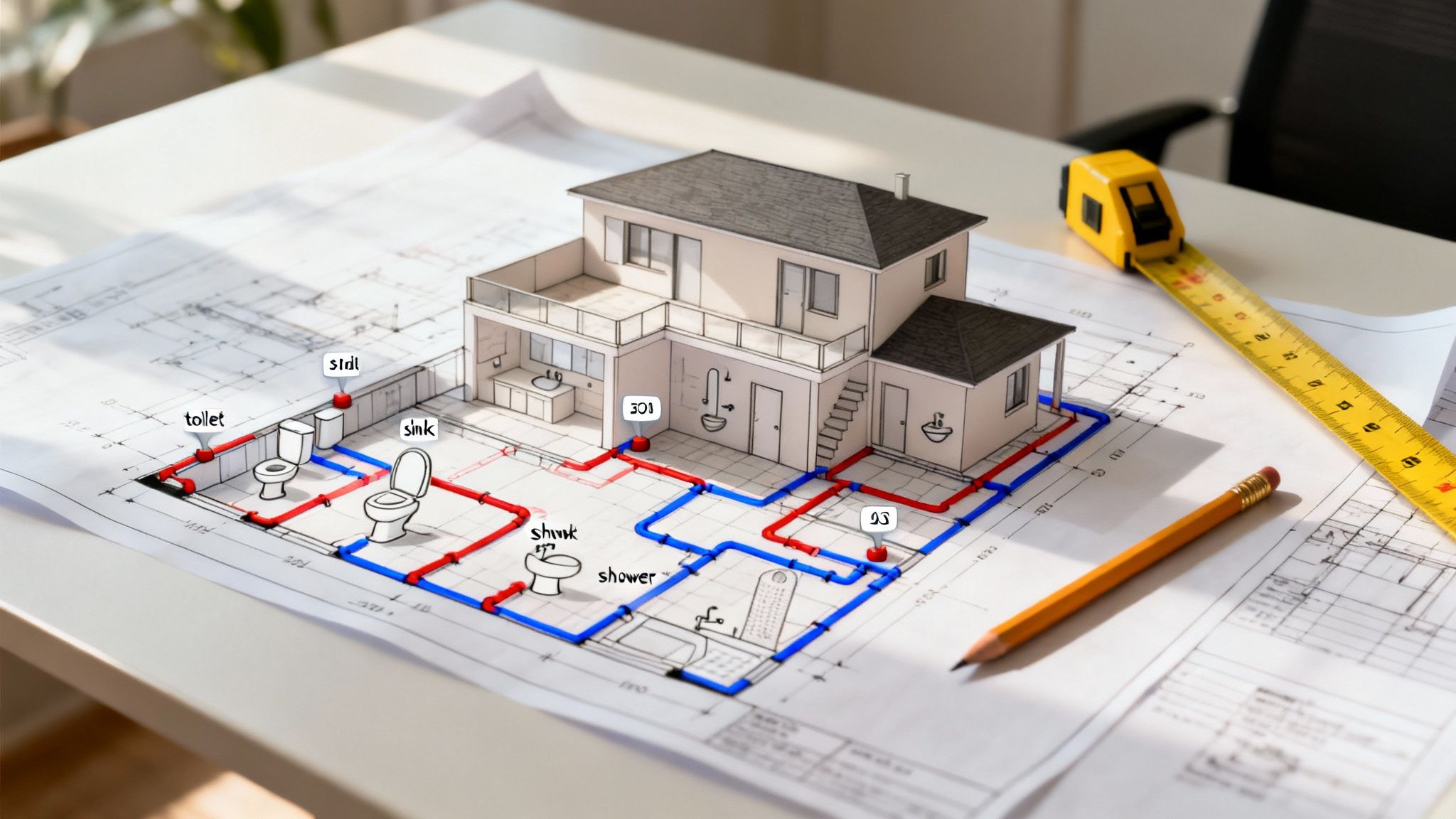
The biggest piece of the puzzle is simply the scope of your project. A larger home means more pipes, more fixtures, and more hours on the job—that much is obvious. But it's not just about raw square footage. The actual design of your home is a massive factor.
Architectural Complexity and Home Size
A straightforward, single-story ranch home out in the Valley is almost always going to be cheaper to plumb than a sprawling, multi-story modern build up in the Hollywood Hills, even if they have the same square footage.
The reason is pretty simple: complexity costs more. Multi-story homes demand long vertical pipe runs, complicated venting systems, and meticulous planning to make sure you get good water pressure on every floor. Sometimes, an open-concept layout even requires special framing just to hide the plumbing, which adds another layer to the cost.
A two-story, 2,500-square-foot house can cost 15-25% more to plumb than a single-story home of the same size. This is due to the additional labor and materials needed for vertical pipe runs and complex drain-waste-vent (DWV) systems.
All that extra complexity translates directly into more time for the crew and a longer materials list, pushing your final plumbing costs higher.
The Cost-Per-Fixture Model
Many plumbing contractors in Los Angeles use a cost-per-fixture model to build out a chunk of their estimate. In plumber-speak, a "fixture" is basically anything and everything that connects to your water supply or drainage system. This includes the obvious stuff, but also some connections you might not think about.
So, what counts as a fixture?
Kitchen: Sinks, garbage disposals, dishwashers, pot fillers, and refrigerator ice makers.
Bathrooms: Toilets, sinks, showers, bathtubs, and bidets.
Utility Areas: Washing machines, utility sinks, and water heaters.
The math is easy: the more fixtures you have, the higher the labor and material costs. A home with three full bathrooms and a fancy gourmet kitchen will have a much bigger plumbing bill than a home with two standard bathrooms, even if they’re the exact same size.
Fixture Quality and Material Selection
Your personal taste in fixtures can also make your budget swing wildly. There’s a huge price gap between basic, builder-grade materials and the high-end designer stuff.
For instance, a standard, no-frills toilet might run you $150. But a high-efficiency smart toilet with all the bells and whistles? That could easily top $1,500. The same logic applies to everything else—faucets, showerheads, sinks, you name it.
While premium fixtures look great and often perform better, they're a serious investment you need to plan for. On top of that, some high-end fixtures need special valves or connections, which can bump up the labor cost. This is where knowing the cost to install a water shut off valve for each individual fixture helps you create a much more detailed and accurate budget.
Unique Los Angeles Site Conditions
Finally, the land your house sits on can throw some curveballs that add to the cost. Building a home in Los Angeles means dealing with some unique geographical challenges that can make plumbing installation trickier.
Hillside Properties: A house built on a hillside in areas like the Santa Monica Mountains often means extra digging, specialized drainage systems, and maybe even sump pumps to handle groundwater. All of that adds up in both labor and materials.
Soil Type: Some areas are known for expansive clay soil or rocky ground, making it a real chore to dig trenches for water and sewer lines. A soil report might even require specific types of pipe bedding and backfill, adding another expense.
Lot Access: Trying to build on a tight lot in a place like Santa Monica or Pasadena can make it tough to get heavy machinery in. This forces plumbers to do more work by hand, which means more labor hours and a higher bill.
Navigating California's Essential Upgrades and Compliance
When you're building a new home in Los Angeles, the plumbing isn't just about connecting pipes and faucets. It’s about creating a safe, modern, and resilient system that stands up to California's demanding building codes. Factoring in both mandatory compliance items and popular upgrades is a huge part of managing your new construction plumbing cost.
These features don't just protect your investment; they're also what insurance companies look for to manage the unique risks we face in Southern California.
It’s a surprising fact, but some of the biggest roadblocks for new construction aren't financing—they're finding an insurance company willing to cover the property. In 2024, a staggering 13% of California real estate deals fell through simply because buyers couldn't get affordable home insurance. This makes having the right safety upgrades more important than ever.
Mandatory and Highly Recommended Safety Systems
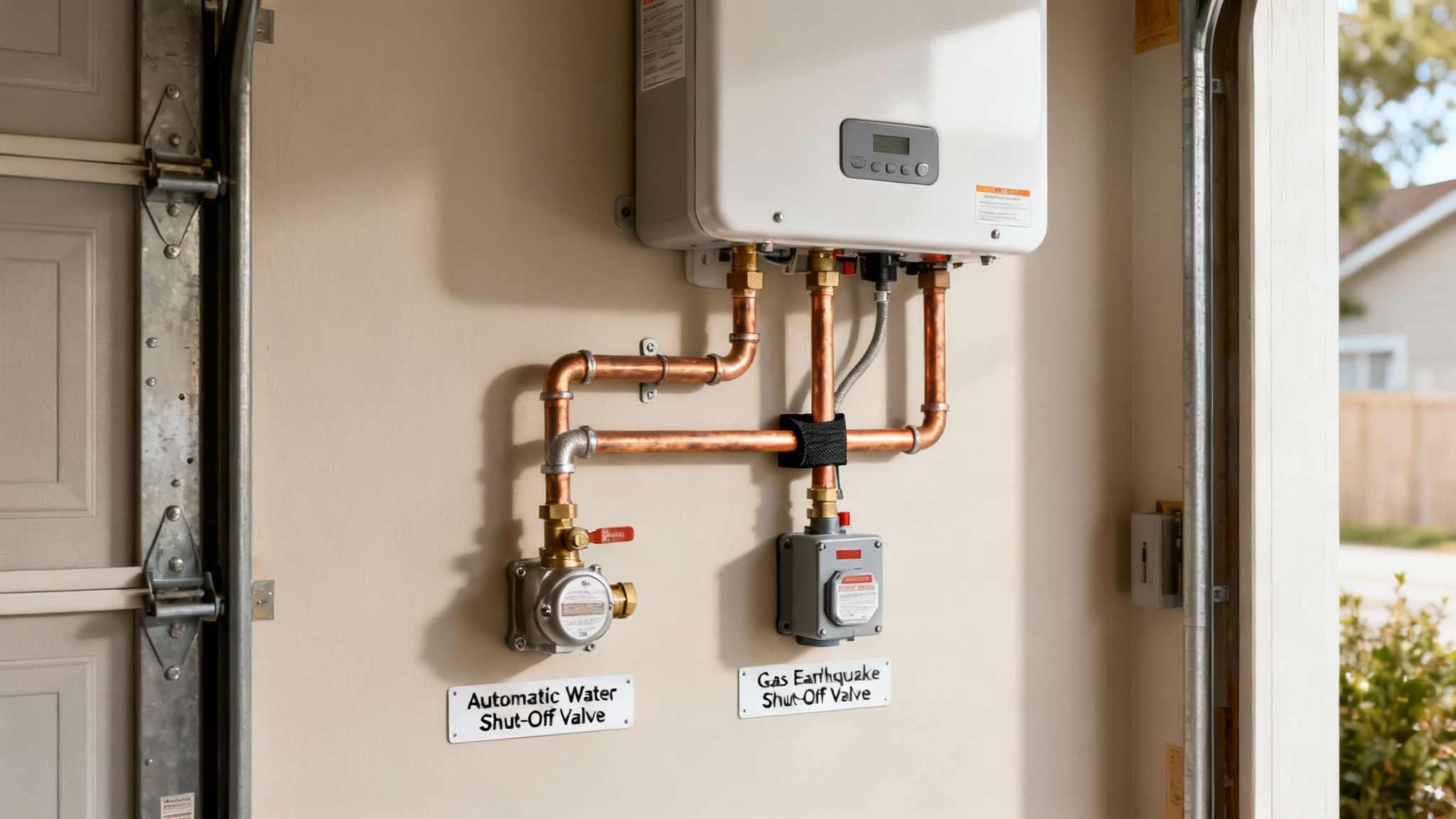
Living in an active seismic zone means taking extra precautions is just part of life. For any new home in the LA area, two of the most critical upgrades are automatic shut-off valves for both your water and gas lines. Think of them as your first line of defense against catastrophic damage when the ground starts shaking.
Automatic Water Shut-Off Valve: This is a smart device that keeps an eye on your water flow. If it detects a leak or a sudden burst, it automatically shuts off the main water line, preventing what could be devastating water damage. Insurers are big fans of these, and installing one can often get you a discount on your premium. Installation usually runs between $500 to $1,500.
Earthquake Gas Shut-Off Valve: This one is a genuine lifesaver. It’s designed to automatically cut off your home's gas supply during a major earthquake (typically around a magnitude 5.4 or higher). This simple device dramatically lowers the risk of a post-quake fire or explosion. It's a non-negotiable feature for safety and peace of mind in Los Angeles.
Investing in these safety systems isn't just another line item on your budget; it’s a fundamental step in protecting your family and your biggest asset. They provide peace of mind and are often a flat-out requirement to get homeowner's insurance in high-risk zones like Greater Los Angeles.
Popular Upgrades for Long-Term Value and Comfort
Beyond the must-have safety features, many savvy LA homeowners choose to invest in upgrades that make daily life better, boost efficiency, and add real, long-term value. While these choices will affect your initial new construction plumbing cost, they often pay for themselves through lower utility bills and a higher resale value.
Thinking through these options is key to building a home that’s not just safe, but also smart and comfortable. To help you weigh the pros and cons, we've put together a quick comparison of the most common upgrades we see in new LA builds.
Cost and Benefit Analysis of Common LA Plumbing Upgrades
Upgrade Type | Estimated Installed Cost | Key Benefit | Relevance to LA Homeowners |
|---|---|---|---|
Tankless Water Heater | $4,000 - $7,500 | Endless hot water, up to 34% energy savings, 20+ year lifespan. | High. Reduces energy costs and saves space in modern home designs. |
Whole-Home Water Filtration | $1,500 - $5,000 | Protects pipes and appliances from hard water, provides better-tasting water. | High. Addresses Southern California's notorious hard water issues. |
Automatic Water Shut-Off | $500 - $1,500 | Prevents catastrophic water damage from leaks or burst pipes. | Essential. Often required for insurance and can lead to premium discounts. |
Earthquake Gas Shut-Off | $300 - $800 | Automatically shuts off gas during a seismic event, preventing fires. | Mandatory. A critical safety feature for any home in a seismic zone. |
By planning for these upgrades from the start, you build a home that is safer, more efficient, and ultimately more valuable in the competitive Los Angeles market.
Tankless Water Heaters
The days of the big, bulky water heater tank are numbered. A tankless system, sometimes called an on-demand water heater, gives you endless hot water while being incredibly energy-efficient.
Benefit: They only heat water when you turn on the tap, which can slash your water heating costs by up to 34%. Plus, they last for 20+ years—that’s nearly double the lifespan of a traditional tank heater.
Cost: A professional installation for a full-home tankless system typically falls between $4,000 and $7,500, depending on the model you choose and the complexity of the install.
Whole-Home Water Filtration Systems
Anyone who lives in Southern California knows about our hard water. Over time, that mineral buildup can wreak havoc on your brand-new pipes and expensive appliances. A whole-home filtration or water softening system stops the problem before it starts.
Benefit: It protects your entire plumbing network from scale and corrosion, helps your appliances last longer, and delivers clean, better-tasting water from every single faucet in the house.
Cost: You can expect to invest between $1,500 and $5,000 for a quality, professionally installed system. It’s a small price to pay to safeguard thousands of dollars in plumbing and appliances.
How to Budget and Secure an Accurate Plumbing Estimate
Having a solid budget is the bedrock of any successful construction project in Los Angeles. Without one, the new construction plumbing cost can quickly get out of hand, turning your dream build into a source of constant stress. Good planning isn't just about plugging in numbers; it's about creating a financial roadmap that guides every decision and prevents nasty surprises later on.
The best first step is to treat plumbing like the core investment it is. Bringing your plumber into the conversation early—right alongside your architect and general contractor—is one of the smartest moves you can make. This early collaboration allows everyone to work together to optimize the plumbing layout, which can drastically reduce the length of pipe runs and simplify connections, saving you money on material and labor.
Getting Detailed Itemized Quotes
Once your architectural plans are locked in, it's time to start gathering estimates from reputable L.A. plumbing contractors. Be wary of a vague, one-page quote—that’s a huge red flag. A professional, trustworthy estimate should be a detailed, itemized document that breaks down every single part of the job.
Here’s what you should expect to see in a comprehensive plumbing estimate:
Scope of Work: A clear, step-by-step description of all tasks, from the initial rough-in plumbing to the final fixture installation.
Material Breakdown: An exact list of the materials specified for your project, including pipe types (like PEX or copper), fixture brands, and essential components like valves and connectors.
Labor Costs: A transparent breakdown of labor charges, whether it's a flat project fee or an hourly rate with an estimated timeframe.
Permit Fees: A clear outline of what it will cost to pull the necessary city or county permits and schedule all required inspections.
Exclusions: This is critical. It's a section detailing what is not included, such as unforeseen site prep or city sewer connection fees.
When you're looking at different bids, fight the urge to just pick the lowest price. An unusually low bid often signals cheap materials, inexperienced labor, or a contractor who missed something important—all of which will end up costing you a lot more down the road.
How to Compare Bids Effectively
Comparing multiple quotes is about more than just the bottom-line price; you need to make sure you're evaluating an apples-to-apples scope of work. Lay the itemized estimates out side-by-side and hunt for differences. Is one contractor quoting for high-end copper pipes while another is using standard PEX? Does one bid include the cost of installing an earthquake shut-off valve, while another lists it as an optional add-on?
These seemingly small details can add up to thousands of dollars. If you see a big difference between quotes, don't be afraid to pick up the phone and ask for clarification. A good plumber will be happy to walk you through their estimate and explain their costs. This process ensures you know exactly what you're paying for and helps you find a partner who aligns with your project's quality standards and budget. For a broader look at project finances, exploring general strategies to reduce overall construction costs can also provide some valuable perspective.
The Importance of a Contingency Fund
No matter how carefully you plan, construction projects are famous for throwing curveballs, especially in a place with as many variables as Los Angeles. You might hit unexpected rock during excavation or find out about a last-minute change to the building code. This is where a contingency fund becomes your most valuable financial tool.
It’s standard practice in the industry to set aside an additional 10-15% of your total estimated plumbing cost to cover these "what-ifs." This fund acts as a financial cushion, giving you the flexibility to handle unexpected problems without derailing your project or having to cut corners on quality. Think of it as insurance for your budget—a necessary precaution for a smooth and successful build.
Finding the Right Plumbing Partner for Your New Build
Choosing the plumbing contractor for your new build in Los Angeles is a huge decision. It’s just as critical as the architect you hire or the materials you select. Get this choice right, and your project sails smoothly—on time and on budget. Get it wrong, and you could be looking at frustrating delays, surprise costs, and plumbing headaches for years.
Think of a professional plumbing partner as your first line of defense. Working with a licensed, bonded, and insured team like ZH Plumbing is non-negotiable. We bring decades of on-the-ground experience with Los Angeles's unique building codes, from navigating the permit maze in Pasadena to tackling the tricky plumbing layouts required for hillside homes in Santa Monica.
What to Look for in a Plumbing Contractor
When you're vetting plumbers, you aren't just hiring a wrench. You're looking for a partner in your project. The best teams prioritize crystal-clear communication and total transparency right from the first phone call. A contractor who’s worth their salt will provide a detailed, itemized estimate and be happy to explain every single line item until you’re comfortable.
Make sure to ask about their experience with projects just like yours. A team that primarily handles commercial high-rises might not have the nuanced touch needed for a custom single-family home. Always ask to see a portfolio of recent new construction jobs and check for glowing reviews from homeowners and general contractors in the area.
Peace of mind is the ultimate goal. The right plumbing partner acts as a guardian of your investment, ensuring the hidden network of pipes that serves your home is built for longevity, safety, and efficiency.
Experience with Los Angeles Specifics
A plumber who truly knows Greater Los Angeles understands the little things that out-of-towners miss. This isn't just about pipes; it’s about knowing which energy-efficient tankless water heaters will deliver the best long-term savings and recommending the right whole-home filtration systems to handle Southern California's notoriously hard water.
Look for a company that offers:
Transparent Pricing: Flat-rate pricing for new construction projects is a game-changer. It locks in your budget and protects you from the anxiety of runaway hourly charges.
24/7 Availability: Construction finishes, but life happens. Knowing you have a reliable team on call for emergencies provides incredible security long after you've moved in.
After-Service Support: A company that stands behind its work with solid warranties and follow-up service is a company you can trust. It’s the hallmark of a true professional.
When you're comparing bids, it's also smart to consider firms that offer comprehensive oversight for construction projects, as they often have a trusted network of subcontractors they’ve already vetted. For a deeper dive, check out our top tips for choosing a trustworthy plumbing company to help you make the smartest choice.
In the end, the right team does more than just install pipes. They deliver a bulletproof plumbing system engineered to last a lifetime, protecting your brand-new home and your family for decades. If you’ve got questions about an upcoming build, our team is here to help.
Answering Your Top Questions About New Build Plumbing Costs
Even with a solid blueprint, it’s completely normal to have questions pop up about your new construction plumbing project in Los Angeles. We get calls from homeowners and general contractors all the time trying to nail down the final details for their budget and timeline. Let's clear up some of the most common ones.
Think of these answers as your roadmap for the installation process, helping you see how each phase fits into the overall cost of plumbing your new home.
How Long Does the Plumbing Phase Take for a New Home?
The timeline for plumbing a new build really comes down to the home's size and complexity. For a typical L.A. home around 2,500 square feet, the initial rough-in plumbing—which is all the behind-the-scenes pipework in the walls and foundation—usually takes our crew about 3 to 5 full workdays.
Much later, after the drywall is up and the painters are gone, we come back for the finish plumbing. This is where we install all the fixtures you can see, like faucets, toilets, and sinks. This stage typically adds another 2 to 3 days to the job. Of course, a sprawling custom home with extra bathrooms or a fancy kitchen layout will naturally take a bit longer.
What’s the Difference Between Rough-In and Finish Plumbing Costs?
It's super helpful to understand how the costs break down between these two critical stages.
Rough-in plumbing is the skeleton of your entire system. It’s all about laying the water supply lines, drain pipes, and vents correctly. This part is labor-intensive and often makes up 60% to 70% of the total labor cost for the whole project.
Finish plumbing, on the other hand, is all about the final touches. The cost here is driven less by labor and more by the fixtures you've picked out. A high-end designer faucet from Italy is going to cost a lot more than a standard, reliable one from the local supply house.
Can I Save Money by Purchasing My Own Fixtures?
This is a classic question, and while it seems like an easy way to trim the budget, buying your own fixtures can sometimes backfire. Professional plumbers have access to trade pricing on durable, high-quality fixtures and we know which ones are compatible with the systems we install. We've seen it all.
When you supply your own, you're on the hook for making sure every single part is there and isn't damaged. A missing gasket or a cracked toilet base can bring the project to a screeching halt, leading to delays and extra labor charges while we wait. It's always best to have this conversation with your plumber upfront to see what their policy is and avoid any headaches.
Are City Sewer Connection Fees Included in a Plumber's Quote?
This is a really important one to clarify. A plumber's quote for a new build almost never includes the municipal sewer connection fees.
Our estimate will cover the work to install the sewer line from your house to your property line. The separate "tap fees" or "connection fees" charged by the City of Los Angeles or your local municipality are an entirely different expense. Make sure you talk to your general contractor to figure out who is responsible for handling and paying those fees.
Building a new home in Los Angeles is a huge investment, and you need a reliable team to make sure every detail is handled correctly. For a transparent, code-compliant plumbing installation that protects your property for years to come, trust the experts at ZH Plumbing. Get a detailed estimate for your new construction project today.
Comments